

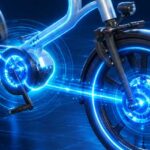
Para uma locadora de veículos, um triciclo carregando é um triciclo que não gera receita. Para um distribuidor rural, um triciclo que fica sem bateria antes do fim do percurso representa um retorno financeiro em potencial. Os triciclos elétricos semirreclinados com bateria dupla resolvem ambos os problemas simultaneamente: eles carregam quase o dobro da energia a bordo, o que se traduz em uma autonomia substancialmente maior e — muitas vezes o aspecto mais valioso — um dia inteiro de trabalho sem precisar recarregar no meio do dia. Quando a autonomia e o tempo de atividade são fatores essenciais para o negócio, a segunda bateria geralmente é a configuração que se paga sozinha.
A bateria dupla é uma das configurações da plataforma abordadas em procurando um triciclo elétrico semi-reclinado. Este artigo analisa o que o segundo pacote realmente compra, os mercados onde ele se paga e como dimensioná-lo para um ciclo de trabalho real, em vez de um número de alcance divulgado.
O que uma segunda bateria realmente proporciona
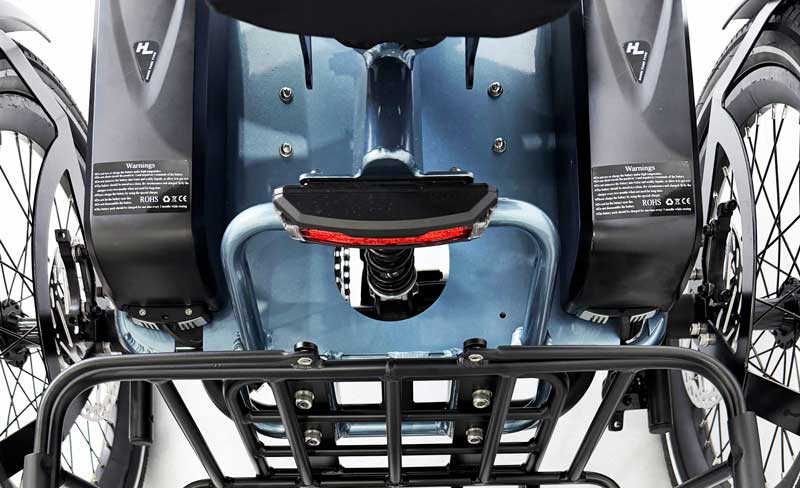
A vantagem mais óbvia é a autonomia: duas baterias com capacidade semelhante armazenam quase o dobro da energia, permitindo que o triciclo percorra uma distância consideravelmente maior no mesmo percurso antes de precisar ser recarregado. A vantagem menos óbvia, porém, costuma ser a mais valiosa: o tempo de atividade. Um triciclo com bateria única que precisa ser recarregado no meio do dia fica parado por horas; um triciclo com duas baterias funciona o dia todo. Em plataformas com baterias removíveis, o operador pode trocar a bateria em minutos, em vez de esperar a recarga, transformando o tempo de inatividade em uma parada rápida. Uma segunda bateria também oferece uma margem de segurança: se uma das baterias estiver descarregada ou apresentar defeito, o condutor não fica sem energia.
Nada disso é gratuito. Dois conjuntos de baterias aumentam o peso e o custo, e há duas baterias para carregar e gerenciar em vez de uma. A verdadeira questão é se a autonomia e o tempo de atividade compensam isso em um determinado mercado — e em vários mercados, claramente, compensam.
Os mercados onde a bateria dupla se paga por si só
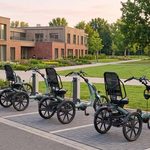
As frotas de aluguel e turismo são o caso mais claro, pois, para elas, tempo de atividade significa receita. Um triciclo que funciona o dia todo sem sair da linha gera mais receita do que um que desaparece para recarregar todas as tardes, e em longas rotas turísticas, a autonomia extra é o que torna o passeio possível. Os mercados rurais e de longa distância são o segundo caso — intervalos maiores entre paradas, terrenos mais acidentados e ciclistas que simplesmente viajam mais longe, tudo isso consome a bateria mais rapidamente do que o esperado. Os mercados de clima frio também se enquadram nessa categoria: as baixas temperaturas reduzem a autonomia útil, e uma segunda bateria compensa essa perda.
Por outro lado, mercados urbanos densos, baseados em trajetos curtos, raramente precisam de uma segunda bateria. Quando a distância diária é percorrida confortavelmente com uma única bateria, a segunda bateria representa peso e custo que o ciclista nunca utiliza, e uma configuração com uma única bateria funciona melhor. O objetivo é adequar a bateria ao mercado — e não instalar a maior disponível por padrão.
A autonomia é um resultado do sistema, não da quantidade de bateria.
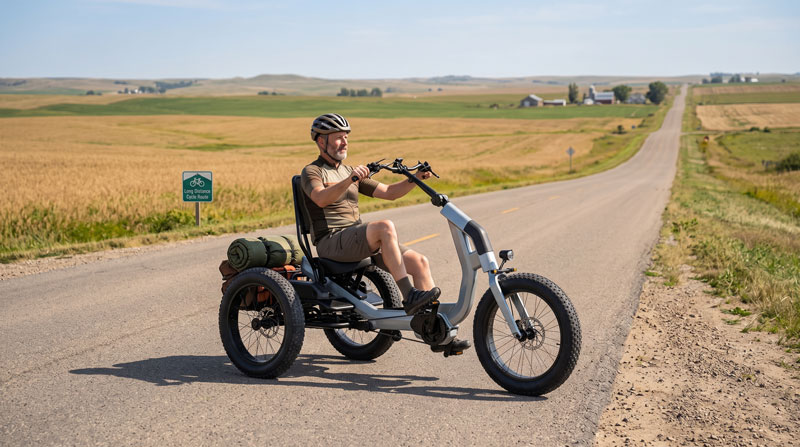
A autonomia anunciada, por si só, significa pouco, pois a autonomia real depende de todo o ciclo de uso: peso do ciclista, terreno e inclinação, nível de assistência, temperatura e escolha de pneus. construção de pneus largos, Por exemplo, uma bateria com maior resistência ao rolamento reduz a autonomia — e é exatamente aí que uma segunda bateria se mostra útil. Dimensionar a bateria significa adequar a capacidade ao percurso que o triciclo realmente fará, nas condições em que irá operar, e não apenas a um número na ficha técnica. Essa é a diferença entre um triciclo que completa o seu dia confortavelmente e um que chega em casa com dificuldades no último quilômetro.
Leitura recomendada:
Conformidade e logística de uma montagem em duas embalagens.
Duas baterias significam dois conjuntos de obrigações relativas às baterias e mais peso para se manter dentro da classe legal do mercado de destino. Na UE, as baterias estão sujeitas a requisitos ao abrigo do Regulamento de baterias (UE) 2023/1542, E ambas as baterias devem atender às mesmas normas de transporte e segurança. Há também um aspecto prático: duas baterias precisam de uma rotina de carregamento que se adeque ao operador — carregamento sequencial, um segundo carregador ou baterias intercambiáveis em sistema de rodízio. Definir tanto a documentação quanto a logística de carregamento na fase de configuração faz parte da especificação correta de um triciclo com duas baterias, e não é algo a ser descoberto após o envio.
Procurando uma configuração de bateria dupla
Um triciclo com bateria dupla é uma configuração da plataforma, dimensionada de acordo com seu ciclo de trabalho e encomendada através do mesmo processo definido: uma amostra conforme sua especificação, uma configuração acordada, depois o projeto piloto e a produção. A capacidade ideal é definida em uma conversa sobre o caminho a seguir, e não por meio de uma simples escolha em um catálogo. Guia para escolher um fabricante de triciclos aborda o que verificar antes de se comprometer, e o Processo ODM Define como uma ordem configurada é executada.
Perguntas frequentes
Uma segunda bateria duplica a autonomia?
Em termos gerais, antes de considerar o peso adicional, duas baterias com capacidade semelhante carregam aproximadamente o dobro da energia. A autonomia real ainda depende do terreno, do peso do ciclista, do nível de assistência e da temperatura, portanto, o ganho varia conforme o ciclo de uso.
Vale a pena ter bateria dupla para uma frota de aluguel?
Normalmente, sim. Para uma empresa de aluguel ou de turismo, tempo de atividade significa receita: um triciclo com bateria dupla continua funcionando o dia todo, em vez de precisar sair da fila para recarregar, e as baterias intercambiáveis transformam uma recarga em uma troca rápida.
As baterias podem ser trocadas em vez de carregadas?
Em plataformas com baterias removíveis, sim. Um operador pode instalar uma bateria nova em minutos e manter o triciclo a gerar rendimento, o que explica em grande parte por que as frotas optam por essa configuração.
Será que o uso de duas baterias aumenta muito o peso e o custo?
Isso adiciona ambos. A bateria extra e sua montagem aumentam o peso e o custo dos materiais. É justificável quando a autonomia e o tempo de atividade são importantes, mas difícil de justificar quando uma única bateria já é suficiente para o dia todo.
Posso encomendar um triciclo semi-reclinado com duas baterias como produto de marca própria?
Sim. É uma configuração da plataforma, disponível sob sua própria marca e dimensionada de acordo com as rotas e condições do seu mercado.
Gerir uma frota de aluguer ou servir um mercado de longa distância? Informe-nos o percurso e o ciclo de trabalho diário, e dimensionaremos a bateria para que os triciclos continuem gerando receita. Fale com nossa equipe sobre a configuração ideal para o seu mercado.
 Portuguese
  English
  German
  Dutch
Dutch  Danish
  French
  Polish
  Spanish