


Pergunte qual o tamanho do Mercado de triciclos elétricos para idosos nos EUA e você obterá uma resposta que não vale nada. As previsões publicadas para a categoria de triciclos elétricos divergem entre si por uma margem de cinco vezes, misturam triciclos de consumo com triciclos de carga industriais e são baseadas em dados cuja fonte ninguém divulga. Qualquer importador que baseie sua estratégia de negócios em um desses dados estará construindo sobre areia movediça. A abordagem útil é parar de procurar números de mercado e começar a analisar os dois conjuntos de dados que se sustentam: as projeções populacionais dos EUA e os dados nacionais sobre lesões. Juntos, eles descrevem um comprador que existe agora, em quantidades conhecidas, por razões que não irão mudar.
Três conclusões iniciais:
- As previsões são inúteis e você não precisa delas. A demanda nessa categoria pode ser derivada de dados demográficos e evidências clínicas, ambas provenientes de agências federais, ambas muito mais confiáveis do que qualquer relatório de mercado privado.
- A categoria é definida por um momento, não por uma idade. É adquirido no momento em que a confiança no equilíbrio falha — o que os dados localizam com precisão e que ocorre em idades diferentes para pessoas diferentes.
- Dois compradores compartilham o mesmo nome de categoria. Eles diferem no que precisam, no que pagam e — e é aqui que define seu plano de canais — em como chegam ao produto.
Dados atualizados até julho de 2026 e provenientes das agências mencionadas; confirme as informações divulgadas antes de citá-las em seus próprios materiais.
Por que não é possível dimensionar esse mercado a partir de um relatório?
Porque ninguém está medindo isso. Não existe nenhuma série de dados federais ou de associações comerciais que contabilize os triciclos de consumo separadamente, então os analistas privados fazem estimativas — e suas estimativas para a mesma categoria no mesmo ano variam em uma ordem de grandeza. Vários deles também incluem triciclos industriais e de carga, que são um mercado diferente com compradores diferentes.
Dois pontos se mantêm firmes. Os dados da indústria compilados pela PeopleForBikes em parceria com a Circana oferecem um panorama sólido do mercado geral de bicicletas elétricas nos EUA e estabelecem algo útil especificamente para essa categoria: as vendas diretas ao consumidor representam uma parcela muito grande do volume total de bicicletas elétricas nos EUA, e os modelos com acelerador dominam esse canal. O acelerador é mais importante aqui do que em qualquer outro segmento do ciclismo, porque o ciclista que utiliza essa categoria pode ter força limitada nas pernas e precisa da opção de não pedalar em uma subida.
O segundo fator determinante é a concentração. Declarações públicas do setor indicam que as vendas de triciclos para adultos nos EUA se concentram, em sua grande maioria, em um número muito pequeno de produtos. É preciso cautela ao analisar o número específico — trata-se de uma afirmação do próprio fabricante, não de dados auditados —, mas o formato do dado importa mais do que o número de casas decimais. Uma categoria em que um punhado de produtos detém a maior parte do volume não é um mercado maduro. É um mercado subdesenvolvido.
O que, de fato, cria o comprador?
Dois conjuntos de dados federais, e eles são excepcionalmente limpos.
População.
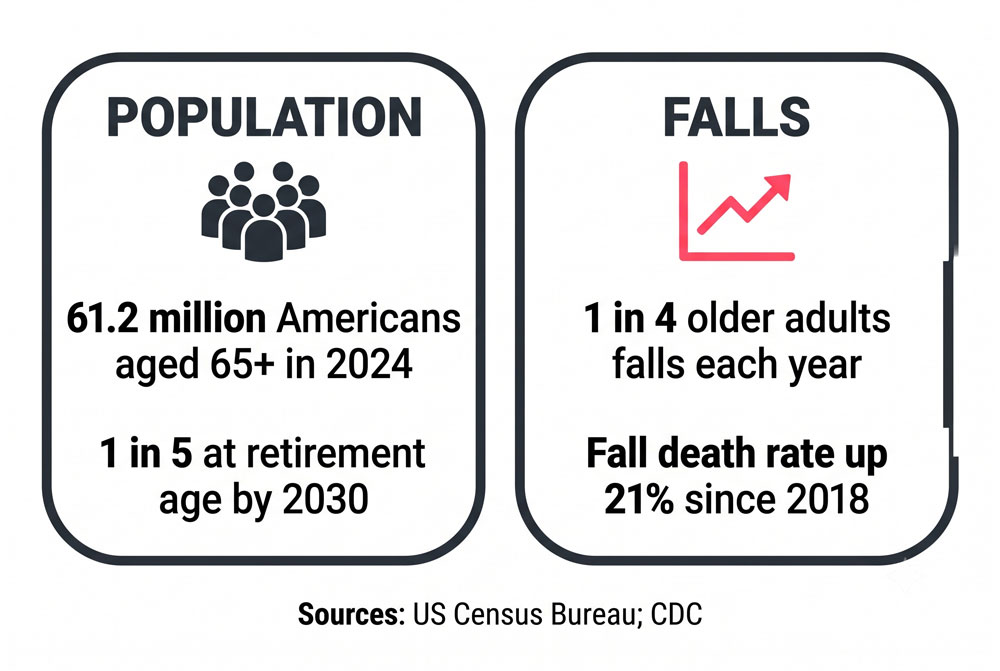
As projeções do Departamento do Censo dos EUA apontam 2030 como um ponto de virada demográfica: a partir desse ano, todos os membros da geração baby boom terão mais de 65 anos, e um em cada cinco americanos estará em idade de aposentadoria. Até 2034, o Departamento projeta que os idosos superarão em número as crianças pela primeira vez na história dos EUA. As estimativas atuais mostram que a população com 65 anos ou mais chegará a 61,2 milhões em 2024 — 18,01 trilhões da população, um aumento em relação aos 12,41 trilhões em 2004 — enquanto a população com menos de 18 anos diminui. As pessoas que terão 75 anos em 2036 têm 65 hoje. Elas já estão no mercado de trabalho.
Quedas.
O CDC (Centro de Controle e Prevenção de Doenças) relata que as quedas são a principal causa de lesões em adultos com 65 anos ou mais, que mais de 14 milhões de idosos — um em cada quatro — relatam sofrer quedas anualmente e que cerca de três milhões são atendidos em departamentos de emergência por ano. A tendência é o aspecto que a maioria dos resumos de produtos ignora: a taxa de mortalidade por quedas ajustada por idade aumentou 211% entre 2018 e 2024, de 64,7 para 78,4 por 100.000 idosos. Este não é um risco estável. Ele está piorando com o envelhecimento da população.
Agora, junte as duas coisas. Uma plataforma de três rodas com entrada facilitada e assento elimina a necessidade de equilíbrio exatamente nos momentos em que os usuários mais idosos o perdem: ao parar, arrancar e ao subir e descer. Isso representa uma correspondência direta entre produto e necessidade, comprovada por dados federais sobre lesões, e não por uma narrativa de marketing — e não depende de subsídios, políticas públicas ou tendências para existir.
Há um terceiro conjunto de dados que vale a pena considerar, embora seja mais difícil de quantificar: o CDC também relata que uma em cada dez quedas resulta em uma lesão que leva o idoso a restringir suas atividades. O medo de cair faz com que as pessoas deixem de se movimentar antes mesmo que qualquer lesão aconteça. Uma parcela significativa dos compradores dessa categoria não está substituindo uma bicicleta. Estão substituindo a atividade que deixaram de praticar.
Quem é o comprador, especificamente?
Dois perfis estão sob o mesmo nome de categoria. Confundi-los é o erro de classificação mais comum neste segmento.
O comprador que busca estabilidade.
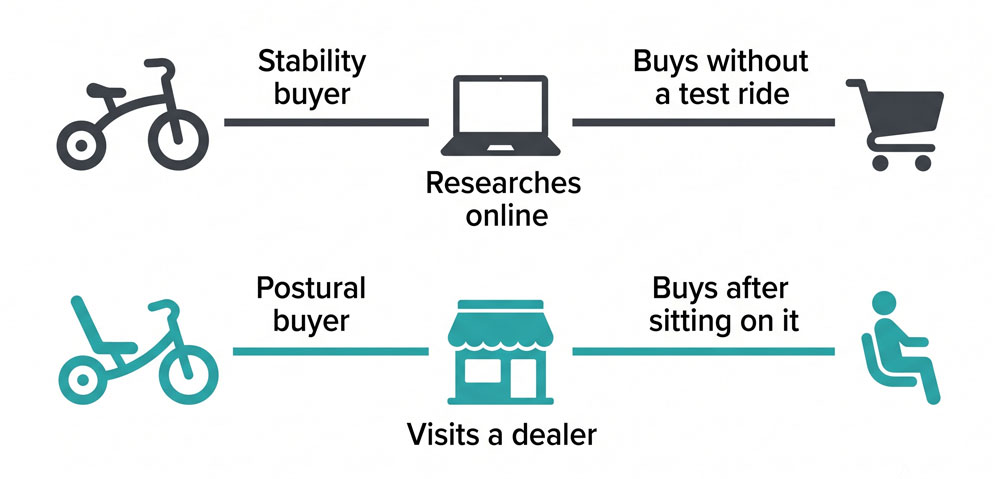
Normalmente, pessoas entre 60 e 80 anos, que ainda pilotam ou pararam de pilotar recentemente, fisicamente capazes de manter uma postura ereta, mas que já não se sentem seguras em baixa velocidade, ao subir e descer calçadas ou ao parar no trânsito. A compra é vista como uma continuidade de algo — tarefas do dia a dia, compras de supermercado, passeios no bairro, deslocamentos em campings e na comunidade. A sensibilidade ao preço é alta, a pesquisa é feita online e a compra geralmente é concluída sem um teste. É aqui que a competição pelo preço de entrada acontece.
O comprador postural.
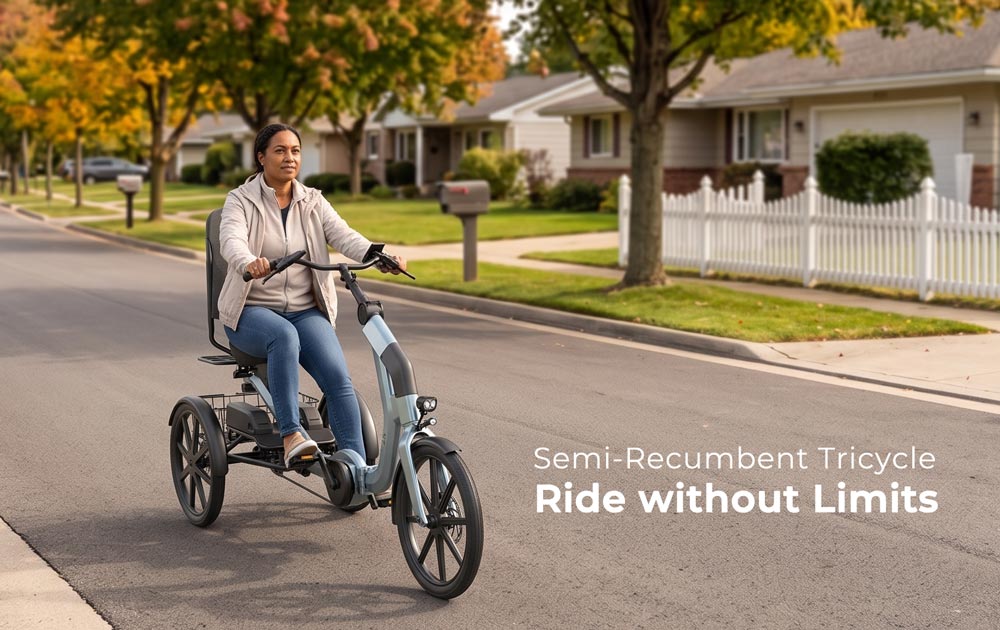
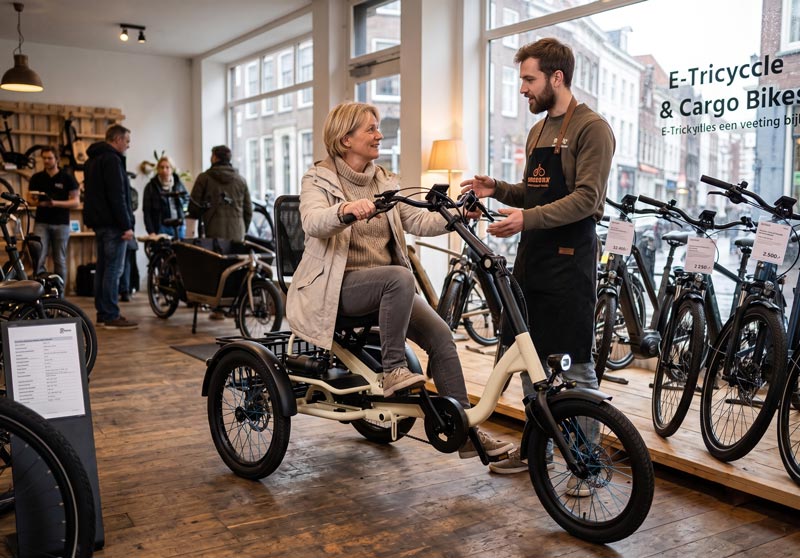
Chega com um motivo específico: dor nas costas, sensibilidade nas articulações, neuropatia, força reduzida no tronco, sobrecarga nos ombros ou pulsos, ou algum problema de equilíbrio. Precisa de apoio para as costas, postura sentada relaxada e sem peso nos pulsos. Esse comprador está disposto a pagar mais, quase sempre quer experimentar o produto antes de comprar e o encontra por meio de lojas de produtos para mobilidade e adaptados, em vez de anúncios em marketplaces. É também para esse tipo de comprador que foram criados os programas de incentivo específicos para produtos adaptados.
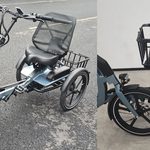
A fronteira entre eles está se tornando menos nítida — os grandes fornecedores agora abrangem ambos — mas a diferença entre os canais de distribuição não diminuiu em nada, e é isso que deve nortear seu planejamento. Uma plataforma semi-reclinada como a UM Vita Não se trata de um triciclo convencional com encosto adicionado; a geometria, a abordagem de vendas e o ambiente de varejo são completamente diferentes.
De que reclama o comprador?
Ao analisar os comentários de proprietários nos EUA nessa categoria, independentemente da marca, os mesmos cinco problemas se repetem. Vale a pena lê-los como uma especificação, pois cada um deles representa uma decisão importante a ser tomada:
Peso de transporte que duas pessoas têm dificuldade em mover. Montagem incompleta que frustra o comprador. Autonomia declarada que não se sustenta em subidas. Fornecimento lento de peças de reposição. E o problema crítico de segurança: instabilidade em curvas, com relatos de levantamento de rodas e capotamento em toda a categoria, o que a torna um problema de projeto, e não apenas um defeito isolado.
Esse último ponto merece destaque, pois compromete toda a proposta da categoria. Um produto comprado para eliminar o risco de queda, mas que introduz o risco de capotamento, não resolve o problema do cliente. Largura da bitola, centro de gravidade, comportamento do diferencial, sistema anti-tombamento, limitação da velocidade inicial e capacidade de frenagem em descida são as variáveis envolvidas, e todas são definidas na fase de projeto. A geometria compacta e baixa do UM Chill Existe em parte por esse motivo — mas a ideia geral se mantém independentemente do modelo: nessa categoria, a segurança é fabricada, não comercializada.
O que isso significa para um sortimento nos EUA?
Se você estiver desenvolvendo uma linha de produtos para o mercado americano, os dados comprovam a necessidade de um formato específico. Atenda ao comprador que busca estabilidade, caso tenha volume suficiente para competir nesse preço, mas não espere se diferenciar nesse segmento. Construa seu posicionamento estratégico em torno do comprador que prioriza a postura, onde as necessidades do produto são reais, a tolerância ao preço é maior, o canal de distribuição valoriza a demonstração em vez da publicidade e — crucialmente — o comprador não se contenta com um produto genérico de cadeira ereta com um encosto aparafusado.
Trata-se de um briefing de engenharia, e é aqui que um parceiro fabricante demonstra seu valor. A United Mobility constrói plataformas semirreclinadas como programas OEM/ODM configurados para cada mercado, o que, para um parceiro nos EUA, significa que a geometria do assento, as especificações de estabilidade, a configuração da tração e a documentação são desenvolvidas especificamente para o seu canal de distribuição, em vez de serem herdadas de um catálogo. Fale com nossa equipe de engenharia. sobre um programa dos EUA, e leia O que o mercado americano exige em termos de conformidade. antes de definir uma especificação.
Perguntas frequentes
Qual o tamanho do mercado de triciclos elétricos para idosos nos EUA?
Não existem dados publicados confiáveis — as previsões para a categoria divergem por uma margem de cinco vezes e frequentemente incluem triciclos de carga industriais. O que é mensurável: a população americana com 65 anos ou mais atingiu 61,2 milhões em 2024 e um em cada cinco americanos estará em idade de aposentadoria em 2030, enquanto mais de um em cada quatro idosos falece a cada ano. A demanda pode ser derivada desses dados; as vendas da categoria não são contabilizadas separadamente.
A categoria de triciclos elétricos para idosos está crescendo ou é apenas um efeito colateral das tendências de busca?
Os fatores que impulsionam a demanda são estruturais, não cíclicos: o envelhecimento da população, segundo projeções federais, e a queda na taxa de mortalidade entre idosos, que aumentou 21% entre 2018 e 2024. Nenhum desses fatores se reverte com o ciclo econômico.
Qual a diferença entre um comprador de triciclos com posição vertical e um comprador de triciclos com posição semi-reclinada?
O comprador de bicicletas ergométricas verticais busca estabilidade sem alterar a forma como pedala, prioriza o preço e geralmente compra online. Já o comprador de bicicletas semi-reclinadas tem uma necessidade física específica — costas, articulações, equilíbrio, resistência — precisa de suporte lombar e uma postura relaxada, está disposto a pagar mais e geralmente compra após experimentar o produto na loja. São produtos diferentes, vendidos por canais diferentes.
Qual é o maior risco do produto nesta categoria?
Capotamento em curvas. Esse problema aparece constantemente nos comentários de proprietários nos EUA, independentemente do fornecedor, e contradiz diretamente o motivo da compra do produto. Largura da bitola, centro de gravidade, comportamento do diferencial, sistema anti-tombamento, limitador de velocidade inicial e frenagem em descidas são decisões tomadas na fase de projeto.
Devemos construir pensando no segmento de baixo preço?
Só com volume a seu favor. A sobreposição de impostos e os requisitos de certificação agora em vigor nos maiores estados comprimiram esse segmento do mercado, e é nele que os fornecedores de maior volume já amortizam o custo das ferramentas. Os segmentos médio e superior, particularmente o comprador de equipamentos de proteção individual, são menos disputados e mais defensáveis.
 Portuguese
  English
  German
  Dutch
Dutch  Danish
  French
  Polish
  Spanish