


A engenharia de estabilidade de triciclos elétricos é a parte desta categoria que o marketing ignora, mas a física não. Um triciclo é comprado para eliminar o risco de queda — e um mal projetado introduz um risco diferente: ele pode levantar uma roda e capotar em uma curva. Ao ler os comentários de proprietários nos EUA sobre essa categoria, percebe-se que isso ocorre com frequência suficiente, em diversos fornecedores, para ser considerado uma falha de projeto em nível de categoria, e não um defeito isolado. Além disso, é totalmente previsível a partir da geometria, o que significa que pode ser evitado na fase de projeto. Este artigo apresenta a física do capotamento de triciclos, os números que o preveem e as decisões específicas que o eliminam — escrito para quem especifica e adquire esses produtos, não para quem os utiliza.
Três conclusões iniciais:
- A inversão é geométrica, não acidental. Uma única relação — largura da bitola em relação à altura do centro de gravidade — prevê a maior parte da resistência ao tombamento de um triciclo. Acerte essa relação e o modo de falha praticamente desaparece.
- Um triciclo é inerentemente menos resistente a capotamentos do que um veículo de quatro rodas, portanto, as margens de segurança devem ser projetadas deliberadamente. Elas não chegam por padrão, e um triciclo alto, estreito e com o assento muito alto é um risco de capotamento ao abrir uma curva.
- O caso de uso para idosos elimina suas rotas de fuga. Um condutor mais jovem desloca o peso e reage rapidamente. O condutor para o qual esta categoria se destina não faz nenhuma das duas coisas, por isso o veículo tem de ser estável sem intervenção do condutor.
As referências de engenharia são citadas abaixo. Os objetivos geométricos específicos dependem da plataforma e da carga pretendida; considere as proporções aqui apresentadas como princípios de projeto e valide qualquer projeto final por meio de testes.
Por que um triciclo rola enquanto uma bicicleta não?
Uma bicicleta de duas rodas não capota como um triciclo — ela cai para os lados, e o ciclista evita isso constantemente mantendo o equilíbrio. Um triciclo elimina a necessidade de equilíbrio, que é justamente a vantagem para um ciclista com pouca confiança no equilíbrio. Mas, ao eliminar essa necessidade, o triciclo assume o mesmo ponto fraco de um carro: com uma base fixa e rígida de três pontos de contato, a força da curva pode levantar a roda interna e fazer o veículo tombar para fora.
O mecanismo consiste na interação entre duas forças que atuam através do centro de gravidade do veículo. Fazer uma curva gera aceleração lateral, que atua lateralmente no centro de gravidade e tenta girar o veículo em torno da linha que une as rodas externas — o eixo de capotamento. A gravidade, atuando para baixo no mesmo centro de gravidade, resiste a essa rotação. O fato de o veículo capotar ou não depende da geometria dessa alavanca: a distância entre o centro de gravidade e o solo, em comparação com a distância entre ele e as rodas externas.
Isso não é um problema específico de bicicletas e não se resolve com a intuição sobre bicicletas. É um problema de dinâmica de veículos leves, e a área de segurança veicular possui uma medida padrão para isso.
O único número que prevê o tombamento: fator de estabilidade estática
Na engenharia de segurança veicular, a resistência ao capotamento é expressa como a Fator de Estabilidade Estática (SSF), definida pela Administração Nacional de Segurança Rodoviária dos EUA como SSF = T / 2H, onde T é a largura da via e H é a altura do centro de gravidade (Metodologia de capotamento do NHTSA NCAPPode ser interpretado como a aceleração lateral, em g, que o veículo pode suportar antes de começar a tombar. Um número maior indica maior estabilidade.
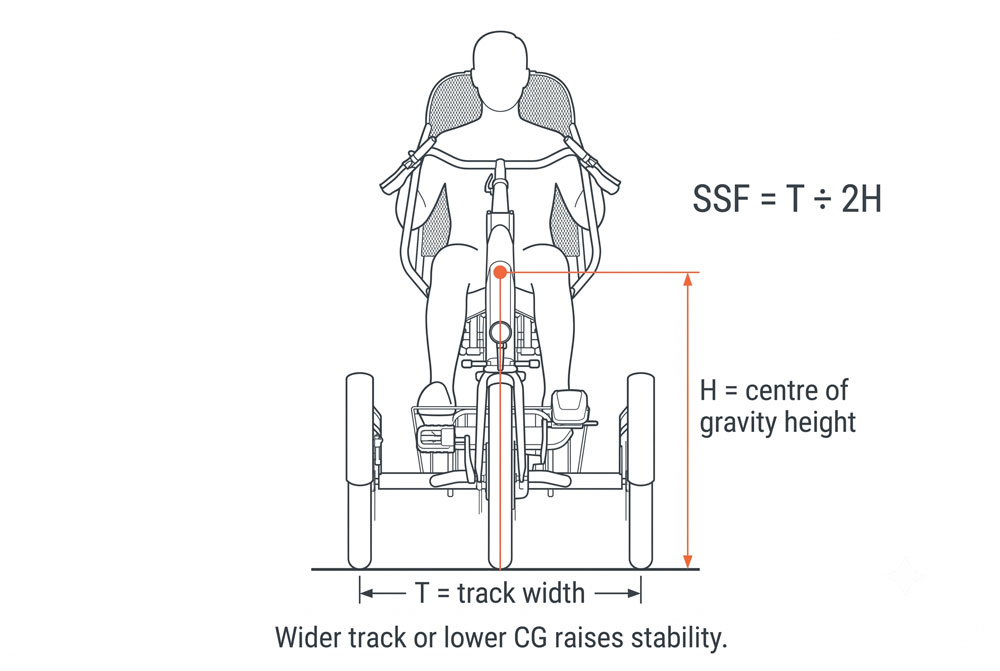
Para contextualizar no mundo automotivo, onde a NHTSA utiliza o SSF (Fator de Estabilidade da Bitola) em suas classificações de capotamento: carros de passeio geralmente ficam entre 1,3 e 1,5, e SUVs mais altos entre 1,0 e 1,3 — e a diferença nas taxas reais de capotamento entre essas faixas é grande. Esse número é determinado por exatamente duas coisas que um projetista controla: aumentar a largura da bitola ou diminuir o centro de gravidade. Ambas aumentam o SSF. Todo o resto na engenharia de estabilidade serve para ajustar essas duas variáveis.
A pesquisa específica sobre triciclos chega à mesma conclusão do ponto de vista do ciclismo. As análises do design de veículos de três rodas convergem para uma regra prática simples: A altura do centro de gravidade deve ser menor que a metade da largura da bitola., e um triciclo convencional não inclinável só consegue atingir a resistência ao capotamento de um veículo de quatro rodas quando o centro de gravidade é baixo e próximo das rodas duplas (Análise de projeto de triciclo, IRJETEste é o núcleo quantitativo de toda a disciplina, e é por isso que uma afirmação de estabilidade que não pode ser expressa em termos geométricos é apenas um enfeite.
Onde o centro de gravidade realmente se encontra — e por que a posição semi-reclinada ajuda.
É aqui que o design de assentos deixa de ser uma decisão de conforto e passa a ser uma decisão de segurança.
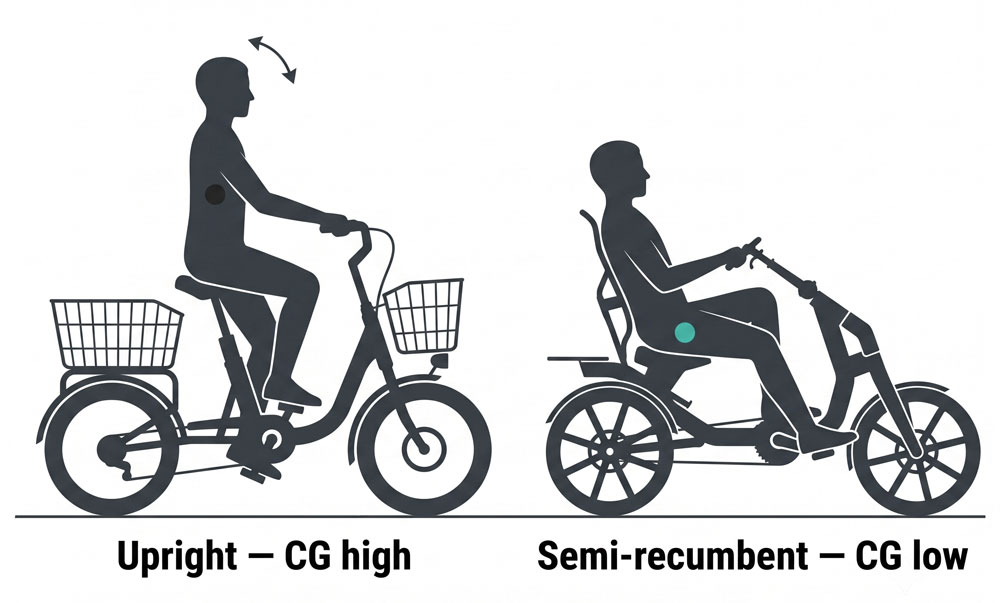
Em um triciclo vertical, o ciclista fica sentado em uma posição elevada e concentra a maior parte da massa. Um assento alto eleva o centro de gravidade combinado, o que reduz o SSF (Sistema de Força de Segurança) e diminui o limite de capotamento para o nível da condução normal — uma curva rápida, uma mudança de inclinação, um desvio. Em um semi-reclinado Na plataforma, o passageiro fica sentado em uma posição baixa e reclinada, colocando essa mesma massa muito mais perto do chão. O passageiro está posicionado em o veículo em vez de sobre É o fator mais eficaz que um projetista pode controlar na altura do centro de gravidade, pois o ciclista é a maior massa móvel do sistema.
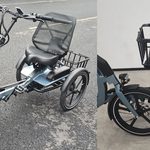
A literatura de engenharia é unânime neste ponto: a posição baixa do assento de um triciclo semi-reclinado bem projetado coloca o centro de gravidade do ciclista onde a resistência ao capotamento é maior (Estudo de projeto de veículo de três rodas em formato de girino, IRJETEste é o argumento de segurança estrutural para o formato, e está subjacente ao argumento do conforto, e não ao lado dele: a mesma geometria reclinada que apoia as costas e elimina a carga nos pulsos também reduz o centro de gravidade que impede o capotamento. Conforto e estabilidade, neste formato, são a mesma decisão de design. UM Vita‘A geometria semi-reclinada de 's existe exatamente com base nesse princípio.
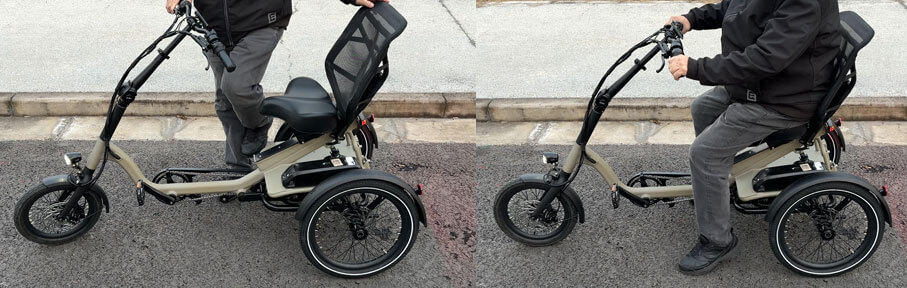
O layout da roda interage com isso. Um girino A configuração — duas rodas na frente e uma atrás — posiciona as rodas estabilizadoras em pares à frente do ciclista e, geralmente, permite fazer curvas com mais segurança, pois a massa do ciclista fica dentro de um triângulo de apoio durante a frenagem e as curvas. delta — uma roda dianteira e duas traseiras — é mais familiar e fácil de se adaptar, mas uma geometria com a roda dianteira voltada para trás e apenas uma para a frente é mais propensa a sobreviragem indesejada em alta velocidade. Nenhuma das duas configurações substitui a importância de se obter a relação ideal entre centro de gravidade e bitola; essa relação é fundamental, e uma boa bitola delta é melhor do que uma bitola tadpole ruim. Mas a configuração é uma variável real e deve ser uma escolha deliberada, não uma herança de qualquer configuração que a fábrica já utilize.
Para uma plataforma sênior de baixa velocidade, a facilidade de acesso proporcionada pelo layout delta é uma vantagem genuína, e sua tendência à sobreviragem é uma característica de alta velocidade que raramente se manifesta nas velocidades atingidas por essa categoria — desde que a relação entre o centro de gravidade e a bitola esteja correta.
A armadilha: frenagem e curva combinadas.
A geometria estática descreve o veículo parado. Os passageiros não estão parados, e o momento perigoso é uma combinação de fatores, não um único estímulo.
A queda que se manifesta em reclamações reais raramente ocorre em uma curva em velocidade constante feita em alta velocidade. O problema está na frenagem. enquanto Fazer uma curva significa chegar a um cruzamento, frear bruscamente no meio da curva, passar por um buraco ou pela borda de uma entrada de garagem. A frenagem desloca a carga para a frente e, em uma curva, esse deslocamento para a frente se combina com a força lateral de inclinação para empurrar o veículo em direção à sua linha de tombamento (dinâmica de veículos de três rodas, JETIRPara um ciclista mais experiente — que tem maior probabilidade de frear tarde, frear bruscamente e frear no lugar errado justamente porque seus reflexos estão mais lentos — isso não é um caso isolado. É terça-feira.
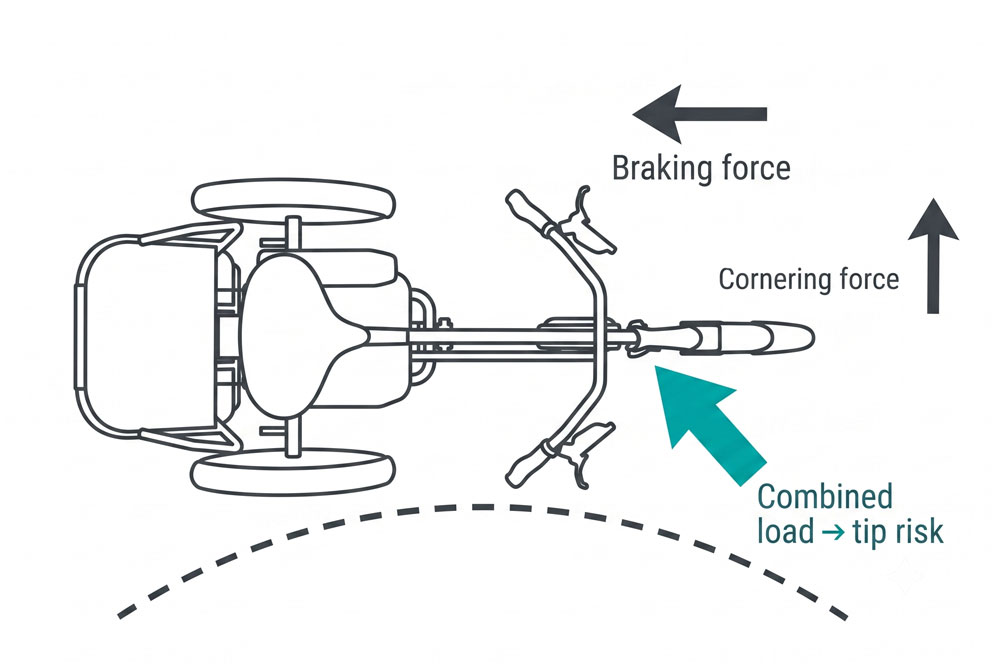
Seguem-se duas respostas de design, e ambas são decisões tomadas a montante:
- Equilíbrio e modulação da frenagem. A frenagem brusca e repentina provoca exatamente a transferência de carga para frente e para os lados que faz um triciclo tombar. A frenagem progressiva e equilibrada — e, em plataformas elétricas mais pesadas, discos hidráulicos em vez de discos mecânicos de qualidade inferior — é um recurso de estabilidade, não um item de luxo. As reclamações sobre os discos mecânicos nos comentários de proprietários nos EUA descrevem essa falha.
- Limitação da velocidade inicial e da assistência. Uma partida suave e com taxa de aceleração controlada — em vez de uma aceleração brusca — mantém o veículo dentro de sua faixa de estabilidade nos dois momentos em que ele é mais vulnerável: ao arrancar e ao manobrar em baixa velocidade. Essa é uma decisão do controlador, tomada no firmware e especificada durante o projeto.
Projetado para o motociclista que não consegue se salvar sozinho
Todo sistema de estabilidade em um carro pressupõe um motorista que reage. Toda decisão de estabilidade em um triciclo para idosos deve pressupor um condutor que não reage — ou não consegue reagir a tempo. Essa é a premissa que diferencia um triciclo projetado para esse mercado de um triciclo de uso geral vendido para o mesmo segmento.
Isso altera o briefing de forma concreta. O veículo precisa ser estável sem necessidade de correção de transferência de peso, pois o piloto não deslocará o peso para dentro de uma curva. Ele precisa tolerar uma velocidade de entrada mal calculada, pois o piloto certamente cometerá um erro de cálculo. Precisa frear de forma previsível mesmo com um comando forte e tardio, pois esse será o tipo de comando que receberá. E precisa fazer tudo isso totalmente carregado — com compras, com um piloto mais pesado, em uma pista inclinada — porque as margens que importam são as que resistem ao uso real, não as medidas com um piloto de teste de 77 kg em terreno plano.
É aqui também que uma plataforma compacta e baixa justifica sua segurança, além de sua praticidade de armazenamento: a geometria rebaixada do UM Chill Mantém o centro de gravidade baixo, que é a mesma alavanca que controla a resistência ao capotamento. A ideia se generaliza para além de qualquer modelo específico — Nessa categoria, a segurança do produto é definida pela geometria e pelo firmware, escolhidos antes da fabricação das ferramentas, e nenhuma estratégia de marketing ou rotulagem posterior poderá reverter essa situação.
O que perguntar a uma fábrica sobre estabilidade?
Se você está buscando fornecedores para este mercado, a conversa sobre estabilidade com um fabricante deve ser específica e desconfortável. Garantias vagas são um sinal de alerta. Perguntas úteis:
Qual é a largura da bitola e qual é a altura estimada do centro de gravidade com um piloto a bordo? O projeto respeita a diretriz de centro de gravidade abaixo da metade da bitola, com carga? Bitola tipo girino ou delta, e por que essa escolha para este caso de uso? Qual é o sistema de freios e como ele se comporta em frenagens e curvas combinadas? Há alguma limitação de velocidade inicial ou taxa de assistência no controlador? A plataforma foi validada quanto à estabilidade em testes com carga, e não apenas por cálculos? E a fábrica pode configurar a bitola, a altura do assento e o comportamento da direção de acordo com o peso do piloto e o terreno, ou a geometria é fixa, conforme o catálogo?
Um fabricante que consegue responder a essas perguntas com números está projetando seu produto para o caso de uso específico. Já aquele que responde com adjetivos está vendendo um triciclo de uso geral e torcendo para que dê certo.
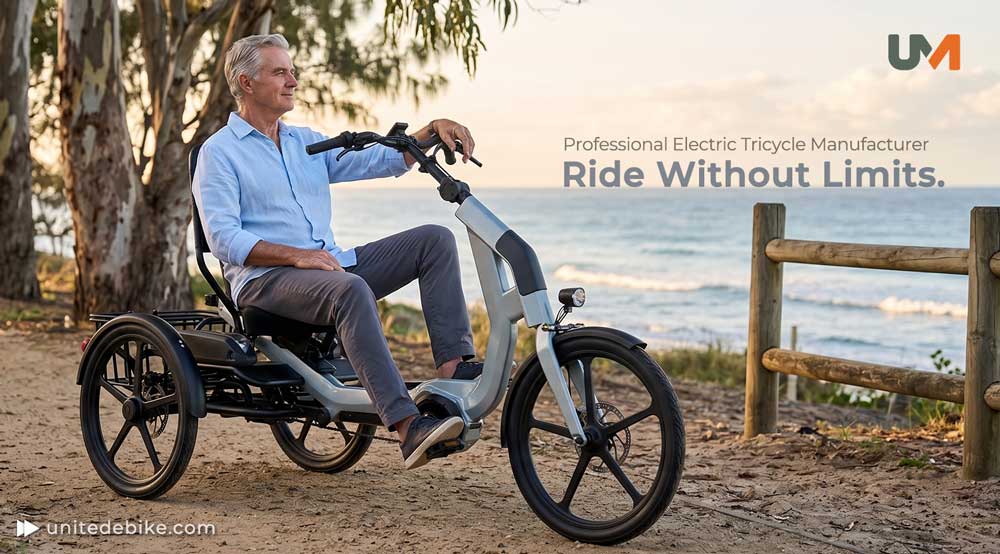
A United Mobility desenvolve suas plataformas semi-reclinadas — as Vita e o Chill — como programas OEM/ODM nos quais a geometria do assento, a bitola, as especificações de frenagem e o comportamento do controlador são definidos de acordo com o perfil do piloto e o terreno pretendidos pelo parceiro, em vez de serem enviados como uma única configuração fixa. Se a estabilidade é fundamental para o seu mercado — e para um produto de alta gama, é a proposta principal — Fale com nossa equipe de engenharia. sobre como especificá-lo corretamente. Para entender como isso se encaixa no contexto mais amplo das normas de entrada nos EUA, consulte o Mapa do mercado dos EUA, o requisitos de certificação, e Quem é, de fato, o comprador americano?.
Perguntas frequentes
Por que os triciclos elétricos tombam?
Porque uma base rígida de três rodas assume o modo de falha de capotamento de um carro: em uma curva, a força lateral atuando através de um centro de gravidade alto pode levantar a roda interna. Isso é regido pela geometria — largura da bitola versus altura do centro de gravidade — e é mais provável quando a frenagem e a curva se combinam, que é exatamente a situação que um motociclista idoso tem maior probabilidade de criar.
O que torna um triciclo elétrico mais estável do que outro?
Principalmente, a relação entre a largura da bitola e a altura do centro de gravidade, expressa em engenharia automotiva como o Fator de Estabilidade Estática (T/2H). Uma bitola mais larga e um centro de gravidade mais baixo aumentam esse fator. A altura do assento é extremamente importante, pois o piloto é a maior massa móvel; um assento baixo e reclinado diminui o centro de gravidade e aumenta a estabilidade.
Triciclos semi-reclinados são mais estáveis do que os triciclos convencionais?
Estruturalmente, a posição baixa do piloto coloca sua massa mais próxima do solo, o que reduz o centro de gravidade combinado e melhora a resistência a capotamentos. Esse é o argumento de segurança subjacente ao argumento do conforto para esse formato. O layout das rodas e a largura da bitola ainda são importantes e devem ser projetados corretamente, independentemente disso.
Qual triciclo, tadpole ou delta, é mais seguro?
As configurações tadpole (duas rodas na frente) geralmente fazem curvas com mais estabilidade e posicionam a massa do piloto dentro de um triângulo de apoio durante a frenagem. As configurações delta (duas rodas na traseira) são mais fáceis de adotar, mas mais propensas a sobrevirar em alta velocidade. Nenhuma delas supera a relação centro de gravidade/bitola, que é o fator dominante — uma configuração delta bem projetada supera uma configuração tadpole mal projetada.
O que devemos perguntar a um fabricante sobre estabilidade?
Solicite informações numéricas: largura da via, altura estimada do centro de gravidade sob carga, se o projeto mantém o centro de gravidade abaixo da metade da via quando carregado, o comportamento do sistema de frenagem em situações combinadas de frenagem e curva, se o controlador limita a velocidade inicial e se a estabilidade foi validada por testes sob carga, em vez de apenas por cálculos.
 Portuguese
  English
  German
  Dutch
Dutch  Danish
  French
  Polish
  Spanish