

A maioria dos compradores de bicicletas de carga avalia 4 pontos de contato em um veículo com mais de 800 componentes — e é por isso que as taxas de falha das frotas no primeiro ano atingem rotineiramente 30%.
Se você estiver buscando fornecedores Fabricante OEM de bicicletas de carga Para o mercado europeu, este é o artigo que ninguém na cadeia de suprimentos quer que você leia. Porque, uma vez que você entenda como é uma avaliação de qualidade real, o teste de condução em feiras comerciais se torna o que realmente é: uma verificação de encaixe, não uma auditoria de engenharia.
Passamos 17 anos fabricando bicicletas de carga para marcas europeias. Este guia é a estrutura que usamos internamente — e a que seus compradores devem usar conosco.
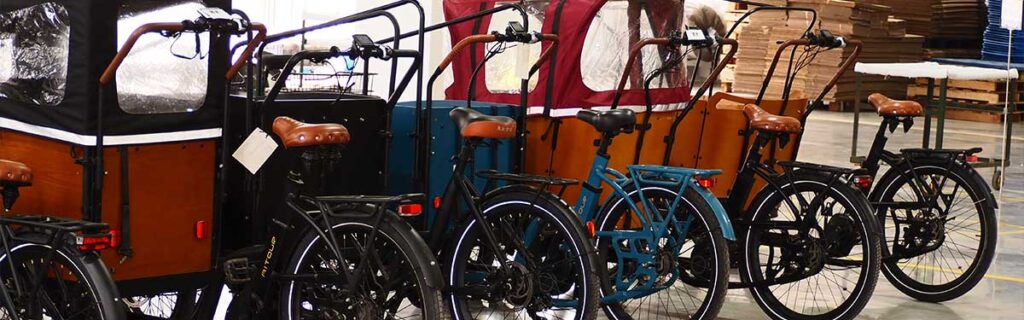
A ilusão do fornecimento de bicicletas de carga
Visite qualquer grande feira de bicicletas — Eurobike, Taipei Cycle, Feira de Cantão. Você verá a mesma cena se repetir milhares de vezes: um comprador senta no selim, aperta os freios uma vez, balança o guidão, acena com a cabeça e diz "parece sólida".“
Eis a verdade incômoda: essa avaliação mexeu com... quatro pontos sensoriais — mãos, olhos, assento, dedos — em um produto com mais de 800 componentes individuais. Isso não te diz praticamente nada que importe para os próximos 5 anos.
O que não pode lhe dizer:
- Verificar se a profundidade de penetração da solda da estrutura atende aos requisitos de ciclos de fadiga sob carga útil superior a 200 kg.
- Se a bateria usa células Samsung/LG com um BMS devidamente configurado — ou células genéricas com monitoramento apenas no nível do pacote.
- Se o controlador do motor possui parâmetros de corte térmico que resistem a uma tarde quente no Mediterrâneo sob carga.
- Não sei se os conectores possuem realmente classificação IP65 para resistência ao sal e à chuva do inverno europeu.
- Se as soldas foram devidamente tratadas termicamente para restaurar a resistência do aço 6061-T6 após a zona afetada pelo calor ter sido comprometida.
Essas são as variáveis que realmente determinam sua taxa de garantia, sua exposição à responsabilidade e se seu segundo pedido de uma fábrica será lucrativo.
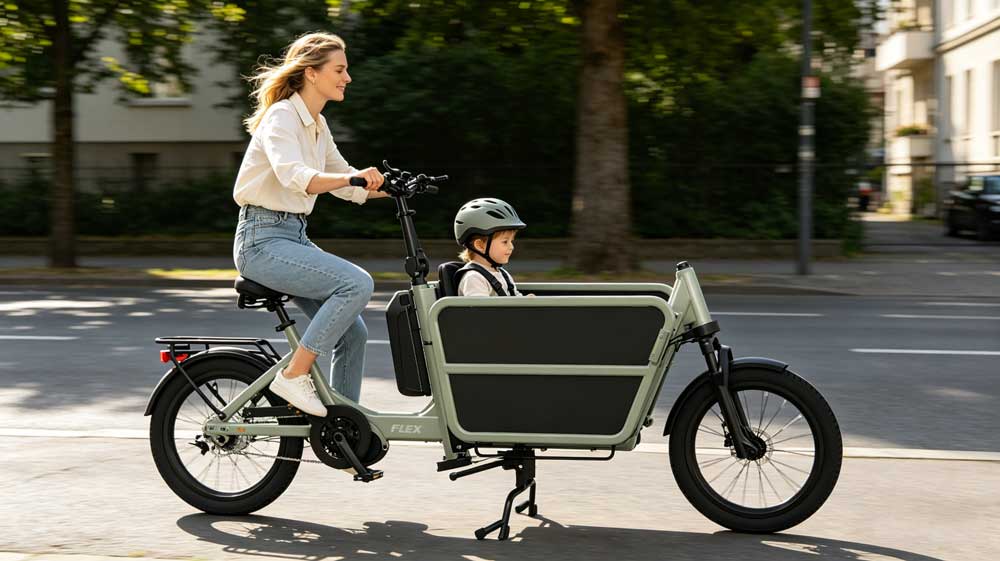
Por que os test drives não revelam o que você pensa?
Os test drives são úteis — para um propósito específico: avaliação de ajuste ergonômico. Eles informam se a geometria é adequada para o ciclista alvo, se a altura do quadro é compatível com o seu mercado e se a assistência parece natural.
Eles não te contam nada sobre:
- Durabilidade da estrutura: Verificado somente através de mais de 100.000 ciclos de teste de fadiga sob tensão, de acordo com os protocolos ISO 4210-6 e EN 17860.
- Vida útil da bateria (ciclos de bateria): mensurável apenas após 500 a 2.000 ciclos de carga
- Desempenho térmico: visível apenas em condições de subida com carga máxima sustentada.
- Integridade de propriedade intelectual no mundo real: Validado por meio de testes controlados de pulverização de água e câmara de poeira, não pela análise de um conector.
O comprador que fez um teste de 30 minutos e concluiu que entendeu o produto é o tipo de comprador mais perigoso: confiante o suficiente para se comprometer, mas desinformado o suficiente para perder dinheiro.
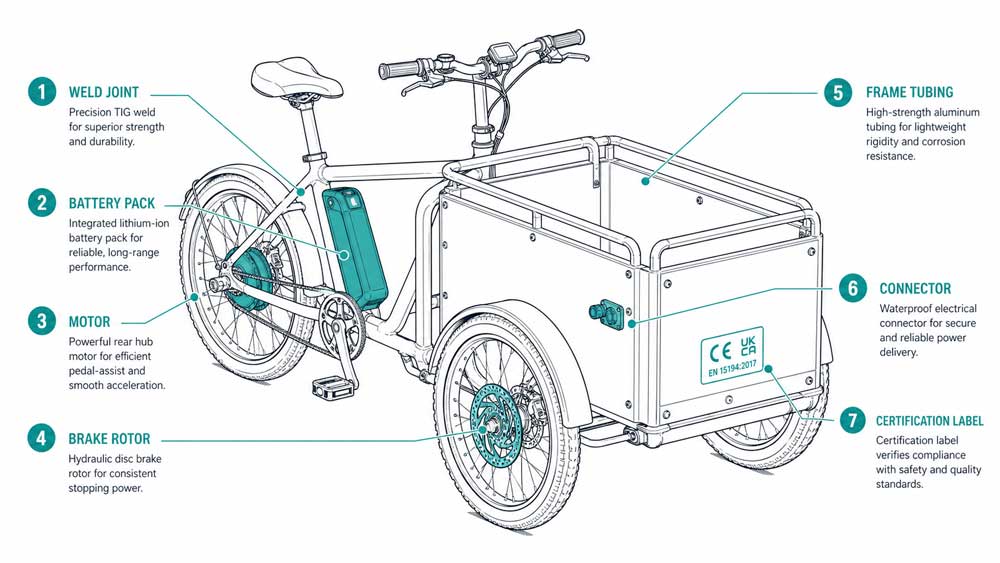
As 7 especificações de engenharia que realmente preveem o ciclo de vida de uma bicicleta de carga.
Essas são as especificações que usamos quando nossa equipe de engenharia avalia um projeto. São também as especificações que você deve solicitar a qualquer fabricante de bicicletas de carga que esteja considerando.
1. Material da estrutura e método de soldagem
- Alumínio 6061-T6 é o padrão da indústria para estruturas de carga comerciais. Após a soldagem, a zona afetada pelo calor perde até 40% de sua resistência original, a menos que seja tratada termicamente de forma adequada.
- Soldagem TIG Em junções de alta tensão (tubo da caixa de direção, suporte do motor, gancheiras) — a soldagem MIG é aceitável apenas para juntas menos críticas.
- Exija fotos da seção transversal da solda e registros de dureza Brinell nas áreas pós-tratamento.
2. Fonte de Células de Bateria e Arquitetura do BMS
- Células de nível 1 As baterias (Samsung SDI, LG Chem, Panasonic) custam de 15 a 22% a mais do que as genéricas, mas oferecem mais de 1.000 ciclos de carga completos, contra 500 ciclos das baterias baratas — uma diferença de duas vezes na vida útil.
- BMS de balanceamento em nível celular Com protocolo CAN bus ou UART, não monitoramento em nível de pacote.
- EN 50604-1:2016 + A1:2021 conformidade para o pacote de baterias
- Classificação mínima IP65 na caixa da embalagem
Leitura recomendada: Estratégia para sistemas de baterias de bicicletas de carga nos mercados da UE: especificações, vida útil, arquitetura e conformidade.
3. Sistema do motor e gerenciamento térmico
- Para cargas úteis acima de 100 kg ou rotas com inclinações acima de 6%, um 250 W nominais / 90 Nm de torque máximo A posição central do motor é o mínimo realista.
- Verifique os parâmetros de corte térmico e solicite a versão do firmware do controlador.
- A subespecificação aqui significa substituições da transmissão a cada 14 meses em vez de 36.
4. Sistema de Frenagem
- Freios a disco hidráulicos com rotores de no mínimo 180 mm. são inegociáveis acima de 60 kg de capacidade de carga
- Sistemas acionados por cabo falham consistentemente em inspeções de ciclo de trabalho comercial.
- Verifique o desempenho de atenuação com parada contínua, não a sensação de parada única.
5. Conformidade com a norma EN 17860 (e não apenas com a EN 15194)
Esta é a especificação que a maioria dos compradores ainda erra em 2026 — mais detalhes abaixo.
Leitura recomendada: Conformidade das normas da UE para bicicletas de carga – Guia completo para importadores
6. Integridade dos Conectores e da Fiação
- Classificação IP65 mínima em todos os conectores externos.
- Alívio de tensão em todos os pontos de saída do arnês
- Chicote de cabos testado quanto à vibração — a norma EN 17860-5 especifica mais de 600 choques mecânicos de acordo com a norma IEC 60068-2-27.
7. Rastreamento da Documentação de Controle de Qualidade
- Lista de materiais com números de peça do fabricante (consulte diretamente Bosch, Bafang, Shimano, Samsung SDI)
- Registros recentes da taxa de rejeição do controle de qualidade
- Relatórios de testes de terceiros de laboratórios acreditados (TÜV, SGS, ACT Lab, Intertek)
Já está avaliando fornecedores de bicicletas de carga? Solicite nossa ficha técnica completa de engenharia B2B. — Enviaremos a mesma lista de verificação que nossos engenheiros de controle de qualidade usam em todas as linhas de produção.
EN 17860: O verdadeiro padrão de conformidade para o mercado da UE
Até 2024, os fabricantes de bicicletas de carga que exportavam para a UE seguiam por padrão a norma EN 15194 — uma norma concebida para bicicletas elétricas urbanas e de trekking. nunca foi projetado para veículos que transportam de 200 a 650 kg de carga ou passageiros.. O recall de 2024 da Babboe devido a rachaduras no quadro — mais de 22.000 bicicletas — expôs publicamente essa falha.
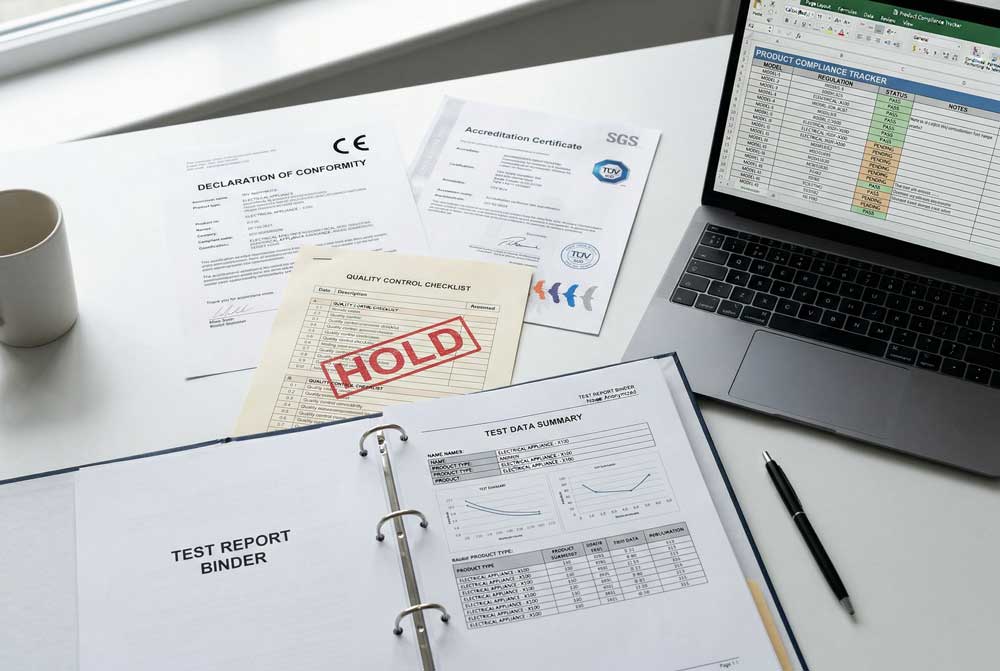
EN 17860, ratificada pelo CEN/TC 333/WG 9 em julho de 2024., é o novo padrão em toda a UE, desenvolvido especificamente para ciclos de entrega. Informações essenciais que todo comprador B2B precisa saber:
- Abrange bicicletas de carga de uma única esteira (até 300 kg), bicicletas de carga de múltiplas esteiras (até 300 kg), bicicletas de carga pesadas (até 650 kg) e reboques elétricos.
- Bicicletas de uso comercial requerem 200.000 ciclos de fadiga por força de pedalada dinâmica. — o dobro dos 100.000 ciclos exigidos para uso privado
- Teste de estabilidade em múltiplas pistas: a bicicleta não deve rolar em uma rampa 16%, vazia ou totalmente carregada.
- Teste de estabilidade em pista única: deve permanecer em pé sem auxílio em uma inclinação lateral de 4,6°
- Os aspectos elétricos (Parte 5) fazem referência à norma EN 50604-1 para baterias e aplicam-se a sistemas SELV até 60 Vdc.
- As partes 1, 2 e 3 foram aprovadas; as partes 4 a 7 estão em processo de aprovação pelo CEN, com previsão de conclusão entre 2025 e 2026.
Tradução para compradores: “A certificação ”EN 15194” já não é suficiente para bicicletas de carga vendidas na UE.. Qualquer fábrica que ainda considere a norma EN 15194 como a principal para a fabricação de bicicletas de carga está ou desinformada ou espera que você esteja.
O programa completo de certificação mecânica para as Partes 1 e 2 da norma EN 17860 normalmente custa entre £20.000 e £40.000 apenas em taxas de laboratório, e uma certificação completa de uma nova plataforma com testes elétricos chega a custar entre £80.000 e £180.000. Os fabricantes que levam a sério o mercado europeu absorvem esse custo — aqueles que economizam em etapas transferem o risco regulatório para você, o importador.
Lista de verificação para compradores B2B
Antes de assinar qualquer contrato com um fabricante de bicicletas de carga, solicite e verifique:
- ✅ Lista de materiais detalhada com números de peça do fabricante para motor, bateria, controlador, freios e transmissão.
- ✅ Relatórios de ensaio recentes EN 17860 e EN 15194 de um laboratório acreditado
- ✅ Certificado de bateria EN 50604-1:2016 + A1:2021
- ✅ Fotos da seção transversal da solda no tubo da direção, suporte do motor e junta de carga principal
- ✅ Documentação do processo de tratamento térmico para estruturas de alumínio 6061-T6
- ✅ Registros da taxa de rejeição do controle de qualidade dos últimos 6 meses
- ✅ Certificados de teste de classificação IP para conectores e bateria
- ✅ Unidade de amostra para inspeção independente por terceiros antes da produção em massa
Se uma fábrica hesitar em relação a qualquer um desses pontos, essa é a sua resposta.
Por que a United Mobility incorpora transparência de engenharia em cada bicicleta de carga?
Fabricamos bicicletas de carga para marcas, distribuidores e operadores de frotas europeus. mais de 16 anos A partir de nossa sede integrada de P&D e produção em Wuxi, China. Nossa plataforma de bicicletas de carga foi projetada para atender aos seguintes requisitos: Certificações EN 15194, EN 17860, CE, TÜV e E-mark — Construído desde o primeiro dia, não adicionado posteriormente.
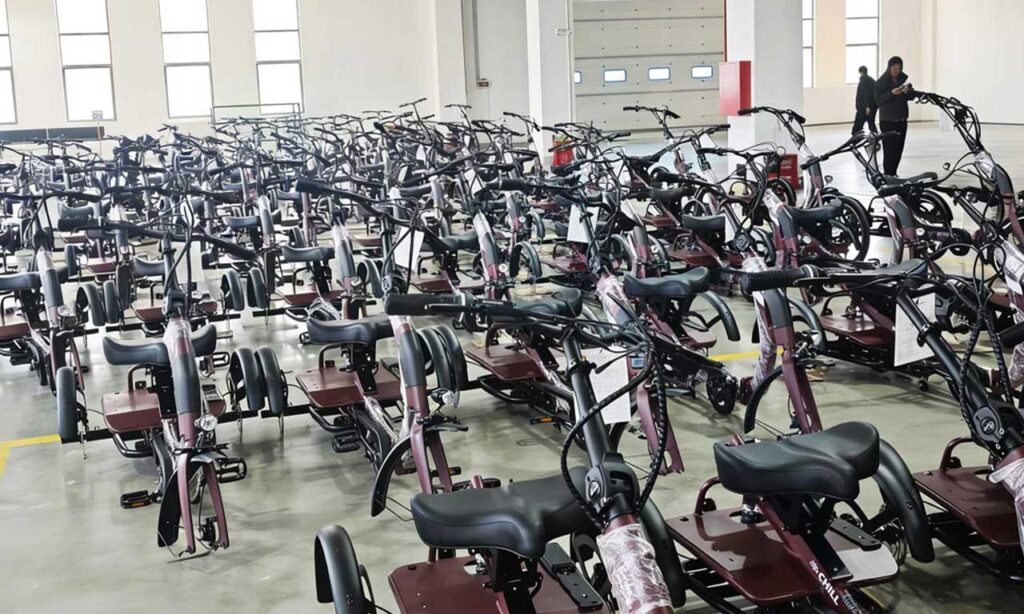
Como isso se traduz na prática:
- 8 plataformas de bicicletas de carga prontas para produção Incluindo configurações de carregamento frontal, cauda longa, long john e triciclo — cargas úteis de até 300 kg
- Serviços OEM e ODM com total transparência da lista de materiais e rastreabilidade ao nível dos componentes.
- Garantia de 2 a 8 anos em componentes principais (motores, baterias) com o respaldo de controles de produção ISO 9001
- Prazo de entrega do fabricante original (OEM) de 5 a 8 semanas Prazo de entrega ODM de 8 a 12 semanas com unidades de amostra antes da produção em massa.
- Equipe de engenharia que cria arquivos técnicos em conjunto com a produção. — para que sua documentação de conformidade com a marcação CE esteja pronta quando o contêiner for enviado.
Para as marcas europeias que estão construindo linhas de produtos de bicicletas de carga de alta qualidade — e não apenas rebatizando o que uma fábrica lhes entrega — essa é a diferença entre um segundo pedido lucrativo e um recall.
Pronto para construir uma linha de bicicletas de carga que passe pelo rigoroso escrutínio das normas da UE? Obtenha um orçamento personalizado de OEM/ODM em 24 horas →
Conclusão: A transparência na engenharia é o novo padrão nas feiras de negócios.
O mercado de bicicletas de carga está migrando da norma $1.05B (2024) para a $1.60B (2029) somente na Europa. Com o aumento do volume, o rigor regulatório também cresce — a norma EN 17860 é apenas o começo. As marcas que se destacarão nos próximos cinco anos não serão aquelas com os estandes mais bonitos em feiras comerciais. Serão aquelas cujas fábricas puderem comprovar a qualidade de cada solda, cada célula, cada conector.
Você pode continuar avaliando bicicletas de carga sentando no selim e apertando os freios. Ou pode avaliá-las da maneira como os engenheiros que realmente as constroem fazem.
Sabemos qual escolha o departamento de garantia espera que você faça.
 Portuguese
  English
  German
  Dutch
Dutch  Danish
  French
  Polish
  Spanish