
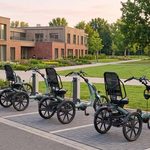
O Triciclo elétrico para idosos na Bélgica é comprado e reembolsado no mesmo balcão — e esse simples fato organiza todo o mercado. A Flandres administra o sistema de financiamento mais incomum da Europa para bicicletas adaptadas: o Vlaamse sociale bescherming paga um valor fixo para um triciclo com Nenhuma restrição de idade., Mas apenas por meio de fornecedores credenciados, somente para produtos em uma lista oficial atualizada mensalmente e com qualquer valor acima do preço fixo pago explicitamente pelo cliente. Reembolso e venda a varejo premium não são dois canais separados. Trata-se de uma única transação, dividida em uma fatura. Para um distribuidor ou marca, isso muda o local da batalha: não em um ministério, não em uma guerra de lances — mas sim no chão de fábrica do fornecedor. Este artigo mapeia o mecanismo, região por região, e o que isso significa para a entrada no mercado. É um capítulo do nosso Mapa do panorama dos triciclos elétricos para idosos em cinco mercados na Europa., ao lado do Holanda, Alemanha, Reino Unido e Dinamarca.
As três conclusões iniciais:
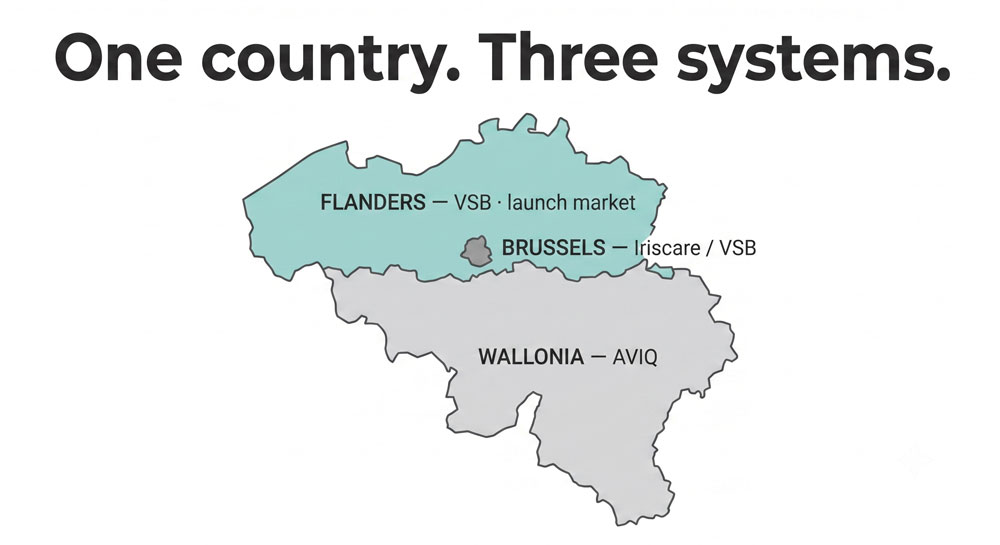
- A Bélgica são três mercados sob uma só bandeira. Flandres (VSB), Bruxelas (Iriscare ou VSB, à escolha do residente), Valônia (AVIQ) — financiadores diferentes, regras diferentes, idiomas diferentes. Flandres é o centro comercial de gravidade e a única primeira opção sensata.
- O portão é o verstrekker e a lista. Os cidadãos não escolhem o tipo de produto; o fornecedor credenciado propõe um, da lista oficial de produtos, mediante prescrição médica. Conseguir a aprovação do fornecedor e a inclusão na lista significa conquistar a distribuição e a legitimidade de uma só vez.
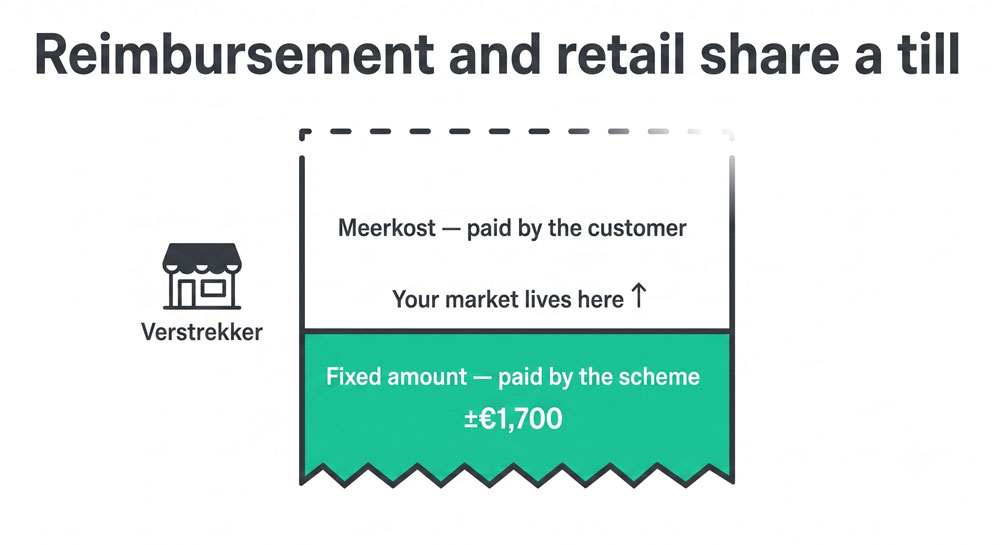
- O reforço financeiro está institucionalizado — e essa é a oportunidade. O VSB paga uma quantia fixa; o meerkost Legalmente, e abertamente, é responsabilidade do cliente pagar por um modelo melhor. A Bélgica incorporou a venda de itens premium ao seu sistema de bem-estar social. Uma bicicleta semi-reclinada com preço acessível preenche exatamente essa lacuna.
É possível obter reembolso por um triciclo na Bélgica? Sim — e a idade não é um fator limitante.
Comecemos pelo fato que surpreende a todos que conhecem os mercados vizinhos. Na Flandres, os auxílios de mobilidade — andadores, cadeiras de rodas, scooters de mobilidade e, explicitamente, drie- en vierwielfietsen e zitdriewielfietsen (Bicicletas de três e quatro rodas e triciclos com assento) — são financiadas pelo Vlaamse sociale bescherming, o sistema de proteção social flamengo. A elegibilidade depende de um prescrição médica — uma prescrição médica que documenta uma limitação permanente de mobilidade decorrente de doença crônica ou deficiência ou velhice — mais a filiação a uma zorgkas. A idade explicitamente não é uma condição., um ponto que o conselho de idosos flamengos deixa bem claro: “Leeftijd is geen voorwaarde.”
Compare isso com todo o resto desta série. Os Países Baixos estão a restringir os subsídios da OMM (Organização Médica Mundial); a Alemanha financia de forma consistente apenas crianças; os cidadãos dinamarqueses estão a optar por scooters de mobilidade. Só a Flandres tem um sistema em que uma pessoa de 80 anos com uma limitação de equilíbrio documentada tem um caminho definido, independente da idade, para obter um triciclo financiado — incluindo o modelo com assento. Em teoria, este é o ambiente de reembolso mais favorável da Europa.
Então leia as letras miúdas, porque as letras miúdas representam o mercado.
Como o sistema realmente funciona: o verstrekker, a lista e o meerkost
Na Flandres, três mecânicos decidem quem vende o quê para quem:
O cidadão não escolhe o produto — o vendedor ambulante o propõe. Os aplicativos são executados por meio de um erkende verstrekker, um prestador de auxílios de mobilidade credenciado, que seleciona o tipo com base na prescrição e a envia para a zorgkas. A fatura é emitida para a zorgkas, não para o cliente. Em outras palavras: O prestador de serviços é, ao mesmo tempo, um profissional que atua como prescritor, varejista e intermediário. Para uma marca, a rede verstrekker é o canal; não há como contorná-lo dentro do segmento financiado.
Só existem os produtos listados. Todos os dispositivos financiáveis estão localizados no site oficial. produtoenlijst mobiliteitshulpmiddelen — uma lista atualizada mensalmente após revisão pela comissão consultiva, com o valor reembolsado e qualquer suplemento ao cliente impressos por produto. Um produto que não consta na lista é, para o mercado financiado, invisível. Esta é a versão belga do sistema de registro alemão — mas mais simples: as entradas são adicionadas mensalmente, não disputadas por anos, e o triciclo com assento (zitdriewielfiets) já é uma categoria nomeada no próprio vocabulário do sistema. O formato abordado em toda esta série já está pré-legitimado na Flandres pela própria taxonomia de reembolso.
A recarga é legal, normal e está impressa na lista. O VSB paga um valor fixo por categoria — para uma bicicleta padrão de três ou quatro rodas, cerca de 1.700 euros (verifique o valor atual em...). Lista de produtos de abril de 2026) — e se o cliente quiser um modelo mais avançado do que o estritamente exigido pela prescrição, ele poderá obtê-lo e pagar o meerkost por conta própria. Os triciclos premium com assentos, de fornecedores europeus consolidados, custam muito mais do que o valor fixo, o que significa que o sistema gera, todos os dias, clientes em pé num balcão com um voucher de cerca de € 1.700 na mão e olhando para uma etiqueta de preço de mais de € 7.000. A questão comercial do mercado belga é o que você oferece a esse cliente. Hoje a resposta é: existe uma diferença muito pequena entre o modelo básico de qualidade municipal e o importado premium. Essa diferença é a porta de entrada.
Duas notas importantes que um distribuidor deve conhecer. Primeiro, VAPH — a agência flamenga para pessoas com deficiência — deixou de lidar com esses auxílios básicos de mobilidade em 2019 e dá Não há suporte para ciclomotores nem assistência motorizada em bicicletas.; A disponibilidade de assistência elétrica para um determinado modelo de triciclo é uma questão específica para cada produto na lista da VSB, portanto, verifique a lista antes de elaborar uma proposta para um canal financiado com foco em um motor. Em segundo lugar, a geografia: Os residentes de Bruxelas têm de escolher entre a Iriscare e a VSB. (A Iriscare aplica uma regra de início antes dos 65 anos a partes do seu programa), e a Valônia tem sua própria agência, a AVIQ. Considere a Flandres como o mercado de lançamento; considere as outras duas regiões como projetos separados e posteriores, com sua própria documentação e idioma — o material em francês não é uma tarefa de tradução, mas sim uma tarefa de entrada no mercado.
Do lado da procura: Flandres é uma região ciclística com um toque belga.
Ciclos de Flandres. Construiu uma rede de fietsostrades — ciclovias de longa distância que ligam cidades a vilas — e o uso da bicicleta para ir ao trabalho é subsidiado pelo empregador. fietsvergoeding subsídio por quilômetro, com a empresa aluguel de bicicletas agora um benefício trabalhista comum. Para essa categoria, isso importa duplamente. Significa que o comprador de 60 a 67 anos, ainda empregado enquanto a idade de aposentadoria na Bélgica aumenta, pode adquirir um triciclo elétrico por meio de um leasing vinculado ao salário, sem qualquer sistema de reembolso. E significa que o contexto cultural é semelhante ao holandês: andar de bicicleta como meio de transporte normal para adultos, não como esporte — daí o posicionamento desmedicalizado que carrega o mercado holandês Isso também se aplica à Flandres, com uma pequena ressalva. A linguagem pública flamenga sobre deficiência coloca a pessoa em primeiro lugar — pessoa com deficiência, Está escrito no próprio nome da VAPH — e o marketing aqui deveria refletir isso: destacar o passeio, a trilha, a feira de sábado de manhã; nunca o que um ciclista perdeu.
Em termos de produto, o briefing flamengo é semelhante ao do capítulo holandês — dimensões compactas para armazenamento em terraços, estabilidade projetada para o momento da montagem — com a adição que faz a diferença no balcão do verstrekker: documentação. O fornecedor que propõe um produto para uma zorgka precisa de especificações que possa defender — altura do assento, espaço livre para entrar, ângulo de embarque, capacidade de carga. Uma plataforma semi-reclinada como a UM Vita, cuja entrada com degrau para sentar é mensurável em vez de meramente declarada, oferece ao usuário exatamente o arquivo que ele precisa; uma construção compacta e fácil de transportar como o UM Chill responde à realidade do armazenamento e do pátio nas habitações urbanas flamengas. Ambas as plataformas estão inseridas no nosso espaço total. gama de triciclos elétricos, configurável por mercado.
Estratégia de canal: ganhar o contra-ataque e depois ampliá-lo.
A sequência se define a partir da mecânica:
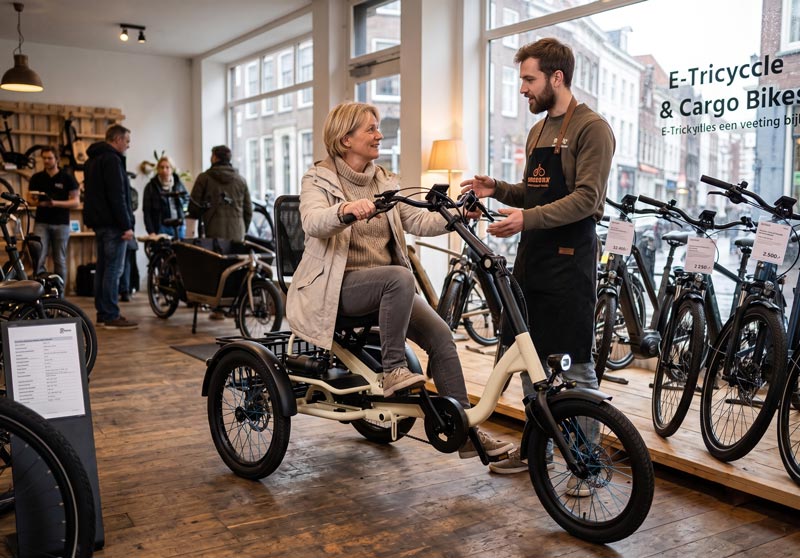
- O primeiro nível do verstrekker. Algumas dezenas de fornecedores credenciados concentram o mercado financiado. A proposta não é "estocamos nosso triciclo" — é "aqui está a opção de preço médio e documentada para o cliente que possui o valor fixo e não quer pagar um preço exorbitante de importação". Você está resolvendo o problema diário de preços do fornecedor, não pedindo espaço nas prateleiras.
- O productenlijst em paralelo. Os ciclos de atualização mensais fazem com que a inclusão na lista seja um projeto que leva meses, não anos. Até que a listagem seja concluída, o mesmo produto é vendido para o mesmo público-alvo por meio de lojas de bicicletas comuns, como uma compra direta pelo consumidor — Flanders tem a densidade de lojas de bicicletas necessária para disponibilizá-lo.
- O canal de leasing e varejo como segundo motor. O leasing de bicicletas para empregadores e o fietsvergoeding atingem a metade mais jovem e ainda ativa da população, completamente fora do sistema de saúde — o segmento que nunca verá um verstrekker e nunca quer ver.
Encontrando um triciclo elétrico para idosos na Bélgica: construção para divisão de faturas
O projeto segue os princípios do nosso Guia de soluções para triciclos elétricos para idosos — Geometria de embarque documentada, engenharia de estabilidade, ergonomia com foco na terceira idade.
Na Flandres, tudo converge para um único objetivo de design: um produto projetado para ser proponível — Documentação de especificações para o arquivo do vendedor, com preço intermediário entre o reembolso fixo e as importações premium, estilo para ser escolhido em vez de atribuído e configurado para a região (documentação em holandês e francês, conformidade com a norma EN 15194, planta compacta para habitação flamenga).
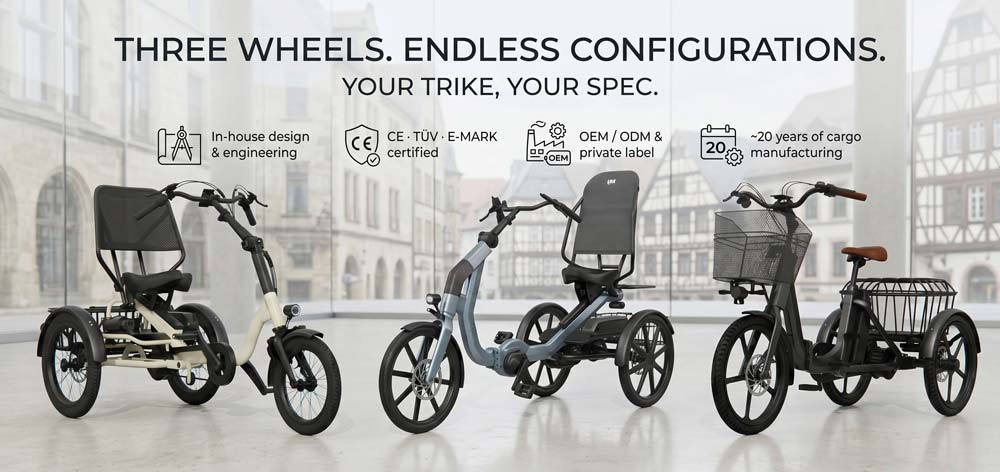
Isso é trabalho de ODM, e é o trabalho. Mobilidade Unida Sim. Nossas plataformas semirreclinadas Vita e Chill são desenvolvidas como produtos de acessibilidade documentados — geometria de embarque mensurável, engenharia de estabilidade, arquivos de conformidade completos — e configuradas para cada mercado: versões com especificações belgas, pacotes de documentação bilíngue e preços competitivos, visando precisamente a lacuna de acessibilidade descrita neste artigo. Se a Flandres está em seus planos como distribuidor, grupo de expansão ou rede varejista, Informe nossa equipe de engenharia no seu plano de canais — e traga o nosso lista de verificação de avaliação do fabricante quando você compara fábricas.
Perguntas frequentes
É possível obter reembolso por um triciclo elétrico na Bélgica?
Na Flandres, sim — bicicletas de três e quatro rodas e triciclos com assento são considerados auxílios de mobilidade pelo Vlaamse sociale bescherming, financiados com um valor fixo mediante receita médica, sem restrição de idade. A solicitação é feita por meio de um prestador credenciado (erkende verstrekker), o produto deve constar na lista oficial de produtos (productenlijst) e qualquer custo acima do valor fixo é pago pelo cliente. Bruxelas e Valônia possuem sistemas separados (Iriscare e AVIQ).
O que é um verstrekker?
Um prestador de serviços de auxílio à mobilidade credenciado — a única via de acesso ao mercado financiado. O prestador propõe um tipo de produto com base na prescrição médica, submete o pedido à farmácia do cliente e emite a fatura diretamente ao plano de saúde. Para as marcas, a rede de prestadores credenciados funciona simultaneamente como ponto de avaliação, canal de vendas e porta de entrada.
Quanto o Vlaamse sociale bescherming paga por um triciclo?
Um valor fixo por categoria de produto, impresso na lista de produtos atualizada mensalmente — para uma bicicleta padrão de três ou quatro rodas, em torno de € 1.700 (verifique a lista atual para o valor exato e para saber como a assistência elétrica é tratada em cada modelo). É permitido desejar um modelo melhor do que o prescrito; a diferença (meerkost) é paga pelo cliente.
O aniversário de 65 anos é um limite para receber apoio na Bélgica?
Não se aplica a dispositivos de mobilidade flamengos — o VSB não impõe explicitamente qualquer restrição de idade. A regra dos 65 anos aplica-se ao reconhecimento de deficiência pelo VAPH (que desde 2019 abrange adaptações e bicicletas especiais que vão além da mobilidade básica, como triciclos com pedais manuais e adaptações para bicicletas) e a partes do programa Iriscare de Bruxelas.
Somos um distribuidor — qual é a aparência de uma embalagem de produto adequada para a Bélgica?
Especificações documentadas de embarque e estabilidade que um veículo de reboque pode apresentar, conformidade com a norma EN 15194, documentação em holandês e francês, um design compacto para habitações urbanas flamengas e um preço calculado para preencher a lacuna entre o reembolso fixo e as importações premium. A United Mobility configura as suas plataformas semi-reclinadas Vita e Chill exatamente de acordo com estas especificações através do seu programa ODM.
 Portuguese
  English
  German
  Dutch
Dutch  Danish
  French
  Polish
  Spanish