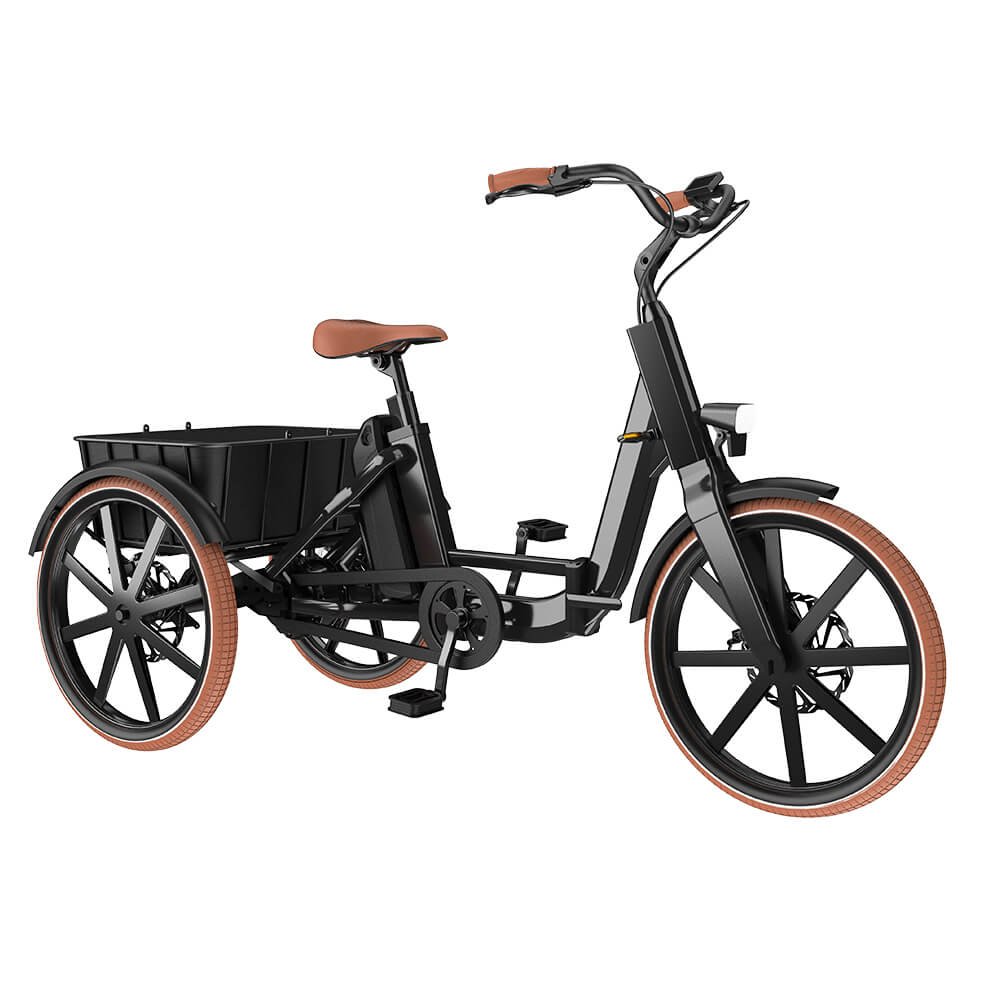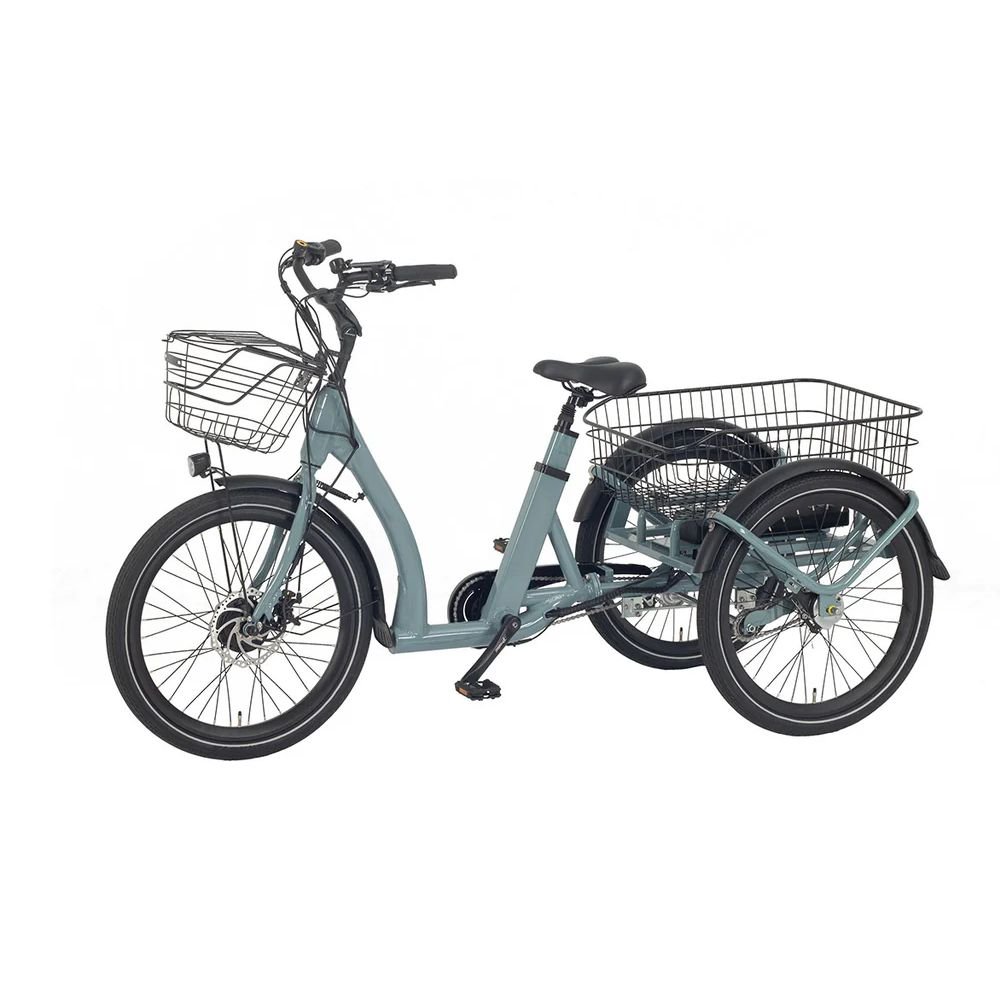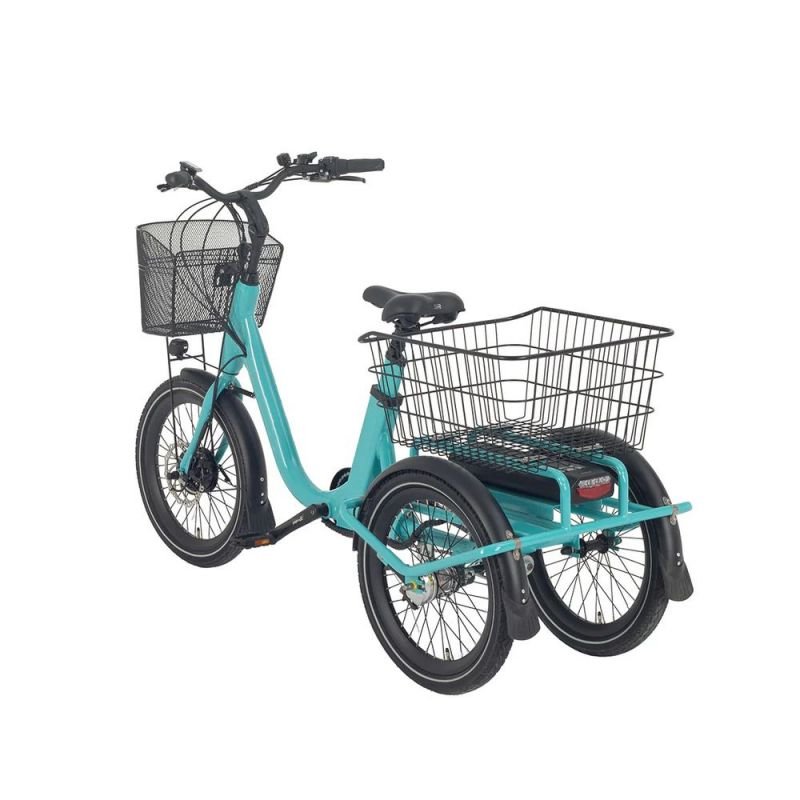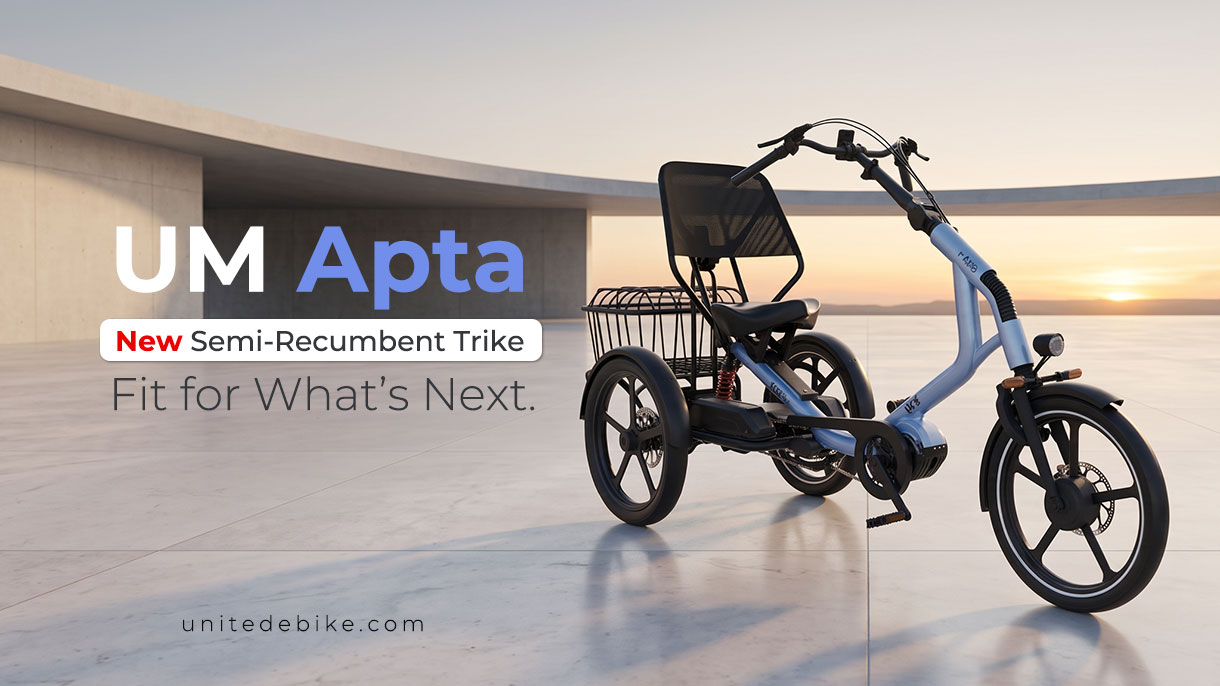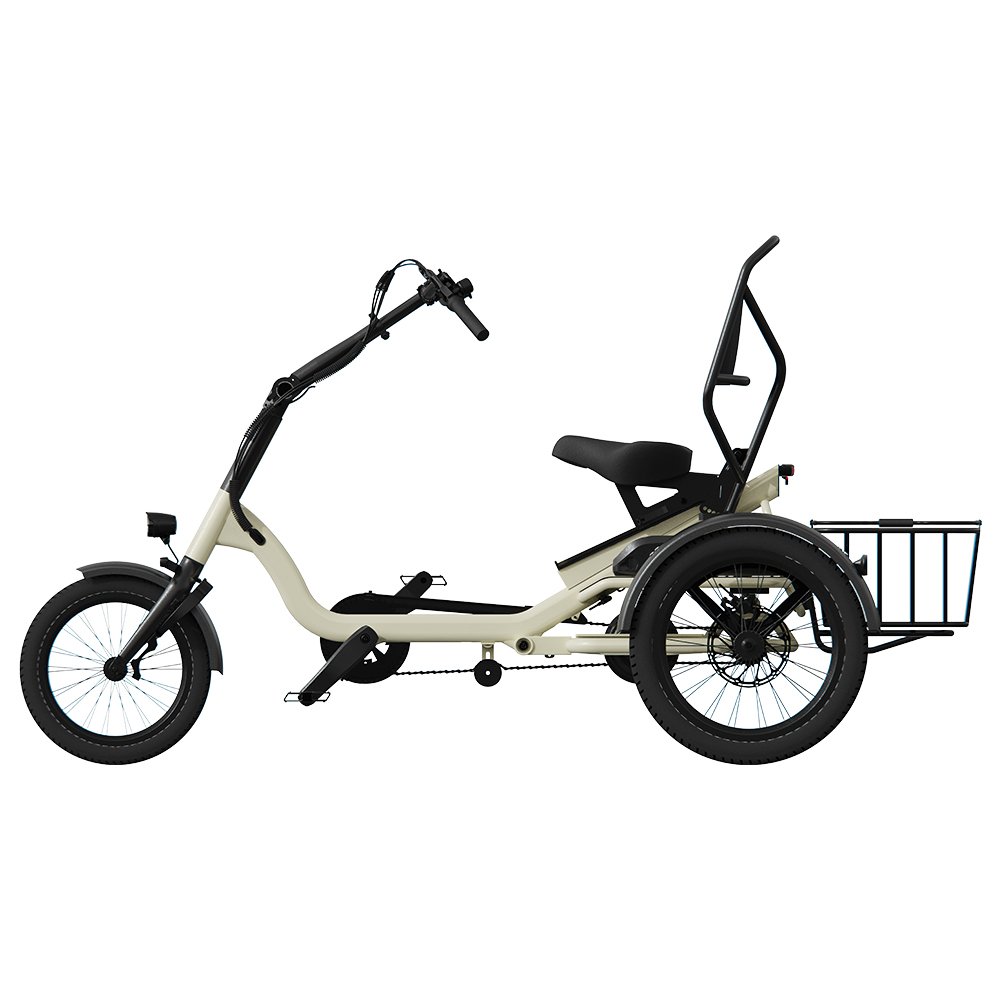
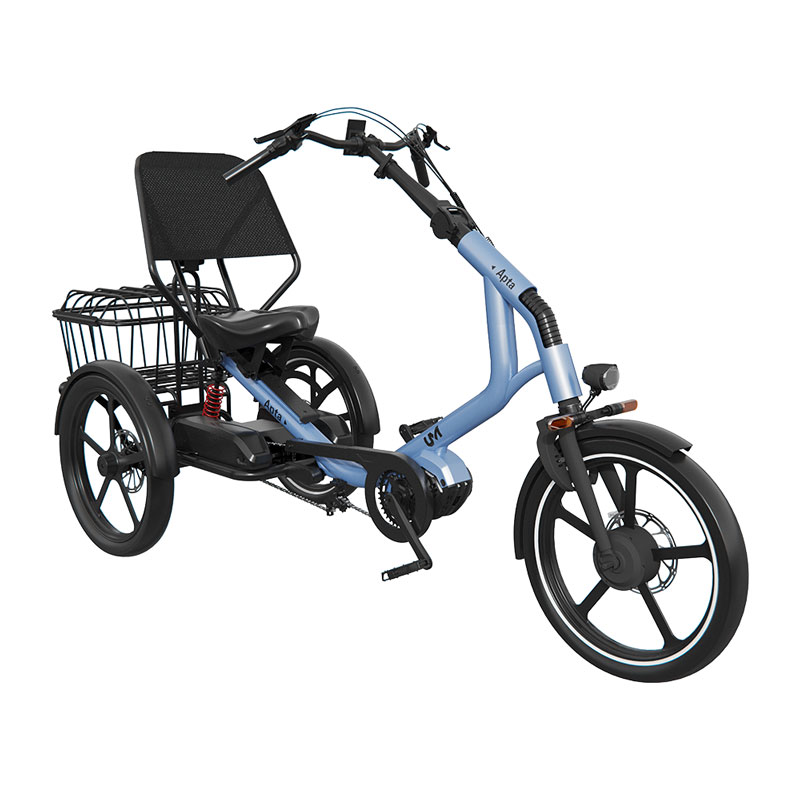
Electric Trike for Seniors in the USA

The electric trike for seniors in the USA is sold in a market with no reimbursement system, no federal purchase credit, and no national dealer network for adaptive cycles. What it has instead is a set of product requirements. Certification decides where you may legally sell. Classification decides whether you are a bicycle at all. Tariffs decide whether your price works. Incentive rules decide whether you can reach the subsidised buyer. And stability engineering decides whether the product does the job it was bought for. Europe organises this category around who pays. The US organises it around what you can prove about the product — which moves the decisive work upstream, to the factory.

Last updated: August 2026 · Built on federal statute, CPSC rulemaking, state programme documents and national agency data, cited per topic in each full analysis.

TL;DR — the five forces in one paragraph

Federal law is on your side: a three-wheeler with operable pedals is expressly a low-speed electric bicycle, not a motor vehicle. Certification is the gate: New York and California already bar uncertified lithium micromobility from sale, most rebate programmes require certification, and a federal mandatory standard is out for comment until 24 August 2026. Tariffs reset the maths: duty stacking has cleared out uncertified budget product and made price competition against high-volume incumbents a losing plan. Incentives are unreliable but instructive: California’s flagship voucher programme was cancelled in late 2025, yet the requirements these programmes impose — certification, class limits, and purchase through a participating physical retailer — persist and quietly dictate your channel. Stability is the product: rollover in turns is the category’s defining complaint, and it is governed by geometry set before tooling.

The comparison table

ForceWhat it decidesWhat it requires of youWhere it’s decided 
Federal classificationWhether it’s legally a bicycle≤750 W, <20 mph motor-only, operable pedals, 2 or 3 wheelsSpecificationFull analysis
CertificationWhere you may legally sellUL 2849 system-level + UL 2271 battery; e-Filing at import since July 2026Design stage, not afterFull analysis
DemandWhether the buyer existsNothing — it’s demographic arithmeticCensus and CDC dataFull analysis
Incentives & channelWhether you reach the subsidised buyerCertification, class limits, a participating physical dealerChannel plan, 12 months aheadFull analysis
Stability engineeringWhether the product worksTrack width, CG height, braking, start-speed limitingBefore toolingFull analysis

Need a professional E-Trike Manufacturer? Talk to An Expert>>

The Five Forces at A Glance

Federal Classification

THE DOOR IS OPEN

Under 15 U.S.C. § 2085, a low-speed electric bicycle is expressly a two- or three-wheeled vehicle with fully operable pedals, under 750 W, and under 20 mph on motor alone. A pedal-equipped e-trike inside those limits is a consumer product regulated as a bicycle — no registration, no licence, no motor-vehicle compliance. State vehicle codes define e-bikes independently and their wording varies, which matters more for semi-recumbent designs than for upright ones.

Read the full certification analysis →

Certification

THE REAL GATE

New York State and New York City bar the sale of uncertified lithium micromobility devices; California's rules apply from January 2026. Most state and city rebate programmes require certification. And since 8 July 2026, importers must electronically file Certificates of Compliance before goods enter US commerce. A federal mandatory standard is out for public comment until 24 August 2026 — and it would adopt the UL standards with modifications, meaning products certified to today's versions may need design changes or retesting.

Read the full certification analysis →

Demand

DEMOGRAPHIC ARITHMETIC

Published market forecasts for this category disagree by a factor of five and mix in industrial cargo trikes — ignore them. The defensible drivers are federal data: the Census Bureau projects one in five Americans at retirement age by 2030 and older adults outnumbering children by 2034, while the CDC reports more than one in four older adults falling each year and an age-adjusted fall death rate up 21% between 2018 and 2024.

Read the full market and buyer analysis →

Incentives & Channel

UNRELIABLE, BUT INSTRUCTIVE

California cancelled its flagship e-bike voucher programme in late 2025 and moved the money to a car scheme — after more than 100,000 people applied for its first 1,500 vouchers. Never plan on a rebate. Do plan around what these programmes consistently require: certification, standard class limits, and redemption at a participating physical retailer — with adaptive models sometimes requiring a fitting appointment. That last requirement rules out pure direct-to-consumer supply for the subsidised segment.

Read the full incentives analysis →

Stability Engineering

THE PRODUCT ITSELF

Rollover in turns appears across US owner feedback often enough to be a category-level design failure, and it directly contradicts the reason the product was bought. It is governed by one ratio — track width against centre-of-gravity height, expressed in vehicle engineering as the Static Stability Factor — plus braking behaviour under combined braking and turning, and start-speed limiting in firmware. All are set before tooling.

Read the full stability analysis →

Recommended E-Trikes

2025 UM New Electric Trike CHILL-2

UM Chill

A compact, transportable recumbent electric trike designed for riders who prioritize comfort, safety, and easy handling in urban environments.
Electric Trike Vita

UM Vita

Daily-use lightweight compact recumbent electric trike: low step-through frame facilitates easy access for seniors and delivers stable, sure handling for comfortable rides.
2025 UM New Electric Trike TRIOGO 1 -2

TRIOGO 1

A compact, stable electric cargo trike designed for modern urban families, senior riders, and light commercial use.
e trike heal middle

Heal Middle

It features anti-tilt self-balancing technology for enhanced stability, especially for seniors or less experienced riders.
electric trike heal mini

Heal Mini

With a 20-inch tire design and low body for easy mounting, it’s perfect for seniors and beginners.

The pattern underneath: five forces, one factory question

Put the five forces side by side and they resolve into a single conclusion: every durable advantage in the US market is created before the container ships. The classification envelope is a specification decision. The certified system boundary is a design decision. The stability that defines whether the product works is geometry and firmware. The documentation your dealer and rebate administrator need is a file that either exists or does not. And the certificate itself — including which party holds it — is a commercial decision most companies make by accident.

That is one brief, and it is upstream of every downstream advantage. It is what our certification analysis sets out in sequence, what the stability engineering discipline enforces, and what our manufacturer evaluation checklist tells you to test any factory on — including us.


Which force binds you first? A short decision logic

  • You have no US certification yet → start there, and design toward the modifications in the proposed federal rule rather than certifying to today’s baseline and paying twice.
  • You want the subsidised and adaptive buyer → build the dealer relationships now. Rebates are redeemed at a register and adaptive purchases may require a fitting; both take twelve months to arrange, not a quarter.
  • You’re competing on price → reconsider. Duty stacking and certification costs have compressed the low end, and the highest-volume incumbents already amortise tooling across large runs.
  • You’re building for the postural buyer → stability geometry and documented boarding data are your product. This is the least contested and most defensible segment.
  • All roads → the same upstream requirements. Build the platform once, configure per market.

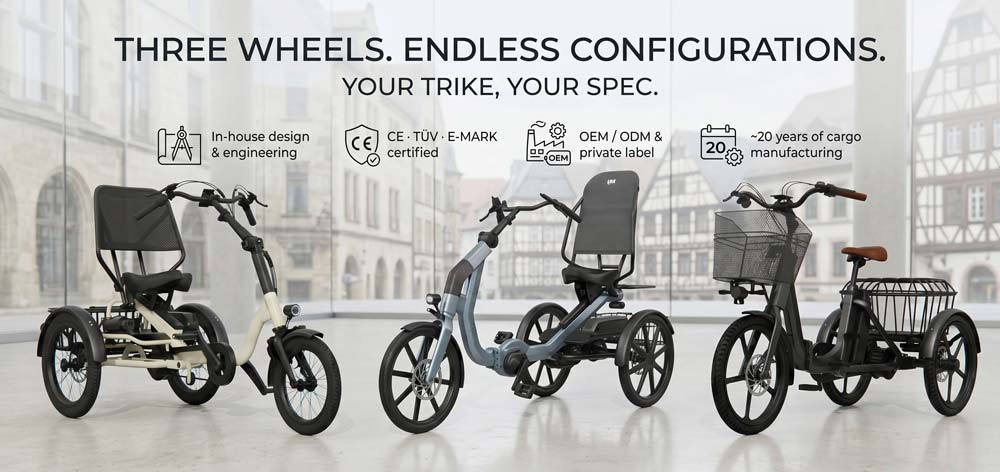
One platform, multi market configurations

The UM Vita and UM Chill are engineered as accessibility products and configured per market through our ODM programme.

senior electric trike models

As A Bike Factory, We Can Offer More Than These

Frequently Asked Questions (FAQ)

Is an electric trike legally an e-bike in the United States?

Federally, yes, if it meets 15 U.S.C. § 2085: three wheels are expressly included, alongside fully operable pedals, a motor under 750 W and a motor-only top speed under 20 mph. State vehicle codes define e-bikes independently and their wording varies — which matters more for semi-recumbent designs than for upright ones.

Do I need UL certification to sell an electric trike in the US?

There is no nationwide requirement today, but New York State and New York City prohibit sale without it, California’s rules apply from January 2026, most rebate programmes require it, and a federal mandatory standard is out for comment until 24 August 2026. Since 8 July 2026, importers must also electronically file Certificates of Compliance before goods enter US commerce.

Is there a federal tax credit for buying an electric trike?

No. Proposed federal legislation has repeatedly failed to pass, so US incentives are state, city and utility programmes only. Several explicitly cover adaptive and three-wheeled models, generally conditioned on certification and often on income.

How is the US senior e-trike buyer different from the European one?

US buyers expect throttle control, ride longer distances at lower urban density, and buy with no reimbursement route — so the purchase is fully discretionary and price-visible. European buyers often reach the product through a public funding channel. US specifications skew toward power delivery, load capacity and range; European ones toward compact footprint and path-width constraints.

What should a distributor look for in a manufacturer for the US market?

A classification envelope held by specification rather than hope, a certified system boundary defined before tooling, documented stability and boarding geometry, and ODM capacity to configure per market. Certification scope, testing body and which party holds the certificate are defined per programme at the design stage — including how easily the product can later move between importers.

Leave A Message

Tell Us Your Demand

Our experienced team is ready to provide tailored solutions to support your business growth.

Our Blog

Latest Blog & Articles

Discover more about the latest innovations, industry trends, and product introductions from the leader in Bike Industry.

EPR for E-Bike Importers in Europe: What You Actually Have to Register, and Where

Extended Producer Responsibility (EPR) is the set of EU and national rules that make the company placing a product on a market financially responsible for that product's end of life. If you import e-bikes, e-cargo bikes or electric trikes into a European country under your own brand, that company is you — not your manufacturer. This guide explains the three obligation streams that apply to electric bikes, the 2025–2027 regulatory timeline, and what to sort out before your first container lands. Official sources used in this guide — bookmark these; every claim below can be checked against them: WEEE Directive 2012/19/EU — scope, exclusions, producer definition (Art. 2–3) EU Battery Regulation (EU) 2023/1542 — battery EPR, LMT category, battery passport Packaging & Packaging Waste Regulation (EU) 2025/40 (PPWR) — applicable from 12 August 2026; the ELI text is the only legally authoritative version European Commission...

Semi-Recumbent vs Upright Electric Trike: Building a US Range

Semi-recumbent vs upright electric trike is usually discussed as a rider preference. For anyone building a US range it is not a preference question at all — it is a channel question, and getting it wrong costs more than a wrong colourway. The two formats attract different buyers, at different prices, through different retail environments, with different documentation attached. Stocking one and assuming it covers the other is the most common assortment error in this category. This article sets out how to split a US range between them, and what each format has to be engineered to do. Three conclusions up front: They are not two versions of one product. They differ in seating geometry, centre of gravity, price tolerance and — decisively — where the sale happens. Most US ranges need both, weighted. Upright covers volume and familiarity; semi-recumbent covers...

Electric Trike Stability Engineering: Designing Out Tip-Over

Electric trike stability engineering is the part of this category that marketing talks around and physics does not. A three-wheeled cycle is bought to remove a fall risk — and a poorly designed one introduces a different one: it can lift a wheel and roll over in a turn. Read US owner feedback across the category and this appears often enough, across enough suppliers, to be a category-level design failure rather than an isolated defect. It is also entirely predictable from geometry, which means it is preventable at the drawing stage. This article sets out the physics of trike rollover, the numbers that predict it, and the specific decisions that engineer it out — written for the people who specify and source these products, not the people who ride them. Three conclusions up front: Rollover is geometric, not accidental. A single...

en_USEnglish