Electric Trike for Seniors
- Home
- Solutions
- Electric Trike for Seniors
Qualified By:

E-Trike for Seniors
Europe is entering a new phase of mobility demand.
The ageing population is no longer looking for less movement, but for safer, more comfortable, and independent ways to stay active.
Across the globe, electric tricycles for seniors are becoming one of the fastest-growing sub-segments in the e-bike market. They are now widely adopted by senior mobility retailers, healthcare and rehabilitation partners, municipalities and assisted-living programs, and specialized e-bike brands focusing on adapted bicycles.
According to Eurostat, over 21% of the EU population is already aged 65+, and this share continues to rise.
At the same time, CONEBI and national cycling associations report steady growth in electric 3-wheel bikes, driven mainly by senior users seeking stability, confidence, and ease of use.
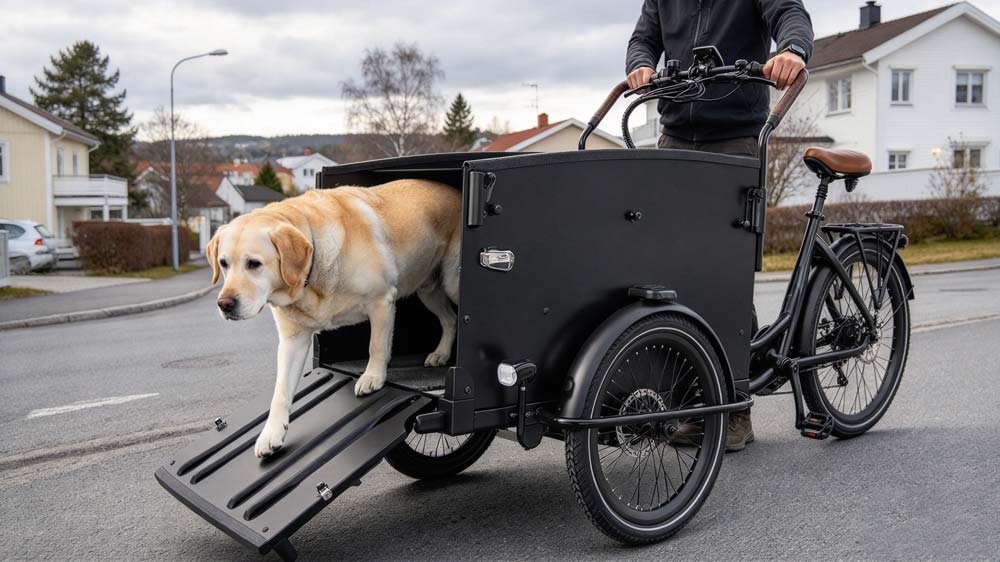
This is where senior cargo e-trikes play a distinct role: not only for riding, but for daily transportation, shopping, social activities, and assisted mobility.
Customized E-Trikes for Senior-Focused Programs
At UM, we develop tailor-made electric tricycle solutions for senior mobility projects.
If you’re:
launching a senior-focused e-bike brand
supplying assisted living or rehabilitation centers
working with municipalities or NGOs
operating a retail or wholesale distribution network
Your needs are rarely “one-size-fits-all”.
That’s why we focus on customization at system level, including:
frame geometry adapted for low step-through access
motor and battery configurations matched to senior riding patterns
stability-focused steering and turning geometry
comfort-oriented seating and control layouts
cargo and rear-rack solutions for daily errands
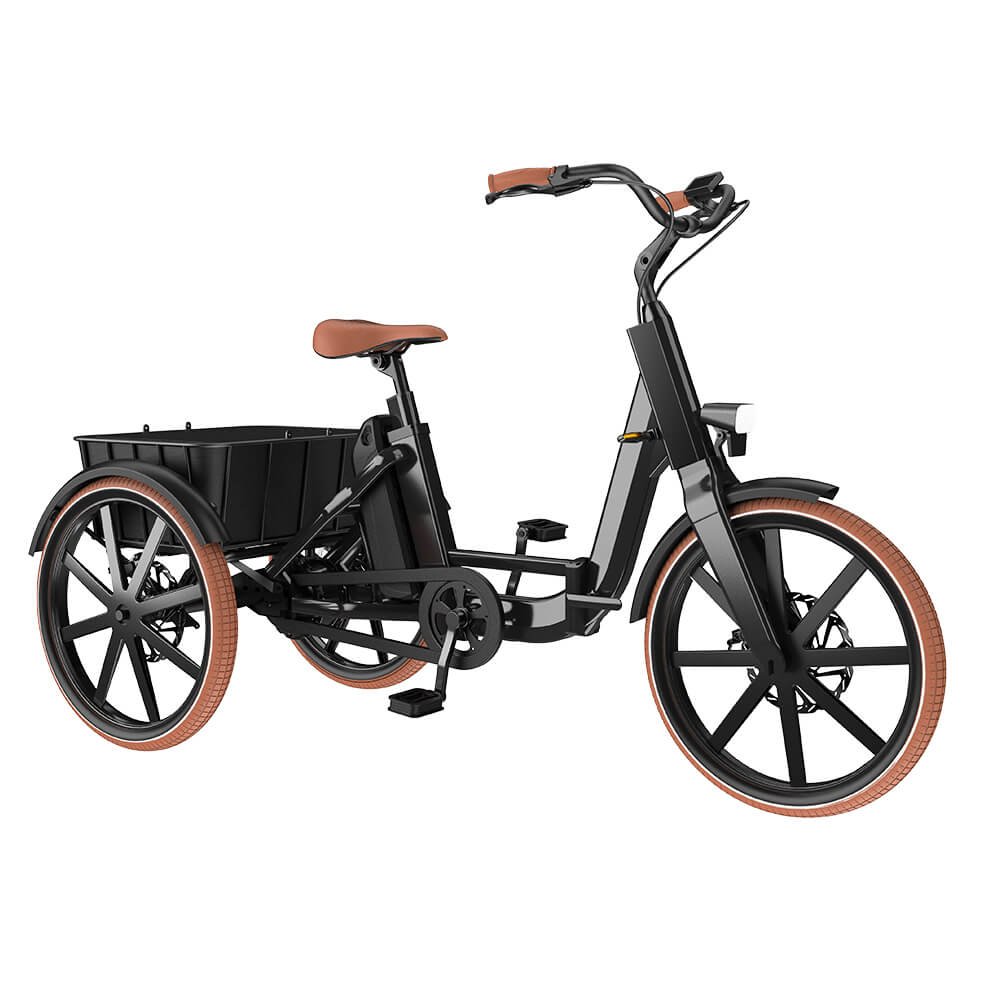
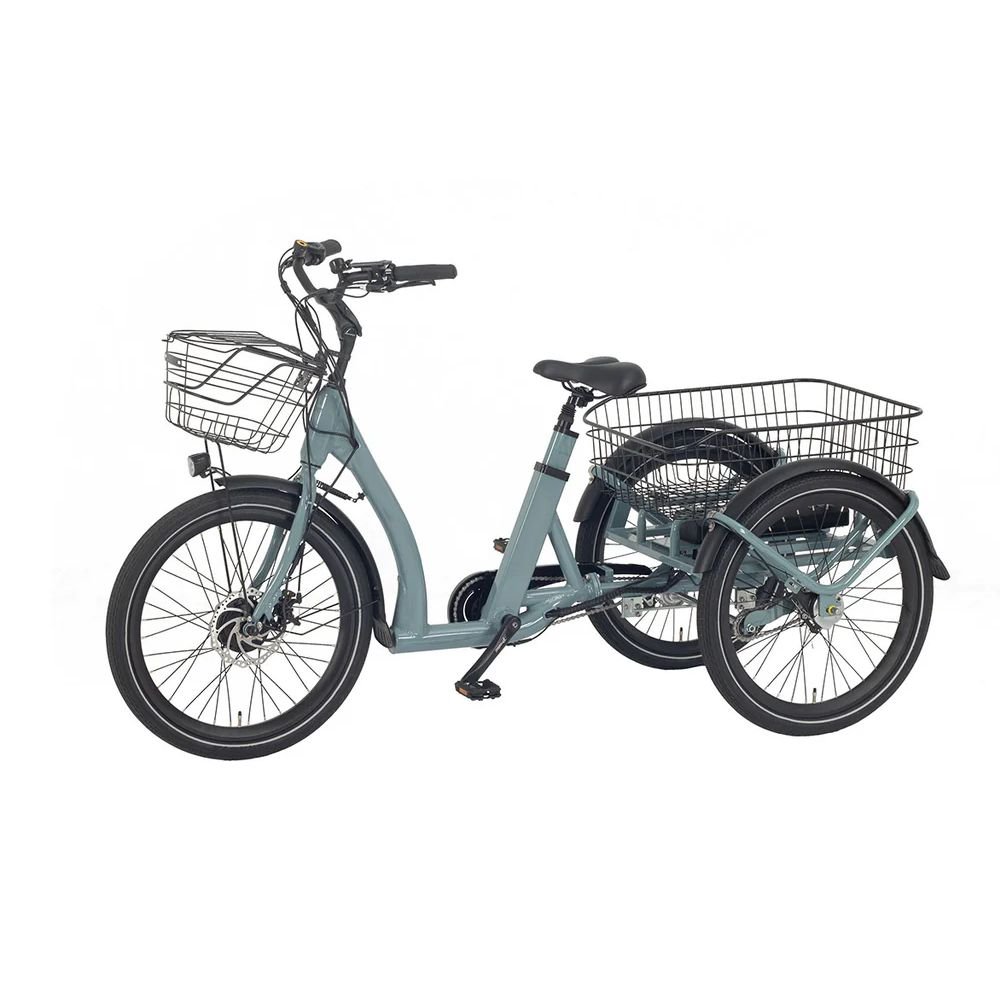
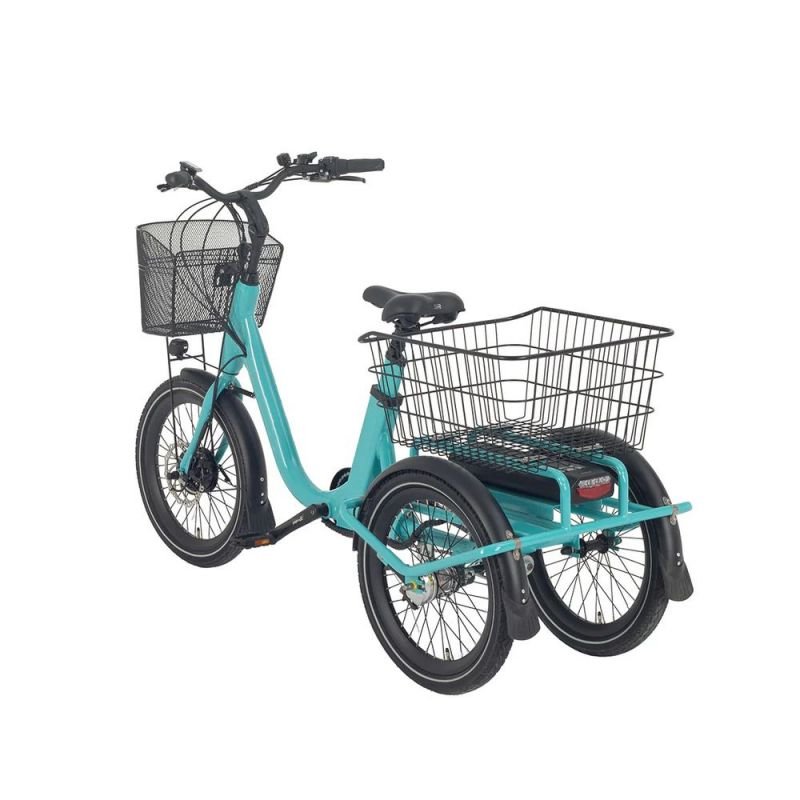
All our e-trikes comply with EU regulations and certifications, including EN17860, EN15194, ensuring road legality and safety across European markets. Below are selected e-trike platforms developed for senior mobility programs. All models support OEM / ODM customization based on your local market needs.
E-Trike vs Recumbent E-Trike
Senior users are not a single group. In practice, business owners usually choose between two proven formats.
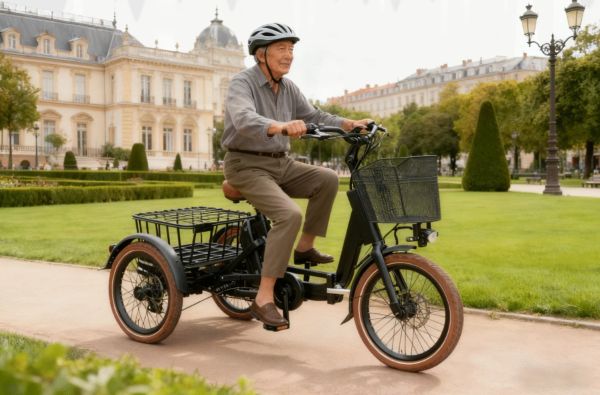
Both standard upright e-trikes and recumbent e-trikes share one essential feature for senior riders: A low-step frame design that minimizes joint strain and makes mounting and dismounting safe and intuitive.
The real difference is not access — it is long-term comfort, body support, and riding experience.
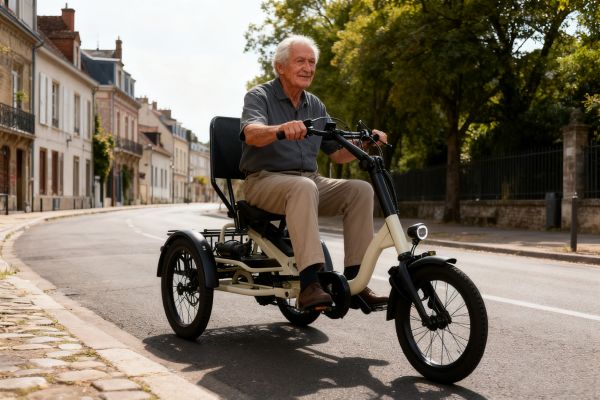
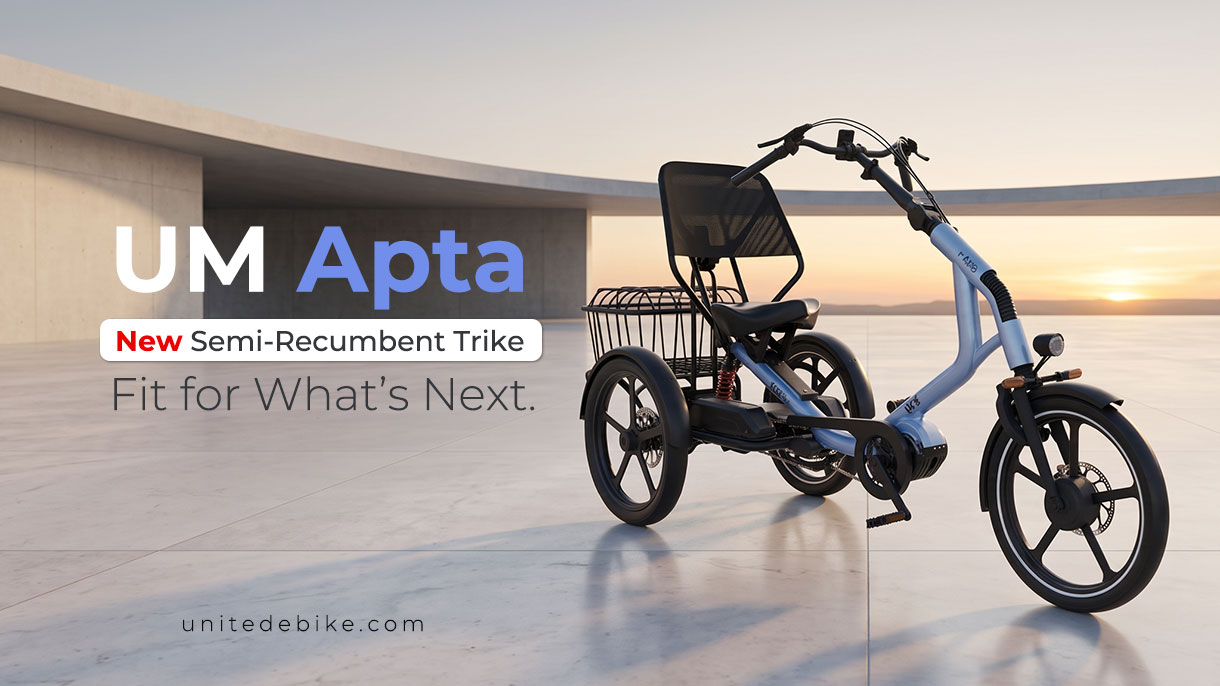
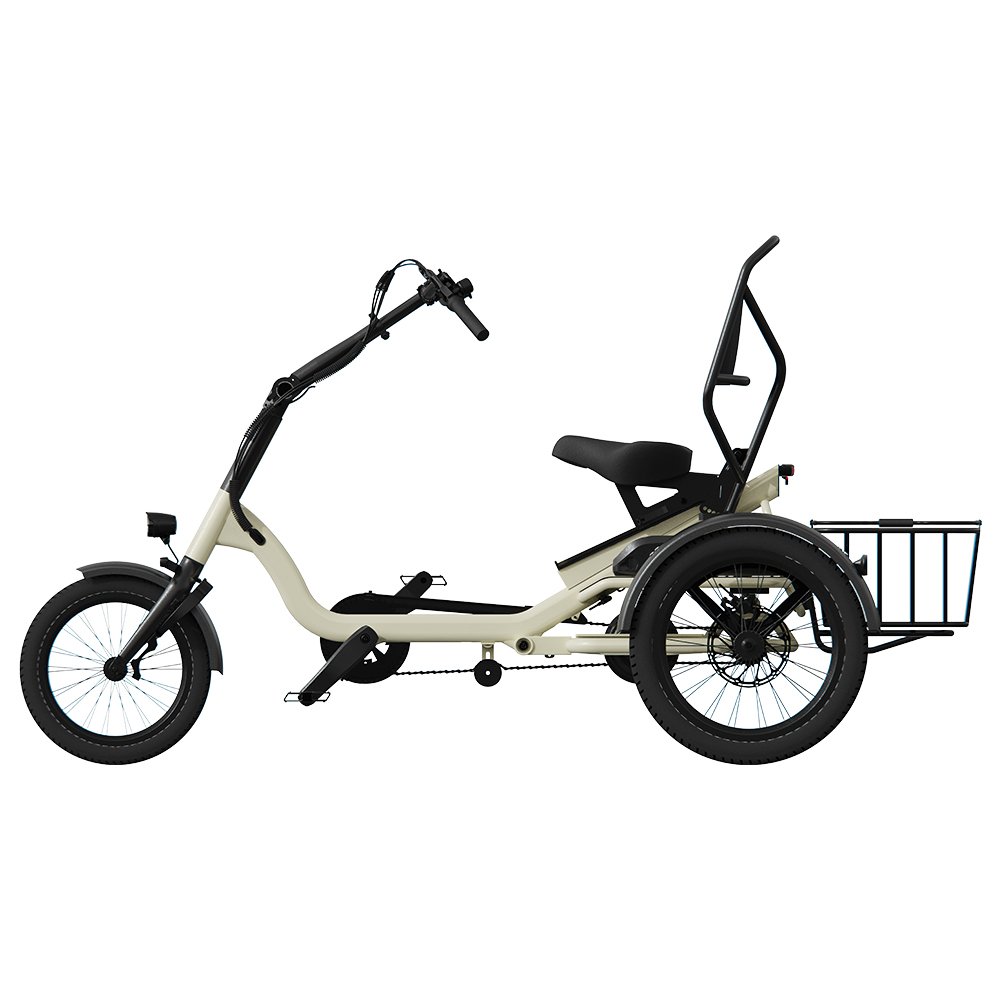
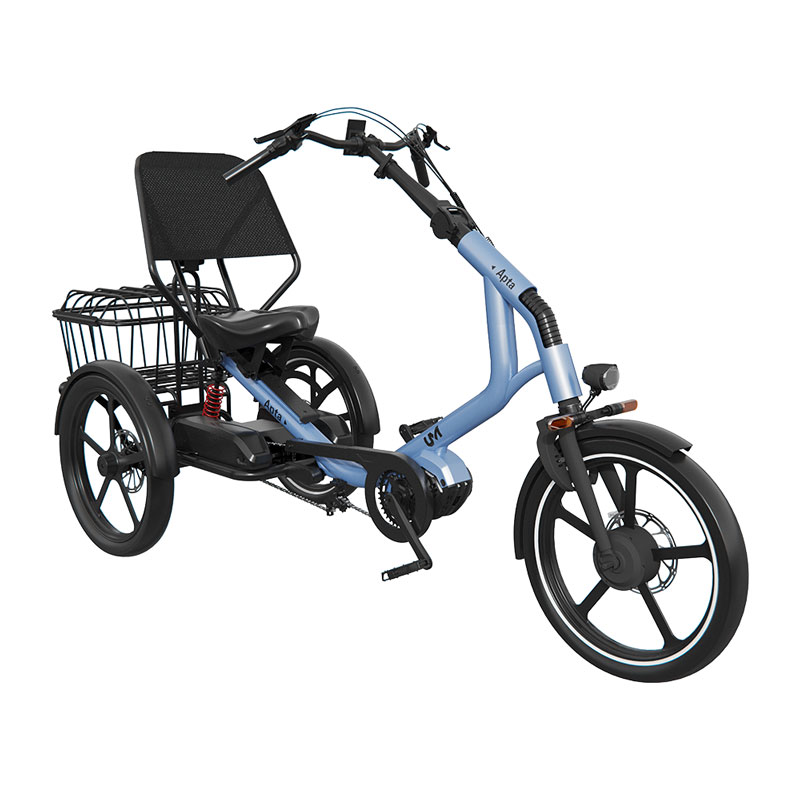
Recumbent E-Trike: Advanced Comfort, Support, and Modern Design
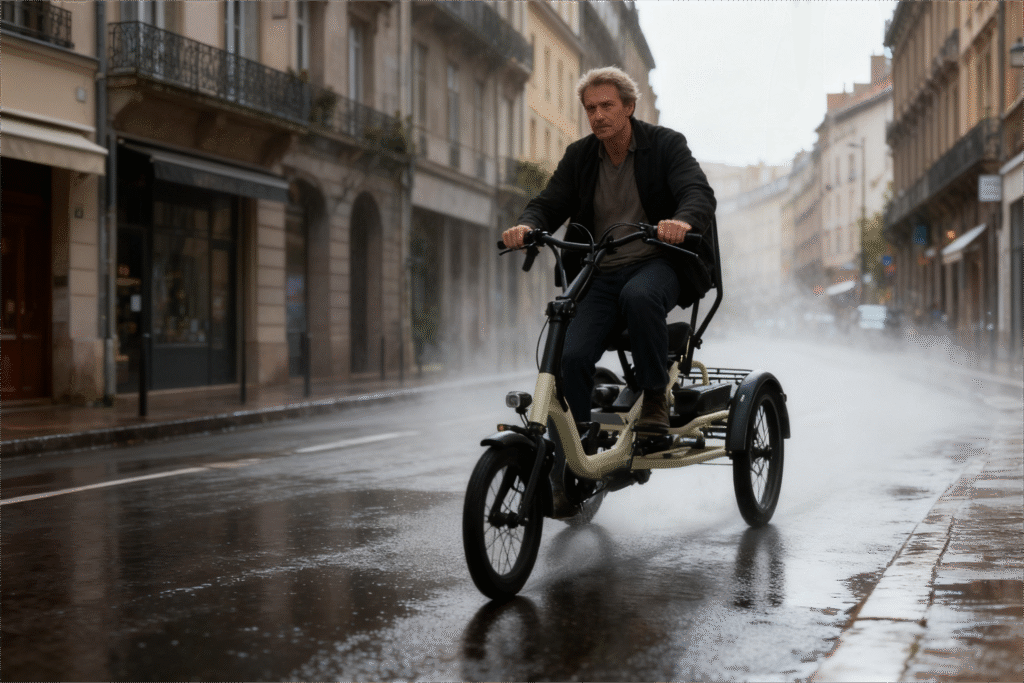
Recumbent e-trikes represent a new generation of senior mobility, designed around ergonomic support rather than cycling tradition.
The key advantage lies in the seat and backrest system.
Instead of concentrating pressure on the hips and lumbar spine, a recumbent e-trike:
- distributes body weight evenly across the seat
- provides full lower-back and side support
- reduces muscle tension in the waist, shoulders, and neck
This results in significantly less fatigue, stiffness, or discomfort, even during long-distance or extended rides — a major benefit for ageing riders.
Additional functional advantages include:
- Smaller front wheels for a tighter turning radius and smoother low-speed handling
- Lower center of gravity, enhancing stability without feeling bulky
- Sportier, lighter visual proportions compared to traditional trikes
- A more modern, active aesthetic that appeals to quality-driven senior users
- Reverse function for easy parking and maneuvering in tight spaces
When combined with a smooth power delivery system and responsive braking, the riding experience feels controlled, confident, and refined rather than heavy or mechanical.
Standard Upright E-Trike: Familiar, Stable, and Easy to Adopt
Upright e-trikes follow a traditional cycling posture, which feels immediately familiar to many seniors. The riding position keeps the torso vertical, offering good visibility in traffic and simple control logic.
Where upright e-trikes perform best:
- Short to medium daily trips
- Urban errands and shopping
- Senior users transitioning from two-wheel e-bikes
- Public or shared mobility programs with minimal training time
Their comfort mainly comes from stability and simplicity.
However, body weight is still partially supported by the hips and lower back, which can lead to fatigue during longer rides.
What Senior End-Users Really Need
Based on market feedback across Europe, senior riders consistently value:
Ease before speed – simple controls, smooth assist, predictable handling
Confidence before power – stable frame, balanced weight, calm acceleration
Comfort before design trends – seat quality, posture, vibration reduction
Safety before features – braking performance, lighting, visibility
Practical storage – rear rack or cargo space for everyday errands
This is why senior cargo e-trikes are increasingly positioned not as “sporty bikes”, but as daily mobility tools.

Why Partner with UM for Senior E-Trike Programs

UM is not a trading brand.
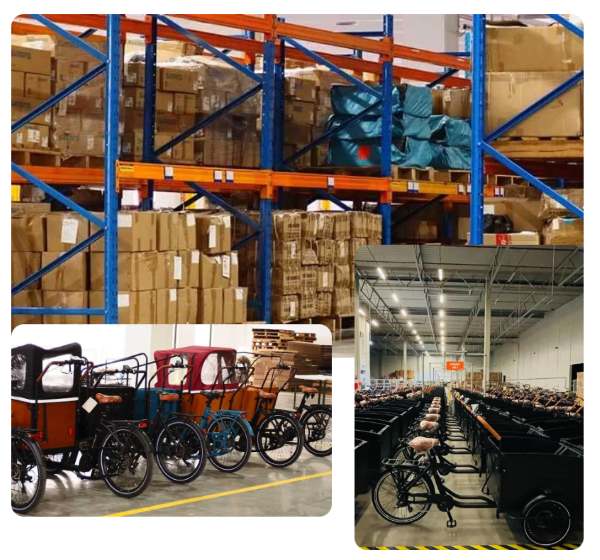
We are a experienced Cargo Bike ODM / OEM Manufacturer with in-house development capability.
You gain:
- custom frame molds and tubing options
- certified production for EU markets
- stable lead times and scalable capacity
- flexible MOQ for pilot projects
- higher margins through direct manufacturing
- marketing and technical support
- reliable after-sales systems
Whether you need a ready-to-launch senior e-trike or a fully customized platform, we build for long-term programs, not one-off orders.
As A Bike Factory, We Can Offer More Than These
Frequently Asked Questions (FAQ)
Yes—when properly designed. Stability, braking systems, and geometry matter more than motor power.
E-trikes are wider than standard bikes and require thoughtful storage and path planning.
With the right adapted e-trike, many seniors safely ride well into their 70s and beyond.
Standard upright e-trikes usually require less onboarding time, especially for seniors who already ride bicycles.
The posture and controls feel familiar.
Recumbent e-trikes may need a short adaptation period, but once riders understand the seating position and steering response, confidence builds quickly, especially for users with back, hip, or balance concerns.
For fleet operators or municipalities, this means:
Upright e-trikes = faster rollout
Recumbent e-trikes = higher long-term satisfaction and repeat usage
Yes — when customization is modular, not experimental.
If you typically request:
Frame geometry adjustments
Seat and backrest variations
Battery capacity options
Motor configuration tuning
Cargo or rear rack adaptations
The key is choosing a supplier that develops proven platforms with flexible modules, rather than building one-off solutions from scratch.
This approach keeps lead times predictable and quality consistent — even at scale.
Have a really
great ides?
Leave A Message
Tell Us Your Demand
Our experienced team is ready to provide tailored solutions to support your business growth.
Our Blog
Latest Blog & Articles
Discover more about the latest innovations, industry trends, and product introductions from the leader in Bike Industry.
The Foldable Mini Cargo Bike: Why It’s the Smartest Bet in Urban Mobility for 2026
The short version: The foldable mini cargo bike solves the one problem that has capped cargo bike sales for a decade — storage. It hauls like a cargo bike, parks like a city bike, and fits in a car boot. For brands and distributors, it is the lowest-friction entry point into the cargo category. Why this segment is growing while others plateau Traditional cargo bikes have a size problem. A full long john is 2.5 metres long. It won't fit in a lift, a hallway, a small apartment, or the boot of a car. For years that single fact has quietly capped adoption — buyers love the utility but have nowhere to put the bike. The foldable mini cargo bike removes that barrier. It keeps the hauling capability your customers want, but folds or shrinks to a footprint they can actually...
Cargo Bike Motor Question: What DJI’s 1,500W Avinox Actually Changes
Core takeaway (read this first): DJI's 1,500W Avinox raises the ceiling on cargo bike motor power — but for commercial hauling, torque, heat control, and component matching matter far more than headline watts. A 30-second primer on what a cargo bike motor actually does An e-bike motor converts battery power into forward assistance. Two numbers describe it. Power, measured in watts, is how much work it can do over time — roughly, sustained speed and the ability to keep moving under load. Torque, measured in newton-metres (Nm), is rotational force — what you feel pulling away from a standstill and grinding up a hill with a loaded box. For a cargo bike motor, torque is the number that decides whether the bike is usable. A fully loaded long john or front-trike carrying 150–250kg starts and stops constantly in city traffic. Each...
Cargo Bike Fleet for Sharing Programs: The 2026 Hardware Sourcing Playbook for European Operators
A cargo bike fleet for sharing programs lives or dies on two decisions made long before launch day: which bike you spec, and which factory builds it. The app, the brand colours, and the press release matter far less than whether each unit can survive thousands of rides from strangers, get located when it goes missing, and be repaired with parts you can actually stock. If you are scoping a shared fleet of electric cargo bikes — for city streets, food delivery, or a scenic resort — this guide skips the program-overview talk most articles stop at and goes straight to the hardware and ODM sourcing layer that decides whether your fleet scales or stalls. Why Shared Electric Cargo Bikes Are Scaling Across Europe The demand signal is no longer subtle. The European e-cargo bike market is estimated at around USD...