


Most European cargo bike manufacturers require 500+ unit minimums for ODM partnerships—but that’s not the full story. For distributors, fleet operators, and emerging private label brands evaluating cargo bike manufacturing partners, understanding how minimum order quantities affect pricing, customisation depth, and go-to-market timing is critical to making the right supplier decision.
This guide breaks down the real numbers: what different tiers of MOQ for cargo bike actually unlock, how order volume shapes your unit economics, and what European compliance requirements look like at each stage—so you can evaluate partnerships with clarity rather than guesswork.
Understanding MOQ for Cargo Bike in ODM/OEM Manufacturing
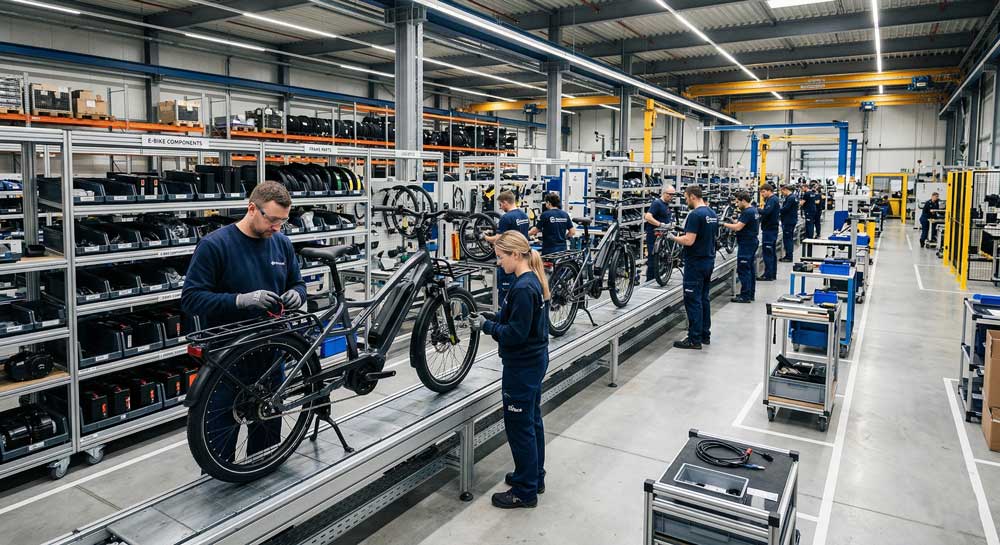
Minimum order quantity isn’t an arbitrary gatekeeping number. It reflects the economics of production tooling, component sourcing, quality assurance workflows, and the cost of building a dedicated manufacturing run around your specific configuration.
In the cargo bike segment, MOQs differ significantly between three types of suppliers:
Finished-goods wholesalers sell existing inventory under their own brand. MOQs can be as low as 5–10 units, but you have no control over specification, branding, or component selection. You’re reselling someone else’s product.
OEM manufacturers build to a defined specification. You select from existing frame geometries, component libraries, and colour options. MOQs typically start at 50–100 units depending on the manufacturer’s production model.
ODM manufacturers develop and produce cargo bikes that carry your brand identity—potentially including proprietary frame design, integrated battery systems, and market-specific compliance configurations. MOQs for true ODM work start at 100–200 units and scale upward with customisation depth.
Understanding which category your prospective supplier actually operates in is the first qualification step. A manufacturer that quotes 20-unit MOQs for “custom” cargo bikes is almost certainly offering cosmetic changes to a stock product, not genuine ODM development.
How MOQ Shapes What You Can Build
Rather than publishing a fixed pricing table—which changes with order complexity, component selection, and market timing—it’s more useful to understand the logic that governs what different volume ranges actually unlock.
Entry-level volumes (the lower end of most manufacturers’ ODM range) typically work from existing validated platforms. You’re selecting base configurations and customising within a defined scope: brand livery, component substitutions from an approved list, battery configuration, and market-specific accessory packages. This is the right entry point for distributors testing a new market or launching a first private label run without the investment of bespoke tooling.
Mid-scale orders open materially more. Custom RAL colour specifications, brand-specific component integration, market-localised documentation and packaging, and in some cases, CE-marked documentation issued under the distributor’s own brand name. This is where most established European distributors building a proprietary cargo bike range operate. Lead times for initial production normalise, and repeat order windows shorten as your specification becomes a known quantity in the manufacturer’s production system.
Scale production unlocks genuine platform differentiation: unique frame geometry, proprietary battery system integration, exclusive component configurations, and co-developed accessory ecosystems. At this level, the relationship with the manufacturer transitions from order-fulfilment to product development partnership—with dedicated capacity and ongoing engineering collaboration.
Full ODM development (ground-up platform design, new frame tooling, bespoke tube profiles) is reserved for programmes with both a clear product vision and the market depth to support dedicated production investment. Timelines are longer; the result is a product that is genuinely yours.
The honest answer to “what’s your MOQ?” is: it depends on what you’re trying to build. A manufacturer worth working with will tell you what a given volume realistically unlocks—not quote you a minimum and leave the rest vague.
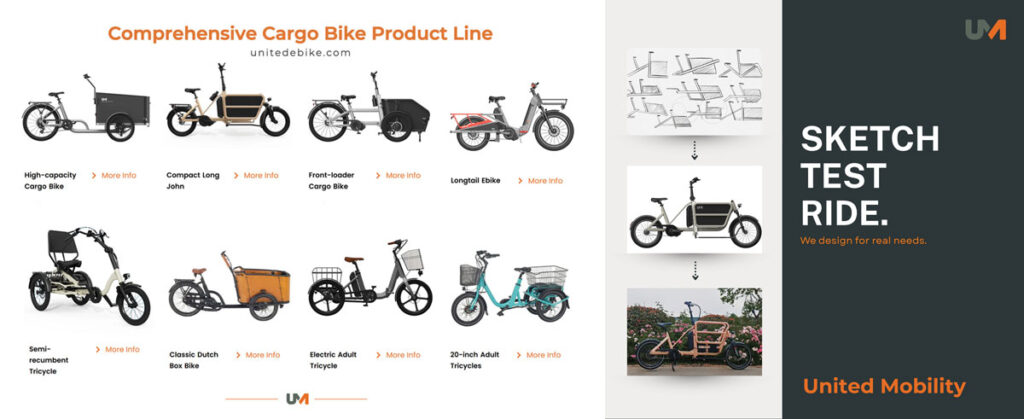
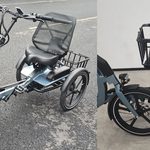
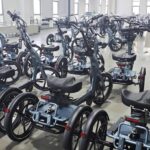
Experienced cargo bike ODM/OEM manufacturer United Mobility‘s full range cargo bike models. Select the right cargo bike type for your business.
How Order Volume Affects Customisation Options
The relationship between MOQ and customisation isn’t linear—it’s tiered, with meaningful step-changes at each threshold.
The key principle: tooling cost amortisation. Every customisation that requires dedicated tooling (a new frame jig, a custom colour batch, a proprietary component mould) has a fixed cost that gets spread across the order quantity. At 50 units, that cost per bike may be prohibitive. At 300 units, it becomes commercially viable. At 500+ units, it disappears into the unit price.
This means distributors systematically underestimate what’s achievable at 200–300 unit volumes. A manufacturer with a strong component supply network and efficient production planning can offer genuine differentiation at this scale—not just badge engineering.
The practical implication: don’t negotiate primarily on MOQ minimums. Negotiate on what the MOQ unlocks. Two manufacturers may both quote 100-unit minimums, but one delivers cosmetic customisation while the other delivers a specification genuinely differentiated from anything else in your market.
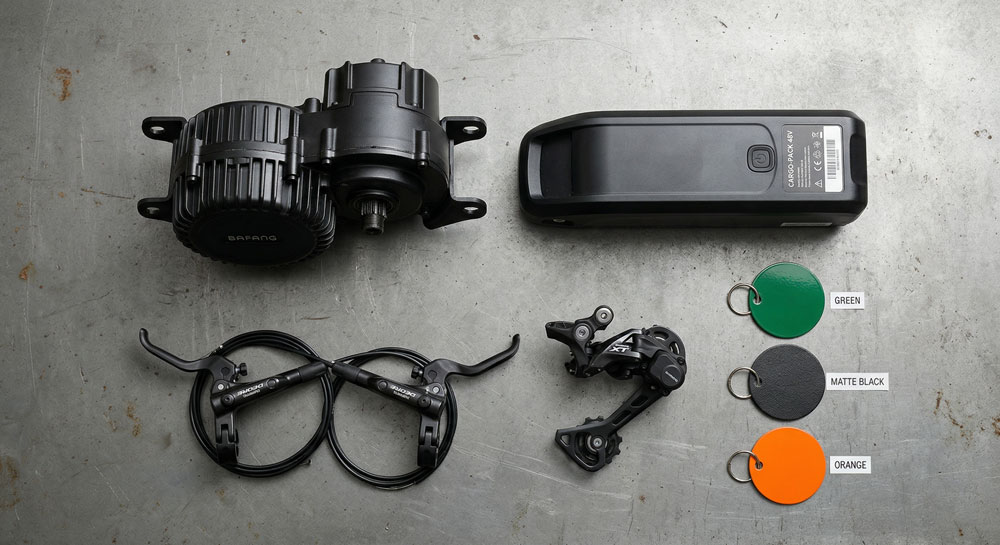
Cost Structure: MOQ Impact on Unit Pricing
Unit pricing in cargo bike ODM/OEM manufacturing follows a predictable curve with three cost components:
Base manufacturing cost — materials, labour, assembly, and quality control. This scales down modestly with volume as batch efficiencies improve, but the curve flattens quickly above 200 units for established manufacturers with mature supply chains.
Tooling and setup amortisation — the fixed cost of configuring a production run for your specification. At 50 units, this can add €80–150 per unit. At 300 units, the same tooling cost drops to €15–25 per unit.
Logistics and compliance cost — EN 15194 testing, CE documentation, and shipping configuration. These are largely fixed per model variant, making per-unit compliance costs highly volume-sensitive.
The unit cost curve in cargo bike ODM manufacturing is meaningful but not linear. The most significant per-unit savings occur as order volumes scale from entry-level into established distribution territory—at that inflection point, tooling amortisation and batch efficiencies combine to produce material cost advantages. Beyond a certain threshold, the curve flattens, and further gains come from supply chain relationships and production continuity rather than volume alone.
The implication for MOQ negotiation: understand not just what the minimum is, but what volume unlocks the cost structure that makes your market pricing viable. If your 12-month demand outlook meaningfully exceeds your launch order, it’s worth modelling the full-year economics before confirming initial quantities.
Lead Times and Production Planning by Order Size
Lead times in cargo bike ODM/OEM manufacturing are driven by three factors: component procurement lead times, production slot availability, and your order’s position in the tooling dependency chain.
50–100 units, standard specification: 75–90 days from order confirmation, assuming components are available from the manufacturer’s existing supply relationships.
100–300 units, moderate customisation: 90–120 days for initial production. Subsequent reorders of the same specification: 60–75 days.
300–500 units, significant customisation: 120–150 days for first run, including component procurement and any tooling lead time. Reorders: 75–90 days.
500+ units, full ODM development: 180–240 days for first production, depending on development scope. This timeline assumes frame tooling from scratch; using an adapted existing platform can compress this to 120–150 days.
Planning recommendation: Most European distributors underestimate reorder lead times on first partnerships. Build a 90-day inventory buffer into your initial planning model, particularly for first-season launches where demand forecasting carries inherent uncertainty.
Supply chain depth matters significantly here. A manufacturer with established relationships across motor, battery, frame, and component supply chains can absorb procurement volatility that would cause delays for a less-integrated supplier. Nearly two decades of electric bike development translates directly into component sourcing relationships that aren’t available to newer market entrants—particularly for battery cells, BMS systems, and torque sensor motor units where supply is periodically constrained.
European Compliance and Testing Requirements
For distributors bringing cargo bikes to the European market, compliance is non-negotiable and the cost structure needs to be factored into your MOQ economics.
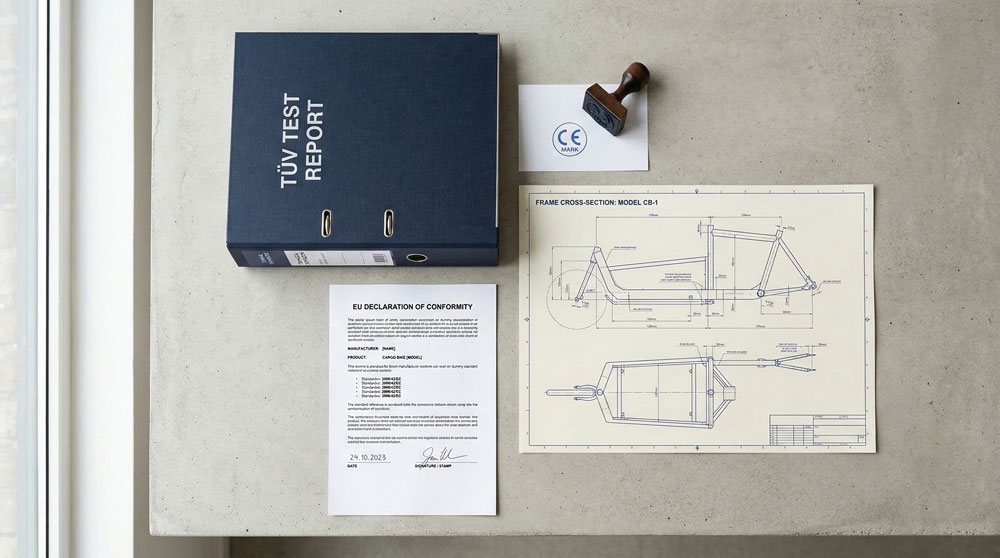
EN 15194:2017 — the European standard for electrically power-assisted cycles (EPACs). This is the primary type approval standard for electric cargo bikes. Compliance requires testing by an accredited test house and is a prerequisite for CE marking and EU market access.
Key testing scope under EN 15194:
- Motor power output (250W continuous rated power limit)
- Speed cut-off (25 km/h assistance cut-off)
- Battery system safety (charging, temperature management, short-circuit protection)
- Electrical system isolation and IP ratings
- Frame and fork structural integrity under load
Type approval approach: Most ODM manufacturers hold EN 15194 type approval for their base platforms. For distributors modifying a tested platform within defined parameters (component substitutions, colour changes, accessory additions), compliance can typically be maintained under the manufacturer’s existing approval with updated technical documentation.
Where customisation goes beyond the tested parameters—particularly new frame geometry, battery system changes, or motor substitutions—a delta test or full retest is required. Budget €8,000–15,000 for delta testing and €20,000–35,000 for full type approval on a new platform, plus 8–16 weeks for test house scheduling.
Practical implication: The compliance cost structure creates a strong incentive to stay within a tested platform’s approval envelope at lower MOQs, and reserve bespoke platform development for 300+ unit volumes where those costs amortise effectively.
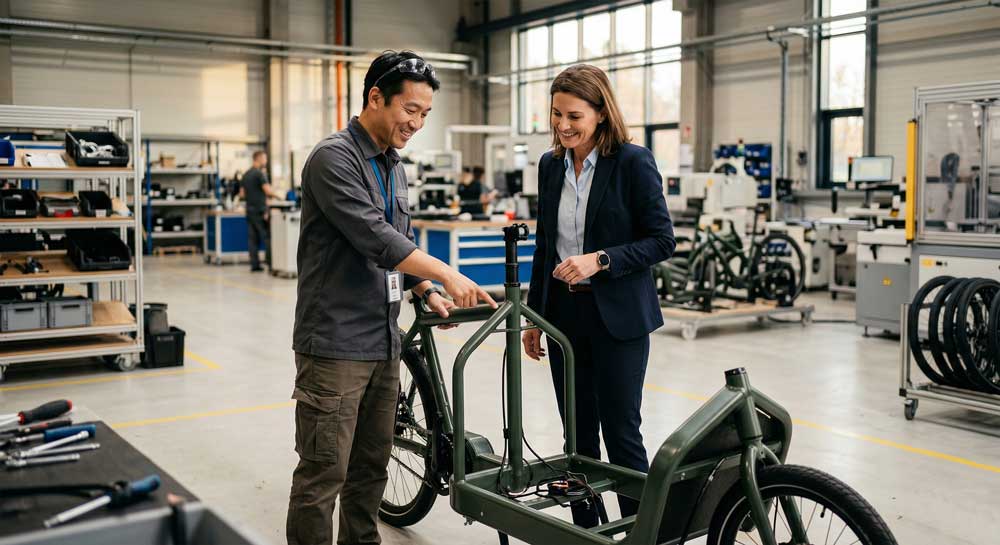
Private Label vs. White Label: MOQ Considerations
These terms are used interchangeably in casual conversation but describe meaningfully different product and commercial relationships.
White label means the manufacturer’s existing product, sold under your brand name. The specification is fixed; you’re applying your branding to a product that may be available from the same manufacturer under multiple other brands. MOQs can be very low (sometimes 10–20 units), but you have no specification exclusivity and limited scope for market differentiation.
Private label means a product developed or significantly configured to your specification, sold exclusively under your brand. The manufacturer doesn’t sell the same configuration to your competitors. MOQs are higher (typically 100–300 units minimum for genuine exclusivity), but you own a differentiated product.
For European distributors building a sustainable cargo bike brand, white label is a market-entry mechanism, not a long-term strategy. The risk: if your supplier sells the same product under competing brands, your competitive position erodes as soon as a competitor identifies and prices your base product.
A credible ODM partner will be explicit about which model they’re offering. Ask directly: “Do you sell this configuration to other distributors?” If the answer is qualified or unclear, assume it’s white label.
Working with United Mobility: Flexible MOQ Approach
United Mobility’s ODM/OEM programme is built around nearly 20 years of electric bike research, development, and manufacturing—a track record that translates into component supply depth, validated platform designs, and compliance infrastructure that significantly reduces the risk and lead time for European distribution partners.
Our MOQ structure is designed for scalability: What our supply chain depth and nearly 20 years of electric bike R&D actually mean in practice is that we can work with a wider range of order volumes than most ODM manufacturers can credibly offer. We’re not gating serious partnerships behind minimum quantities that only the largest distributors can meet—but we’re also not a white-label catalogue operation that ships anyone the same product with a different badge.
The right starting volume is the one that allows us to build you something genuinely differentiated and commercially viable. For some partners, that means a focused initial run on a validated platform with strong brand customisation. For others, it means co-developing a platform from the ground up with dedicated production capacity. We’ve done both, and the conversation about which model fits your situation costs nothing.
What doesn’t change regardless of order scale: our component supply relationships, our EN 15194 compliance infrastructure, and our commitment to transparent lead times. We hold established sourcing relationships across motor systems, battery configurations, and European-standard components—built over two decades of production, not assembled opportunistically for a single project.
What our supply chain depth means in practice: We hold established supplier relationships across motor systems (mid-drive and hub configurations), battery systems (from 360Wh to 750Wh configurations), frame manufacturing, and European-standard components. This means our component procurement lead times are predictable and buffered—we’re not exposing your production schedule to spot market availability risks.
European compliance: Our cargo bike platforms carry EN 15194 type approval for EU market access. For distributors operating within our tested platform parameters, compliance documentation can be prepared and transferred within your standard production lead time—no additional test house cost or timeline.
To discuss your specific volume requirements, market timeline, and customisation objectives, contact our B2B partnerships team. We’ll provide a transparent breakdown of what your target MOQ unlocks—including unit pricing indicatives, lead time commitments, and a clear picture of the customisation scope available at your volume.
For broader context on United Mobility’s ODM/OEM manufacturing approach, see our Complete Guide to Cargo Bike ODM/OEM Manufacturing. For detail on the customisation options available at different production volumes, see Private Label Cargo Bikes: Brand Customisation Options. For a full overview of European compliance requirements, see European Cargo Bike Certification: CE and EN 15194 Compliance.
 English
  German
  Dutch
Dutch  Danish
  French
  Polish
  Portuguese
  Spanish