





The rise of cargo bike sharing isn’t just a fad. In Europe, it’s becoming a core building block of sustainable urban mobility — and you, as an e-bike sharing operator, a city government, or a nonprofit, have a chance to ride this wave in a highly strategic way.
Here’s why the e-bike & bicicleta de carga elétrica sharing market matters, where it can shine, and how partnering with a flexible, experienced supplier can turn that potential into reality.

E-Bike & Cargo Bike Sharing: Market Reality Today
The European e-cargo bike market is seeing strong growth. According to Mordor Intelligence, the European e-cargo bike market was valued at USD 1.16 billion in 2025, with a projected CAGR near 3.9% through 2030.
Meanwhile, urban metrics show cargo-bike logistics commanding a meaningful share: research estimates Europe holds ~45% of the global cargo-bike logistics market.
Shared mobility initiatives are tapping into this. According to a press release from cargobike.jetzt, 72% of cargo bike sharing rentals replace car journeys — a huge lever for reducing emissions and traffic.
And the sustainability impact is real. As Heinrich Böll Stiftung notes, shared cargo bikes help shift “at least half” of motorised goods transport in European cities.
Where Cargo Bike Sharing Makes Sense: Key Use Cases
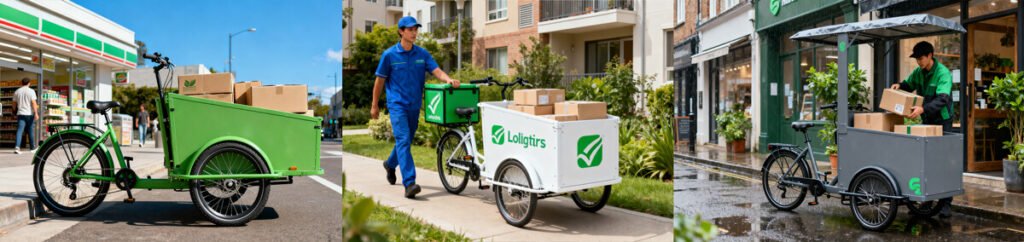
Shared cargo bikes (or rent cargo bike models) are not one-size-fits-all. Here are practical scenes where they deliver huge value:
- Last-Mile Delivery
- Food delivery, courier services, small-package logistics.
- Use e bike rental for delivery to serve dense cities without vans.
- Shared fleets reduce fleet capex and lower operational risk.
- Municipal Rentals & Public Services
- Cities or nonprofits operate bike stations with cargo bikes for residents or social programs.
- Integration with public transport: shared cargo bikes parked near transit hubs.
- Family Sharing Programs
- Shared Dutch Cargo Bikes or front-load bikes in residential neighborhoods.
- Families prefer to borrow larger capacity three-wheeled cargo bikes for school runs, shopping, or weekend outings.
- Corporate & Campus Mobility
- Companies deploy shared transport service systems so employees can use cargo bikes for errands on campus.
- Universities or business parks offer shared cargo bikes for internal logistics.
- Event or Community Use
- Shared cargo bikes for local festivals, markets or community events.
- NGOs or civic groups run low-cost rental models to promote climate action.
Policy & Regulation: What’s Helping?
Shared cargo bike projects benefit from stronger policy tailwinds:
- In Germany, North Rhine-Westphalia offers up to 80% funding for setting up municipal cargo bike sharing programs in the first three years. cargobike.jetzt
- Countries like Austria channel public funding into shared cargo systems: for instance, federal support has helped deploy thousands of shared cargo bikes across municipalities. Cycle Competence Austria
- On a European scale, shared cargo bikes are framed within the sustainability agenda. The European Mobility Atlas shows many cities now include cargo bikes in their public bicycle scheme. Heinrich-Böll-Stiftung
Why Shared Cargo Bikes Align with Growing Green & Cycling Culture
European urban residents are increasingly aware of climate impact, and shared cargo bikes directly reduce car trips. According to surveys, nearly half of shared cargo users avoided a car trip.
In many cities, cycling infrastructure is improving, including bike lanes wide enough for loaded cargo cycles.
Shared cargo bikes help democratize access: not everyone can afford a private cargobike, but sharing lowers the barrier.
Challenges & Realities for Shared Cargo Bike Operators
You should not overlook key operational challenges:
- Cost per vehicle: E-cargo bikes cost more than regular e-bikes, which raises shared-asset risk.
- Storage and charging: Shared cargo fleets need secure parking and charging — ideally near stations or micro-hubs, which requires planning.
- Usage patterns: Unlike bikes, shared cargo bikes are larger and may be idle more, or used in bursts.
- Maintenance: Higher load use means components (brakes, drivetrain, box) need frequent check-ups.
- Regulatory hurdles: Local policies, public procurement rules, and fleet funding incentives vary heavily across countries.
However, given the projected ~12–13% annual growth in European cargo-bike logistics, the upside is large for shared mobility providers. Dataintelo+1
What Shared-Mobility Providers Need: A Partner Who Gets Cargo Bike Sharing
If you are planning a wholesale sharing e bike or cargo bike sharing program, you need more than a normal e-bike vendor. You need a partner who understands:
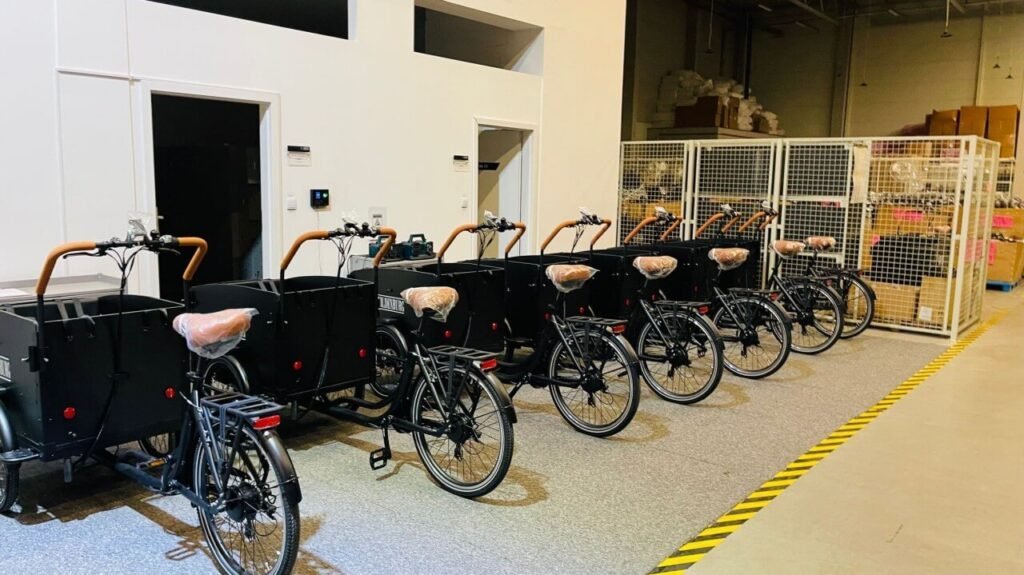
- Fleet-grade e-cargo bike design — built for durability and high usage
- Scalability: modular frames, interchangeable boxes, long lifecycle
- Compliance with shared mobility needs: easy maintenance, spare parts, locking and charging systems
- Regulatory alignment: ODM/OEM that knows EU/local subsidy schemes and can help you design programs that get grants
- Capacity to adapt: rental rates, subscription model, shared transport service
Final Thoughts
The shared mobility industry is evolving — and cargo bike sharing is no longer niche.
For cities, operators, and NGOs, shared e-cargo bikes represent a powerful, green, and practical modality.
When you partner with a provider like UM, you get more than bikes — you get a scalable, policy-aligned, fleet-grade solution built to last in the real world.
If you’re ready to pilot a cargo bike sharing program — whether for delivery, public mobility, or community transport — reach out. Let’s explore how we can make your shared fleet sustainable and impactful.
 Portuguese
  English
  German
  Dutch
Dutch  Danish
  French
  Polish
  Spanish