





Ao planejar um projeto de bicicletas de carga — seja para uma marca própria, uma frota ou um programa de mobilidade pública — o quadro Não é apenas um componente.
É o alicerce que define segurança, durabilidade, conformidade, escalabilidade e custo operacional a longo prazo.
Este artigo explica o que caracteriza um quadro de bicicleta de carga fundamentalmente diferente de um padrão quadro de bicicleta elétrica, Como avaliar materiais, regulamentações e escolhas de design, e como você pode avaliar se um fabricante é realmente capaz de fornecer produtos em conformidade, bicicletas de carga personalizáveis em grande escala.
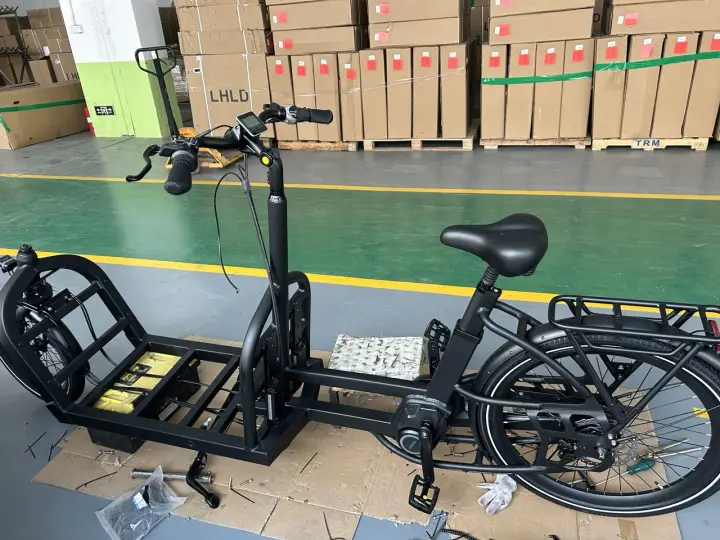
Por que um quadro de bicicleta de carga não é simplesmente um quadro maior de bicicleta elétrica?
Resposta curta: Porque as bicicletas de carga são veículos utilitários que suportam carga, e não produtos de mobilidade pessoal.
Um quadro padrão de bicicleta elétrica é projetado em torno de:
- Um passageiro
- Cargas curtas e dinâmicas
- Ciclos de tensão estrutural limitados
A quadro de bicicleta de carga deve lidar com:
- Cargas estáticas e dinâmicas (crianças, mercadorias, contêineres)
- Distribuição de peso assimétrica
- Paradas e arranques frequentes, e impactos no meio-fio.
- Longa vida útil em uso diário.
Em termos de engenharia, as estruturas de carga requerem:
- Maior resistência à fadiga
- Juntas e soldas reforçadas
- Diferentes perfis e espessuras de tubos
- Geometria específica para carga
É por isso que simplesmente aumentar a escala de um quadro de liga leve para bicicleta elétrica não é suficiente — e é por isso que muitos modelos de "carga" falham em testes de longo prazo.
Quais materiais são usados para fabricar quadros de bicicletas de carga — e por quê?
A escolha dos materiais define tanto o desempenho quanto a conformidade.
Materiais comuns para quadros de bicicletas de carga
| Material | Uso típico | Principais vantagens | Trocas |
|---|---|---|---|
| Quadro em liga de alumínio (6061 / 7005) | A maioria das bicicletas de carga da UE | Leve, resistente à corrosão, escalável | Requer soldagem e tratamento térmico precisos. |
| Aço de alta resistência | Bicicleta de carga, triciclo para serviço pesado | Excelente resistência à fadiga | Mais pesado, custo logístico mais elevado |
| Aço cromoly | Bicicleta utilitária personalizada | Conforto ao dirigir, reparável | Produção em massa limitada |
| Composto (raro) | Experimental | Redução de peso | Custo, complexidade da regulamentação |
Na maioria dos mercados europeus, os quadros de liga de alumínio predominam devido ao seu equilíbrio:
- Resistência estrutural
- Eficiência de peso
- Controle de custos
- Compatibilidade com o regulamento
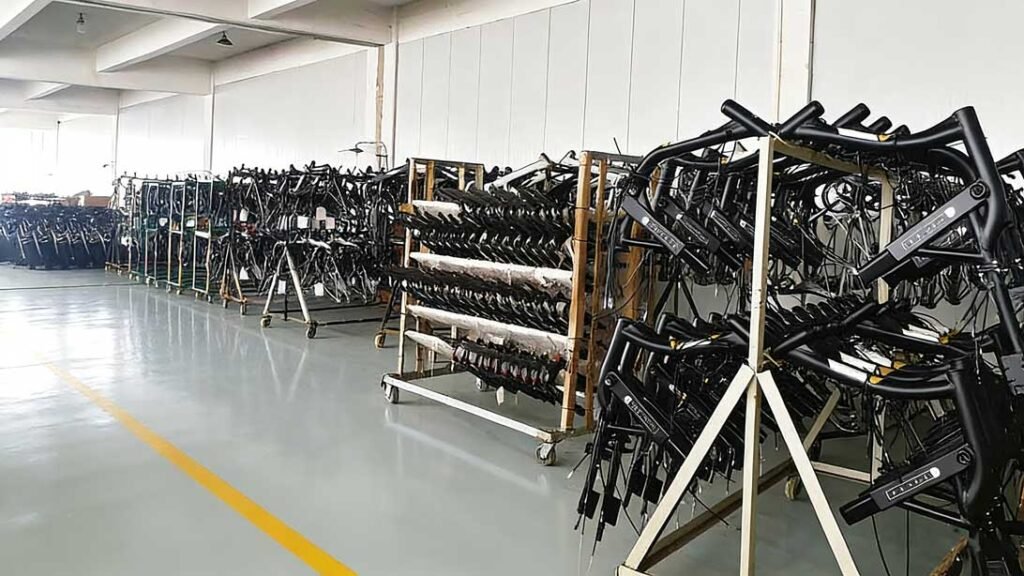
No entanto, nem todas as fábricas que produzem quadros para bicicletas elétricas conseguem fabricar corretamente quadros de alumínio para veículos de carga. A espessura da parede, a geometria das juntas e a sequência de soldagem variam.
Quais regulamentações da UE se aplicam aos quadros de bicicletas de carga?
Se o seu mercado-alvo for a Europa, a conformidade é imprescindível.
Principais normas e políticas da UE
- EN 17860 – Segurança estrutural de bicicletas de carga (testes de carga estática e dinâmica)
- EN 15194 – Requisitos do sistema elétrico EPAC
- EN ISO 4210 – Requisitos de segurança para bicicletas
- Diretiva de Máquinas (para casos de uso comercial)
- Regras locais de compras municipais (frotas públicas)
Para um bicicleta de carga de três rodas ou triciclo de carga, Os limites de teste de carga são significativamente mais altos do que para modelos de duas rodas.
Importante:
Uma fábrica que pode produzir bicicletas elétricas legalmente é não se qualifica automaticamente para produzir bicicletas de carga que atendam aos requisitos.
Pergunte isso diretamente:
“As estruturas de carga passaram no teste EN 17860 sob carga nominal máxima?”
Como o design do quadro muda de acordo com o tipo de bicicleta de carga
Nem todas as bicicletas de carga suportam a carga da mesma maneira.
Arquitetura do Quadro de Bicicleta de Carga — Tabela de Visão Geral da Engenharia
| Tipo estrutural | Configuração das rodas | Caminho de carga primário | Foco do quadro-chave | Riscos comuns em engenharia |
|---|---|---|---|---|
| Bicicleta de carga com carregamento frontal (long john) | de duas rodas | eixo dianteiro → tubo da direção → tubo inferior | Rigidez torsional, reforço do tubo da caixa de direção, alinhamento da articulação da direção | Flexão do quadro, direção instável, fadiga na junção do tubo da direção. |
| Bicicleta de carga com carregamento traseiro (longtail / midtail) | de duas rodas | eixo traseiro → triângulo traseiro → tubo do selim | resistência do triângulo traseiro, precisão do dropout, resistência à fadiga | Oscilação traseira sob carga, rachaduras na junção entre a escora traseira e o tubo do selim. |
| Triciclo de carga com carregamento frontal | três rodas (2F+1R) | caixa de carga → travessa dianteira → estrutura principal | Rigidez da travessa, simetria da carga, integração da estrutura com a caixa | Carga irregular nas curvas, direção pesada, torção do chassi |
| Triciclo de carga com carregamento traseiro | três rodas (1F+2R) | plataforma traseira → subchassi traseiro → estrutura principal | capacidade de carga estática, precisão de montagem do eixo, resistência à tensão a longo prazo | A traseira apresenta inclinação acentuada e baixa durabilidade em uso com paradas e arranques frequentes. |
Projetar um conjunto de frames sem compreender essas diferenças leva a produtos superdimensionados ou com desempenho inferior.
Se você está planejando um programa de bicicletas de carga e deseja validar se um conceito de quadro é estruturalmente viável para o seu caso de uso pretendido, vale a pena discutir a arquitetura antes de definir os componentes ou as ferramentas.
Raio de giro e encaixe da caixa de carga
Para bicicletas de carga, o design do quadro define mais do que apenas a resistência.
Isso afeta diretamente raio de giro e controle em baixa velocidade, que são cruciais no uso urbano.
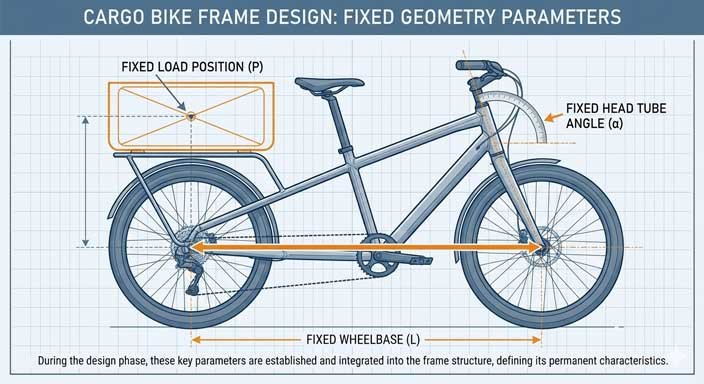
A distância entre eixos, o ângulo do tubo da direção e a posição da carga são definidos no nível do quadro. Se esses parâmetros não forem projetados levando em consideração as condições reais da cidade, mesmo um quadro robusto pode parecer difícil de manobrar, principalmente quando totalmente carregado.
As dimensões da caixa de carga também devem ser definidas desde o início. O comprimento, a largura e a posição de montagem da caixa influenciam a folga da direção, a distribuição de peso e a tensão na dianteira. Tratar a caixa como um acessório adicional geralmente leva a uma dirigibilidade ruim.
Para bicicletas de carga com carregamento frontal, quadros longtail e bicicletas de carga de três rodas, o quadro e a caixa devem ser projetados como um sistema único para garantir curvas previsíveis e usabilidade diária.
Como a estrutura deve combinar com outros componentes-chave
O quadro de uma bicicleta de carga não funciona isoladamente.
Pontos críticos de correspondência:
- Sistema de freioOs freios a disco hidráulicos exigem rigidez de montagem.
- Motor de acionamento centralA transferência de torque afeta o design do movimento central.
- Bateria para bicicleta elétricaA posição de montagem influencia o centro de gravidade.
- Eixos e rodasO espaçamento entre os quadros deve corresponder à capacidade de carga das rodas.
Uma má correspondência gera ruído, desgaste prematuro ou manuseio inseguro.
Como é o processo de desenvolvimento adequado de uma bicicleta de carga?
Se você está planejando um projeto personalizado de bicicleta de carga, este é o... processo padrão Você pode esperar:
- Definição de caso de uso (família, logística, frota, serviço público)
- Análise de carga e ciclo de vida
- Validação do conceito e da geometria da estrutura
- Seleção de materiais e processos de soldagem
- Testes de protótipo e fadiga
- Testes de regulamentação (normas da UE)
- Produção piloto
- Produção em massa baseada em SOP
Se um fornecedor pular etapas, o risco passa para você.
Como avaliar um fabricante de bicicletas de carga (lista de verificação prática)
Ao procurar um fabricante de bicicletas de carga, Faça perguntas que você possa verificar:
- Você possui relatórios de ensaio EN 17860 para estruturas de carga?
- Vocês fabricam internamente estruturas de liga de alumínio específicas para cada tipo de carga?
- Como controlar a consistência da solda?
- É possível adaptar a geometria do quadro, e não apenas a pintura ou as peças?
- Vocês possuem Procedimentos Operacionais Padrão (POP) para inspeção de chassis e testes de fadiga?
- Você já realizou entregas para frotas ou projetos públicos?
Solicite comprovação do processo, não promessas.
Como comunicar as necessidades do seu mercado com clareza
Para obter o enquadramento correto, descreva:
- Carga alvo (kg, dinâmica vs estática)
- Frequência de uso diário
- Condições de armazenamento e estacionamento
- Regulamentos locais
- Exposição climática
- Capacidade de manutenção dos usuários finais
Informações claras levam a uma estrutura que funciona na realidade — não apenas no papel.
Pensando em um projeto de bicicleta de carga personalizada?
Se você estiver desenvolvendo um modelo de bicicleta de carga para atacado, marca própria ou específico para frotas, a escolha do quadro definirá o sucesso do seu produto mais do que qualquer componente individual.
Na UM, nós apoiamos ODM de bicicletas de carga projetos com:
- Quase 20 anos de experiência em desenvolvimento de frames
- Especialização em regulamentação da UE
- Processos de teste certificados
- Produção escalável orientada por procedimentos operacionais padrão (SOPs)
- Personalização flexível que vai além da estética
Se você quiser discutir seu caso de uso, mercado ou requisitos técnicos, pode Entre em contato conosco para uma avaliação profissional e orçamento.—Sem pressão, apenas orientação embasada.
Considerações finais
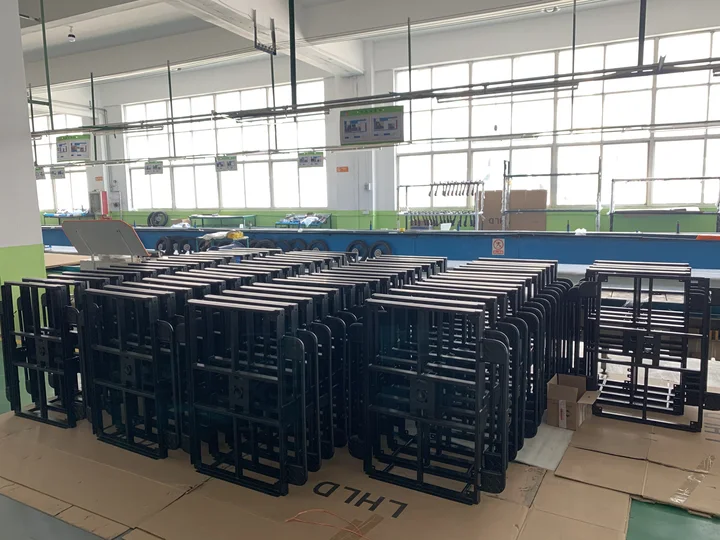
Na construção de uma bicicleta de carga, não se deve economizar em nada.
É onde se constrói confiança, longevidade e valor no mundo real.
Contate-nos para uma solução de design de quadro de bicicleta de carga personalizada.
 Portuguese
  English
  German
  Dutch
Dutch  Danish
  French
  Polish
  Spanish