

Wiele osób dorosłych, zwłaszcza tych powyżej 55. roku życia, przestaje jeździć konno nie dlatego, że tracą zainteresowanie.
Przestają jeździć, bo nie czują się już komfortowo, stabilnie i bezpiecznie.
Właśnie tutaj elektryczny trójkołowy rower poziomy odgrywa wyjątkową rolę. Zmieniając pozycję użytkownika, rozkład obciążenia i logikę sterowania, usuwa wiele fizycznych i psychologicznych barier, które uniemożliwiają osobom starszym pozostanie aktywnymi na rowerze.
Czym jest trójkołowy rower poziomy?
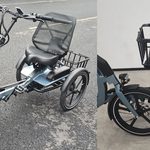
Jakiś elektryczny trójkołowy rower poziomy jest trójkołowy elektryczny trójkołowiec gdzie siedzi jeździec niżej i dalej do tyłu, wspierane przez pełne oparcie, a nie tradycyjne siodło.
W porównaniu z trójkołowymi rowerami pionowymi dla seniorów, ta konfiguracja:
- Obniża środek ciężkości
- Równomiernie rozkłada ciężar ciała
- Zmniejsza nacisk na kolana, biodra, nadgarstki, ramiona i dolną część pleców
Dzięki temu nadaje się szczególnie do:
- Jeźdźcy z problemami z równowagą
- Ból stawów lub ograniczona ruchomość
- Seniorzy odchodzą od rowerów dwukołowych
- Długie, bezstresowe przejażdżki rekreacyjne lub codzienne
Z perspektywy rynku są to: pojazdy mobilne stawiające na komfort, a nie rowery elektryczne o wysokiej wydajności.
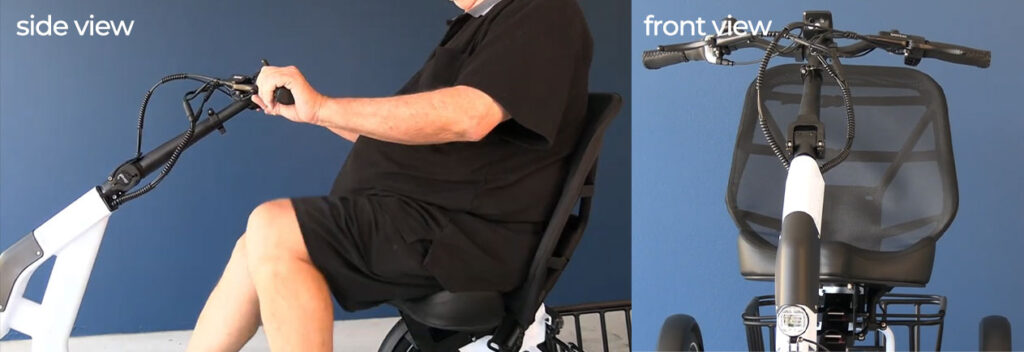
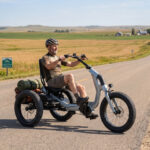
Zbliżenie pozycji siedzącej pokazujące kąt oparcia i postawę kierowcy.
Pozycja jazdy: Dlaczego konstrukcja półleżąca zmienia wszystko
To jest najważniejsza różnica między standardowymi 3-kołowymi rowerami dla seniorów a prawdziwie wygodnym poziomym trójkołowym rowerem elektrycznym.
Układ półleżący działa tylko wtedy, gdy siedzenie jest prawidłowo zaprojektowane. szeroki, siedzisko przypominające krzesło połączony z wspierające oparcie pozwala rowerzystom zachować pozycję wyprostowaną bez obciążania nadgarstków i dolnej części pleców. Taka geometria siedziska sprzyja dłuższym jazdom z mniejsze zmęczenie, szczególnie dla użytkowników z nadwrażliwością stawów lub zmniejszoną siłą rdzenia.
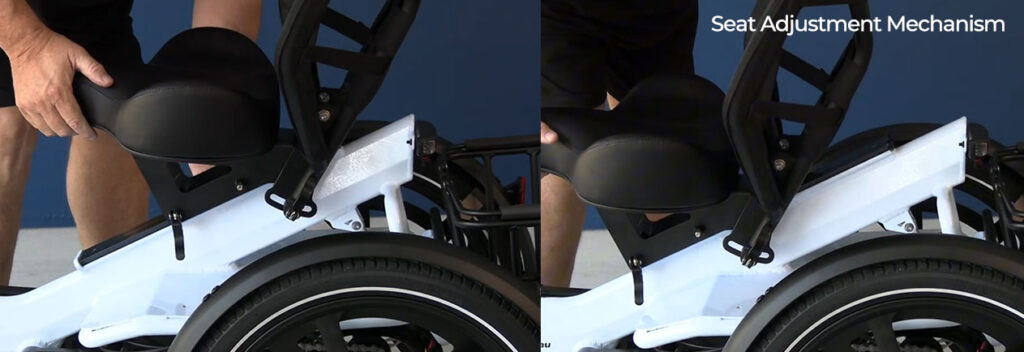
Jakiś kątowa przesuwna szyna siedziska Dodatkowo poprawia dopasowanie poprzez jednoczesną regulację zasięgu nóg i wysokości siodełka. Pozwala to uniknąć skomplikowanej, wielopunktowej regulacji i umożliwia rowerzystom szybkie osiągnięcie wygodnej pozycji, nawet bez wcześniejszego doświadczenia w jeździe na rowerze.
Wielu jeźdźców twierdzi, że pozycja podczas jazdy jest “naturalne” w ciągu kilku minut, nawet jeśli od lat nie jeździli na rowerze.
Analiza branży podkreśliła również, w jaki sposób półleżące trójkołowce elektryczne mogą pomóc większej liczbie osób w komfortowej jeździe przez lata, szczególnie w miarę zmiany potrzeb fizycznych >> Ten niezwykle wygodny trójkołowy rower elektryczny może sprawić, że więcej osób będzie jeździć nim przez lata
Stabilność tam, gdzie to ważne: niska prędkość, ruszanie i zatrzymywanie
Dla rowery trójkołowe dla starszych jeźdźców, stabilność przy niskiej prędkości liczy się bardziej niż prowadzenie przy dużej prędkości.
Kluczowe czynniki stabilności obejmują:
- Geometria trójkołowa
- Niski środek ciężkości
- Przewidywalna reakcja układu kierowniczego
- Brak konieczności zachowania równowagi podczas zatrzymywania się i ruszania
Na skrzyżowaniach, wspólnych ścieżkach i w trakcie częstych postojów konstrukcja ta eliminuje lęk przed wywróceniem się – jedną z głównych barier psychologicznych utrudniających seniorom powrót do jazdy na rowerze.
Dlatego wielu kupujących poszukujących najlepszego 3-kołowego roweru dla seniorów stawia na stabilność, a nie na prędkość.
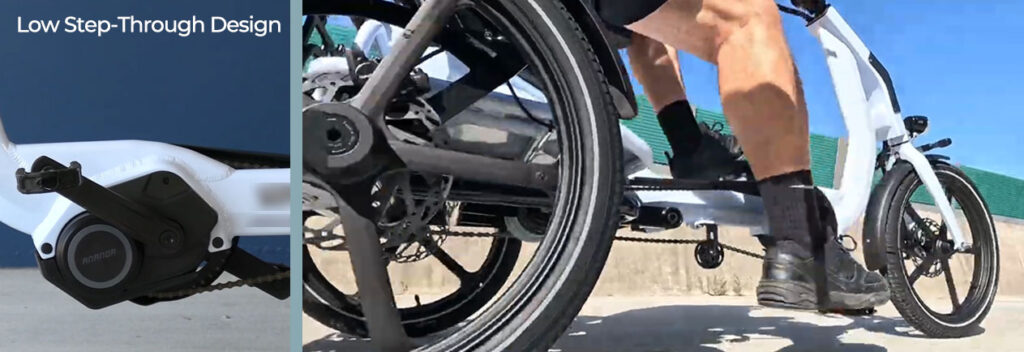
Łatwy dostęp: niskie przejście i intuicyjne sterowanie
Kolejnym nie podlegającym negocjacjom wymogiem dotyczącym trójkołowych rowerów dla seniorów jest dostępność.
Prawidłowo zaprojektowany trójkołowy rower poziomy powinien umożliwiać:
- Montaż przez przechodzenie bez unoszenia nóg
- Proste, intuicyjne sterowanie
- Brak zaawansowanych umiejętności jazdy na rowerze
Jeśli potrafisz kręcić pedałami, potrafisz jeździć.
Dzięki temu znacząco zwiększa się liczba dostępnych użytkowników, obejmująca:
- Więksi jeźdźcy
- Pasażerowie przesiadający się z balkoników lub wózków inwalidzkich
- Użytkownicy z ograniczoną ruchomością bioder lub kolan
Funkcja ta obniża barierę psychologiczną uniemożliwiającą jazdę na rowerze, tak samo jak barierę fizyczną.
Wspomaganie elektryczne: płynna moc, nieagresywne przyspieszenie
W przeciwieństwie do sportowych rowerów elektrycznych, elektryczne rowery 3-kołowe dla seniorów wymagają kontrolowane, przewidywalne dostarczanie mocy.
A silnik środkowy z wysokim momentem obrotowym i płynnym załączaniem umożliwia:
- Pewne pokonywanie wzniesień pod obciążeniem
- Starty bez wysiłku
- Dłuższa jazda bez zmęczenia
Typowa jazda w rzeczywistych warunkach skupia się na:
- Jazda z prędkością około 25 km/h
- Stabilność przy wietrze czołowym lub nachyleniu
- Efektywne wykorzystanie energii zamiast maksymalnej prędkości
Podejście to jest zbieżne z rzeczywistym sposobem użytkowania trójkołowych rowerów przez osoby starsze — do codziennych sprawunków, przejażdżek rekreacyjnych i do samodzielności, a nie do bicia rekordów prędkości.
Zasięg i pewność działania baterii
Pojemność akumulatora bezpośrednio wpływa na to, jak pewnie rowerzysta planuje swój dzień. System litowo-jonowy 48 V o mocy 650–700 Wh zazwyczaj umożliwia wyprawy na średnie dystanse bez częstego ładowania, jednocześnie zapewniając długotrwałą sprawność akumulatora.
Dla wielu starszych motocyklistów świadomość, że mogą przejechać cały dystans bez obaw o zasięg, jest ważniejsza niż maksymalna prędkość.
Hamowanie i bezpieczeństwo: Stworzone dla pewności, nie agresji
Układy hamulcowe w trójkołowcach dla dorosłych i seniorów muszą działać bez konieczności użycia siły rąk lub agresywnego wkładu. W przypadku rowerzystów ceniących sobie mobilność pewność hamowania ma bezpośredni wpływ na chęć jazdy w ruchu mieszanym lub na trasach współdzielonych.
Do kluczowych oczekiwań należą:
- Hydrauliczne hamulce tarczowe zapewniające kontrolowane zatrzymywanie
- Grubsze wirniki zapewniające lepsze zarządzanie ciepłem i dłuższą żywotność
- Hamulec postojowy do zabezpieczenia trójkołowca na pochyłościach
Oświetlenie i widoczność są równie istotne:
- Reflektory LED o dużej mocy
- Zintegrowane światła stopu
- Kierunkowskazy widoczne z tyłu i z boku
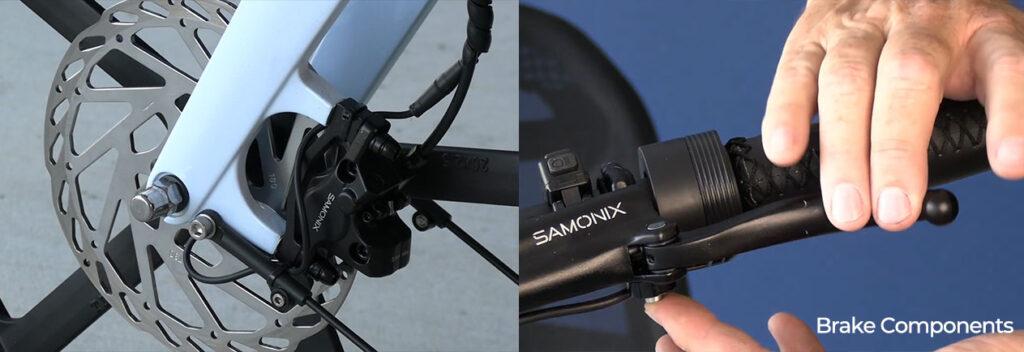
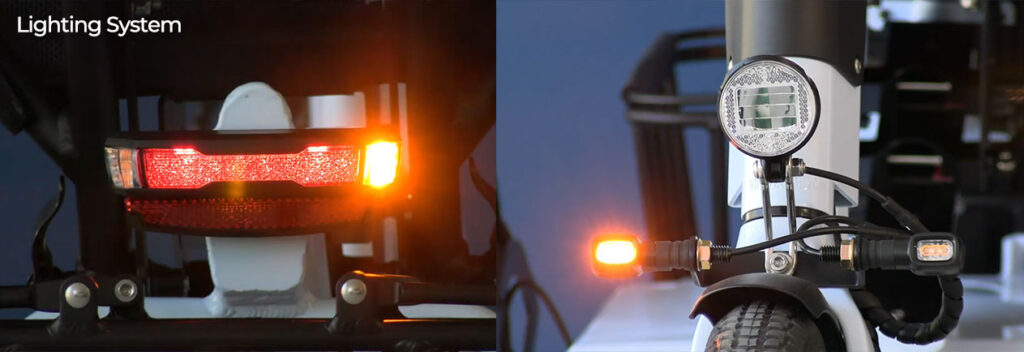
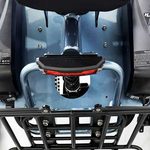
Szczegółowe ujęcie układu oświetlenia i elementów hamulcowych.
Komfort ponad odległością: siedzisko, zawieszenie i regulacja
Komfort nie jest w tej kategorii terminem marketingowym — jest to wymóg funkcjonalny.
Wysokiej jakości, wygodny, poziomy trójkołowy rower elektryczny charakteryzuje się zazwyczaj:
- Szeroka podstawa siedziska eliminująca punkty nacisku
- Oddychające oparcie z siatki
- Pełna regulacja siedziska do przodu/do tyłu i wysokości
- Regulowany kąt oparcia
- Zawieszenie dostosowane do nierównych dróg
Te funkcje pozwalają jeden zestaw ram pasujący do kolarzy o bardzo różnych rozmiarach, redukując złożoność SKU dla dystrybutorów i marek.
Użyteczność ładunku: Dlaczego trójkołowy rower dla dorosłych z koszykiem nadal ma znaczenie
Nawet w konstrukcjach leżących, praktyczna ładowność pozostaje kluczowa.
Wyjmowany tylny kosz oferuje:
- Codzienne zakupy
- Łatwe prowadzenie po zejściu z roweru
- Elastyczność dla pasażerów, którzy nie potrzebują ładunku podczas każdego przejazdu
Dla wielu kupujących sama ta funkcja sprawia, że trójkołowiec staje się pojazdem rekreacyjnym codzienne rozwiązanie w zakresie mobilności.
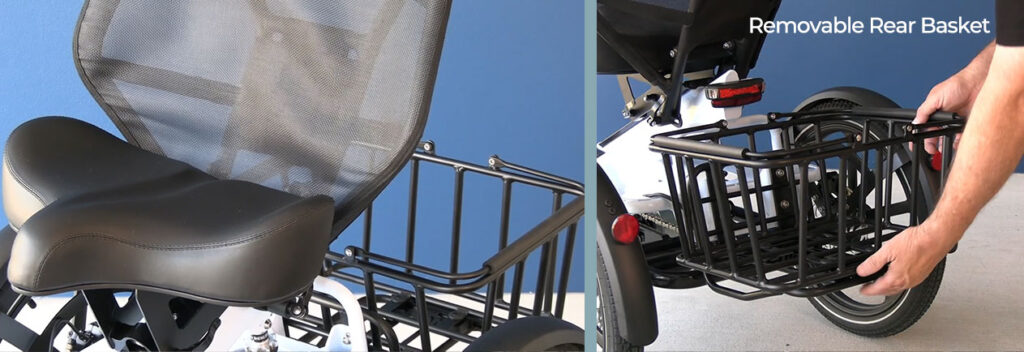
Tylny kosz można było zdjąć i nosić jako kosz na zakupy.
Promień skrętu i zwrotność w rzeczywistych warunkach
Jedną z powszechnych obaw kupujących rowery trójkołowe dla starszych użytkowników jest manewrowość.
Mały promień skrętu — wokół 2,4–2,5 metra dla pełnego obrotu o 360°—pozwala:
- Użyj na ścieżkach współdzielonych
- Łatwa nawigacja na parkingach
- Pewne zawracanie bez zsiadania z konia
Ma to bezpośredni wpływ na zaufanie użytkowników w środowiskach miejskich i podmiejskich.
Dla kogo właściwie przeznaczony jest trójkołowy rower poziomy?
Z perspektywy rynku kategoria ta służy:
- Seniorzy szukający niezależności
- Dorośli z problemami z poruszaniem się lub równowagą
- Jeźdźcy, którzy cenią sobie komfort bardziej niż osiągi sportowe
- Kupujący porównujący pomoce w poruszaniu się z rozwiązaniami rowerowymi
Dla wielu użytkowników oznacza to różnica między pozostaniem w domu a aktywnością fizyczną.
Ostateczny wgląd dla decydentów biznesowych
Trójkołowce elektryczne leżące to nie tylko kolejny produkt SKU.
Znajdują się na skrzyżowaniu:
- Mikromobilność
- Rozwiązania dla starzejącej się populacji
- Profilaktyka zdrowotna i niezależność
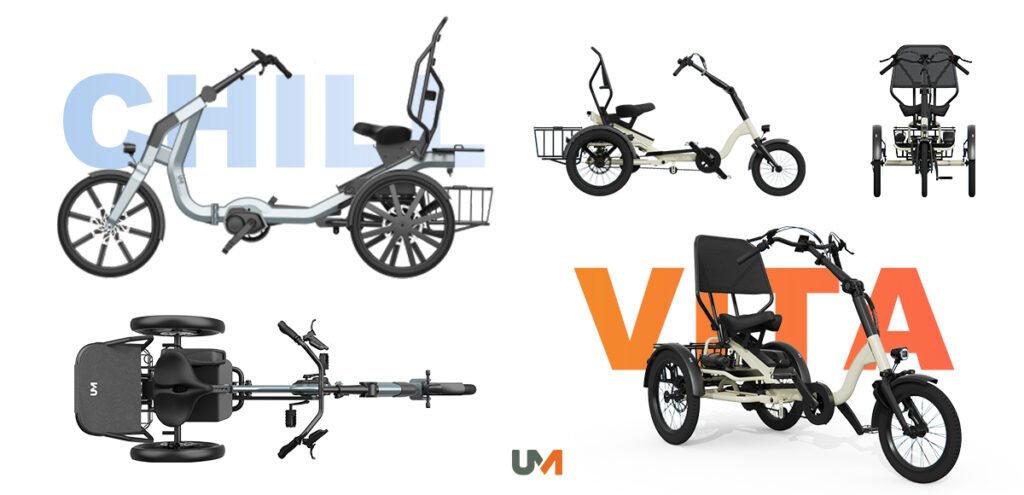
Za sukcesem wielu produktów z zakresu mobilności stoi nie tylko dobry pomysł, ale i zespół, który rozumie, jak jeżdżą prawdziwi użytkownicy.
Na UM, wspieraliśmy marki prywatne i dostawców rozwiązań mobilnych w opracowywaniu gotowych do wprowadzenia na rynek rozwiązań w szerokiej gamie kategorii — od trójkołowce elektryczne leżące I platformy mobilności seniorów Do kompaktowe rowery cargo typu long john, składane modele cargo, trójkołowe rowery cargo, rowery rodzinne, i rowery cargo do celów logistycznych.
Dzięki prawie dwudziestoletniemu doświadczeniu w branży łączymy wiedza inżynierska, projektowanie zorientowane na użytkownika, I kompletny system produkcyjny—od projektowania ram i zgodności z przepisami, przez skalowalną produkcję, po konkurencyjny łańcuch dostaw. Dzięki temu nasi partnerzy mogą dostosowywać produkty do lokalnych rynków z pewnością, niezawodnością i długoterminowym wsparciem.
 Polish
  English
  German
  Dutch
Dutch  Danish
  French
  Portuguese
  Spanish