Introduction: Why the Long John Cargo Bike Still Matters
The long john cargo bike is not a new invention, but it is one of the few cargo bike formats that has proven resilient across generations, markets, and use cases. Today, as European and North American cities push for car reduction, low-emission zones, and safer streets, the long john e bike has re-emerged as a core solution for family transport, last-mile delivery, and service fleets.
For B2B decision-makers—brand founders, product managers, sourcing leads, and fleet operators—the challenge is no longer whether to offer a long john bicycle, but how to design, source, and configure one that actually works in real-world conditions. This article goes beyond surface definitions to unpack the technical, regulatory, and operational realities behind long john cargo bikes, with practical guidance drawn from manufacturing and market experience.
What Is a Long John Bike? Definition and Short History
A long john bike is a two-wheeled, front-loading cargo bicycle where the cargo platform or box is positioned between the rider and the front wheel, distinguishing it from rear-loading designs and three-wheeled cargo bikes that rely on dual-wheel stability. The front wheel is steered via a linkage system rather than a direct fork–handlebar connection, allowing precise control even when carrying heavy or bulky loads.
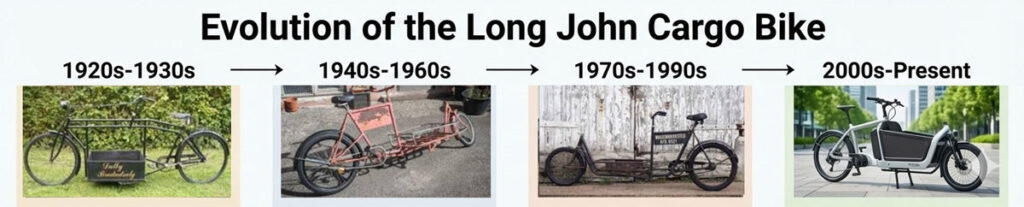
Era
Key Milestones
Impact on Design and Use
1920s-1930s
Invention in Denmark; patented linkage steering for stability.
Established front-loading for trades; narrow profile for city navigation.
1940s-1960s
Widespread adoption in Europe; models like Urania with serial numbering.
Enhanced durability for daily commercial use; integration of gears and brakes.
1970s-1990s
Decline due to motorized vehicles.
Shift to niche applications; preservation in cycling cultures.
2000s-Present
Electric resurgence; EU certifications like EN 17860.
Modern materials and motors; focus on sustainability and customization.
Originally developed in Scandinavia in the 1920s, the long john bicycle was designed for urban tradespeople—bakers, postal workers, and craftsmen—who needed stability and load visibility in dense city environments. Denmark and the Netherlands later refined the format for family use, embedding it into everyday mobility culture.
What distinguishes the long john cargo bike from longtail or trike designs is weight distribution. Loads are carried low and centrally, improving balance and predictability—especially important for child transport and inexperienced riders.
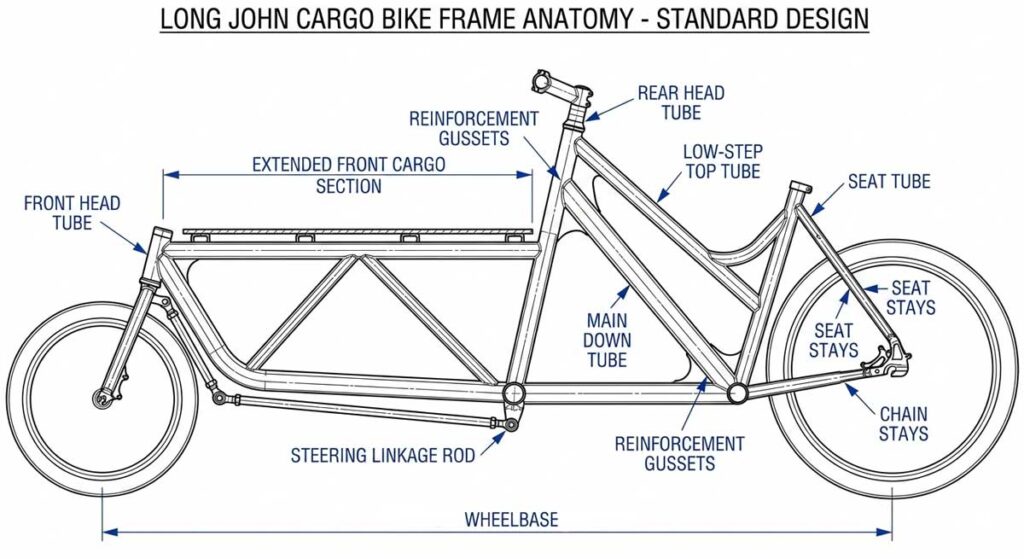
Anatomy of a Long John Cargo Bike Frame
Understanding the long john cargo bike frame is critical for anyone involved in product development or sourcing. Unlike standard e-bikes, cargo bike frames are semi-custom structures, often designed around a specific use case rather than a universal geometry.
Key Structural Components
Extended front frame section: Supports cargo box, basket, or modular mounting system
Main down tube and reinforcement members: Handle bending and torsional forces under load
Head tube and steering arm mounts: Interface with the steering linkage system
Rear triangle: Often reinforced to support child seats or rear racks
Low-step or mid-step entry: Improves accessibility for diverse users
Load ratings for quality long john frames typically range from 180–250 kg total system weight, depending on frame material, welding quality, and reinforcement strategy.
Steering Systems: The Most Overlooked Decision
Steering is where many long john projects succeed—or fail. The riding experience, safety perception, and maintenance burden are all influenced by steering design.
Common Steering Linkage Types Compared
Steering Type
How It Works
Pros
Cons
Cost Impact
Affects
Rod Linkage (Solid Bar)
Steel/aluminum rod connects handlebar to fork
Direct feel, durable, low flex
Heavier, alignment sensitive
Low–Medium
Turning radius, maintenance
Cable Steering
Tensioned cables control fork movement
Lighter, smoother routing
Cable stretch, higher maintenance
Medium
Steering precision over time
Hybrid (Rod + Damper)
Rod linkage with steering damper
Stable under load, beginner-friendly
Higher cost, more components
Medium–High
Rider confidence, safety
Advanced Modular Systems
OEM-specific engineered assemblies
Tuned feel, scalable design
Tooling cost, ODM dependency
High
Brand differentiation
For family-oriented long john e bikes, steering stability at low speeds is often prioritized. For logistics fleets, durability and ease of maintenance take precedence.
Frame Materials: Beyond the Marketing Debate
While aluminum alloys and steel dominate cargo bike frames, the decision is less about ideology and more about application fit.
Aluminum frames offer corrosion resistance and weight savings, ideal for urban private users and premium family models.
Steel frames excel in fatigue resistance and repairability, often favored by fleet operators and delivery services.
Hybrid frames: Steel front + aluminum rear for balanced cost and durability
In practice, many successful long john cargo bikes combine materials strategically—aluminum main frames with steel reinforcement zones—to balance weight, durability, and cost. Read the deeper insights of how to choose the cargo bike frame materials.
Electric Integration: Designing a Proper Long John E Bike
Electrification changes everything. A long john e bike is not simply a standard long john with a motor added.
Key Integration Considerations
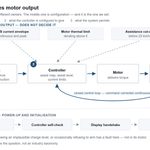
Motor placement: Mid-drive motors improve torque control under load; hub motors simplify maintenance
Battery positioning: Low and central placement preserves handling
Controller and wiring protection: Critical for all-weather European use
Thermal management: Overlooked in high-load, low-speed scenarios
In EU markets, compliance with EN 15194, motor output limits (250W nominal), and speed restrictions (25 km/h) must be designed in from day one—not retrofitted later.
Practical Uses: Where Long John Cargo Bikes Excel
Family Transport
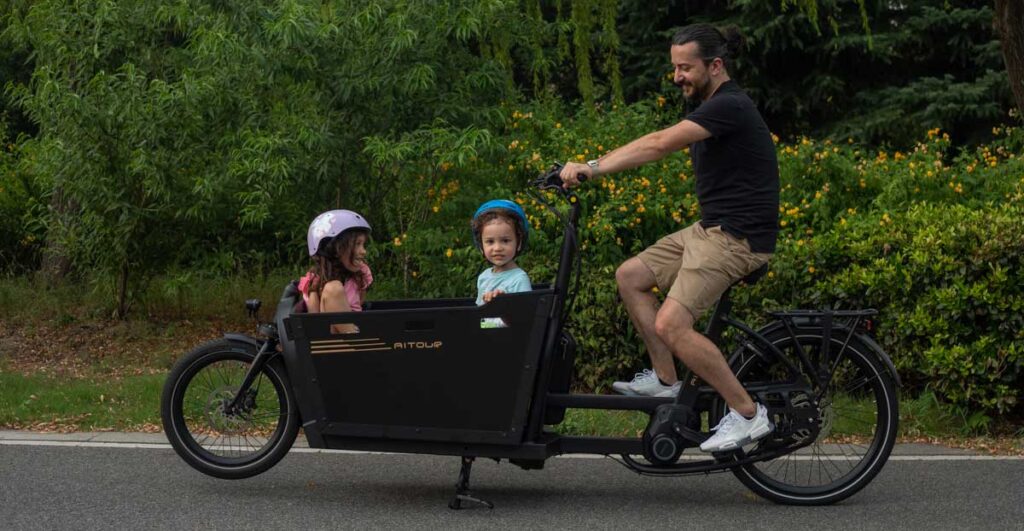
For families with one or two children, the long john bicycle remains one of the safest and most intuitive options.
Clear line of sight to children
Lower center of gravity than longtails
Compatible with rain covers and modular child seating
In user surveys across Germany and the Netherlands, families report replacing 60–80% of short car trips with a long john cargo bike after the first three months of ownership.
Business Logistics and Service Fleets
For urban delivery under 3–5 km per trip, long john cargo bikes offer measurable cost advantages.
Metric
Small Van
Long John E Bike
Annual operating cost
€4,000–6,000
€500–900
Parking time
High
Minimal
Access to bike lanes
No
Yes
CO₂ emissions
High
Near zero
Real-world fleet operators report ROI within 12–18 months, especially in cities with congestion charges or zero-emission zones.
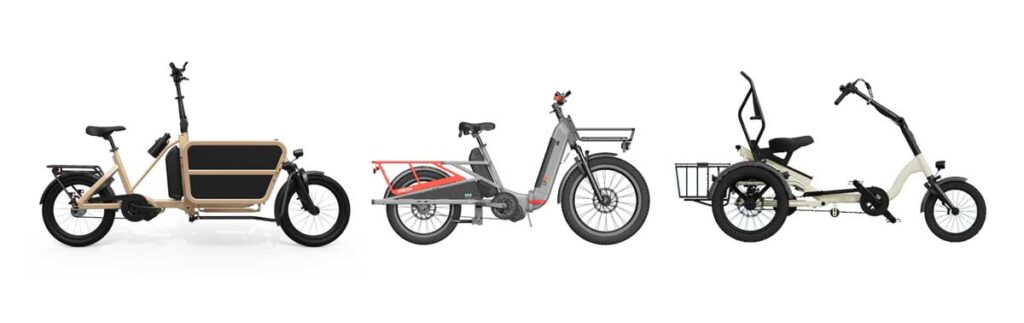
Long John vs Longtail vs Trike: Choosing the Right Tool
Low gravity with step-through design, static stability
Width, speed, infrastructure limits
Seniors and people with special needs
For B2B buyers, offering multiple formats within a modular platform can reduce development cost while covering broader market needs.
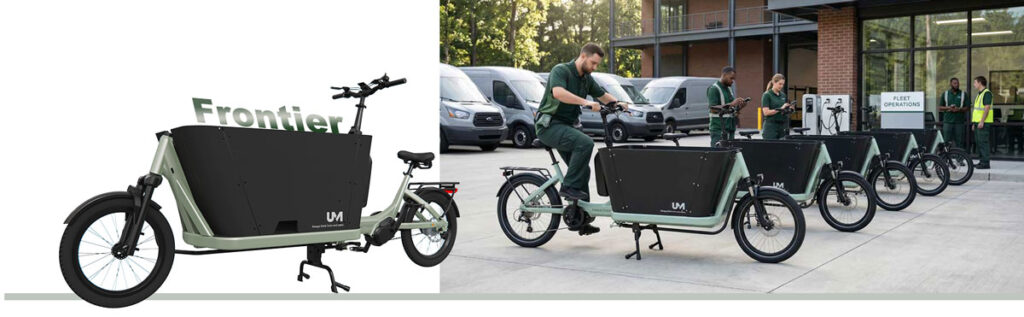
Two platforms worth considering if modularity is your primary requirement: the UM Flex and the UM Frontier.
The Flex is built around a flexible frame system that switches between passenger, child-carrying, and cargo configurations without retooling — dual loading platforms, MIK HD rack compatibility, and optional dual batteries make it practical for brands targeting both family and light commercial segments from a single SKU. The Frontier takes a more commercial-first approach, suited for fleet operators and logistics brands that need a heavier-duty long john platform with the same modular cargo module logic underneath.
Both are available for OEM/ODM development — frame geometry, branding, component spec, and cargo module design can be configured to your market and your product positioning.
Reviews of Top 2025-2026 Electric Long John Models
Recent reviews of electric long john bikes emphasize versatility.
The Urban Arrow Family Cargo Line earns praise for its premium build and smooth Bosch motor, handling families effortlessly at $7,999.
The Specialized Globe Haul LT, a long-tail hybrid with long john influences, scores 8.9/10 for 441 lb capacity and 60-mile range, though its length is noted ($3,800).
Affordable options like the ENGWE LE20 offer 440 lb loads and 109-mile ranges at $1,499, ideal for entry-level users.
Our UM Zip stands out for compactness, with a 50-65 km range and foldable design, certified to EU standards for reliable performance.
Manufacturing Reality: ODM Customization and Risk Control
Cargo bikes are not standardized products. ODM projects require close coordination between design and production.
Common ODM Customization Options
Frame geometry adjustments (wheelbase, head angle)
Modular cargo box interfaces
Rear rack configurations for child seats
Branding and color systems
Wiring and component localization
Tolerance control is critical. Deviations as small as ±0.5 mm in mounting points can lead to misalignment between frame, cargo box, and steering components—causing delays, rework, or safety risks.
Experienced manufacturers mitigate this by synchronizing design changes with tooling, jigs, and QA processes in real time.
Maintenance and Safety: What Experienced Operators Know
Regular steering inspection is more important than drivetrain servicing
Brake system upgrades are non-negotiable for loaded use
Frame inspection intervals should be shorter than standard e-bikes
Safety certifications such as EN 17860 (cargo bikes) and child seat standards significantly influence insurance acceptance and fleet adoption in Europe.
Future Trends: Compact, Human-Centric Long Johns
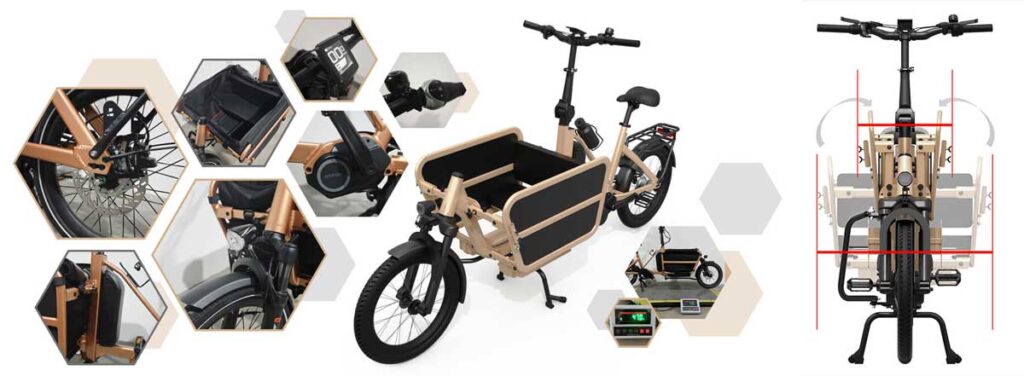
Urban density and apartment living are reshaping demand. Compact long john designs with foldable cabins, stems, or modular cargo zones are gaining attention—particularly among families without private storage.
Human-centric design elements—low-step frames, intuitive steering, and adaptable rear racks—are no longer optional. They are becoming baseline expectations.
Our Perspective: Building Long John Cargo Bikes That Work
With nearly 20 years of experience in cargo bike development, UM approaches the long john cargo bike as a system—not a single product. From EU-certified frames to EU-based assembly and ODM customization, our focus is on building platforms that scale across use cases while remaining compliant, reliable, and commercially viable.
Our compact long john solution, including foldable cabin and stem designs, reflects this philosophy: practical engineering shaped by real urban constraints.
If you are developing or sourcing a long john e bike for the European or North American market, understanding these fundamentals is the difference between a concept bike and a product that succeeds on the street.
For more industry insights and technical discussions, connect with UM and explore how experienced cargo bike manufacturing can reduce risk while expanding opportunity.




 English
  German
  Dutch
Dutch  Danish
  French
  Polish
  Portuguese
  Spanish