


Casi todas las fábricas ahora afirman que pueden construir una bicicleta de carga eléctrica compacta. Son muchos menos los que entienden lo que un distribuidor europeo en Múnich o una marca estadounidense en Denver realmente necesita para poner un producto en el estante y venderlo. Este informe analiza el segmento desde la perspectiva de un fabricante: qué modelos tienen éxito, qué elogian y qué critican los propietarios, y las certificaciones que determinan si un producto puede venderse legalmente.
La versión corta: El segmento compacto de bicicletas de carga es donde se concentra el crecimiento y donde la barrera de entrada es menor para una marca. Los compradores valoran las bicicletas que son lo suficientemente pequeñas para guardar y estacionar, lo suficientemente ligeras para que las maneje un ciclista de menor estatura, lo suficientemente fiables como para no tener que llevarlas a un taller y certificadas según el estándar que exige el mercado de destino: EN 15194 / EN 17860 en Europa y UL 2849 en EE. UU. Si se cumplen estos cuatro requisitos, un modelo compacto se convierte en la bicicleta de carga más fácil de vender.
¿Qué tamaño tiene el segmento de vehículos de carga compactos en Europa y Estados Unidos?
La tendencia no es sutil. En Alemania, el mercado de carga más grande del mundo, las ventas de bicicletas de carga para consumidores aumentaron de aproximadamente 60.000 unidades en 2018 a 235.250 unidades en 2024, y esas cifras excluyen explícitamente las bicicletas de uso comercial, que se cuentan por separado (ZIV, la asociación alemana de la industria de la bicicleta.El segmento de vehículos de carga es ahora uno de los grupos de modelos de más rápido crecimiento en el mercado, mientras que el auge general de las bicicletas se ha moderado.
A nivel mundial, el mercado de bicicletas de carga eléctricas se valoró en alrededor de Se prevé que alcance los 2.000 millones de dólares en 2024 y que llegue a cerca de 2.900 millones de dólares en 2029., con Europa pasando de aproximadamente 1.050 millones de dólares a 1.600 millones de dólares en el mismo período (SGS, 2024). Para contextualizar las expectativas de precio, la bicicleta eléctrica promedio vendida en Alemania en 2024 se vendió por unos 2.650 € (Datos de mercado de ZIV 2024) — un punto de anclaje útil al colocar un modelo compacto debajo del nivel de ropa interior larga de tamaño normal.
El subsegmento compacto y mini importa por una razón estructural: un calzoncillo largo completo mide aproximadamente 2,5 metros de largo y no cabe en un ascensor, un pasillo o el maletero de un coche. Ese simple hecho ha frenado silenciosamente su adopción durante años. Una plataforma compacta mantiene la mayor parte de la utilidad de transporte al tiempo que elimina la objeción de almacenamiento, que es precisamente por lo que es el punto de entrada con menor fricción a la categoría para una nueva marca. (UM cubre esa tesis de almacenamiento en profundidad en el mini bicicleta de carga plegable guía.)
Los modelos que prefieren los compradores de la UE y EE. UU., y en qué acertaron.
Si analizamos las bicicletas que recomiendan tanto los críticos como los usuarios, observamos un patrón. Ninguna destaca únicamente por su capacidad de carga; todas triunfan gracias a una combinación específica de compacidad, ergonomía, precio y facilidad de mantenimiento.
| Modelo (región) | Lo que los compradores valoran |
|---|---|
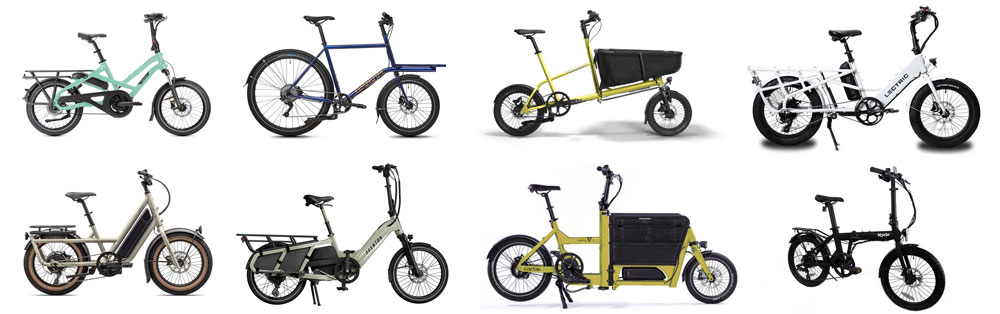
| Tern HSD / Transporte rápido / Transporte corto (UE + EE. UU.) | Compacta y fácil de aparcar como una bicicleta normal, con cuadro bajo y una sólida red de distribuidores y accesorios. La Quick Haul es considerada la bicicleta de carga ideal para la mayoría de las familias. |
| Omnium Mini / Mini Max (UE + EE. UU.) | “Su manejo ágil y compacto, similar al de una bicicleta normal, no nervioso, demuestra que sus propietarios han sustituido un coche por ella. Prueba de que una bicicleta compacta con carga frontal puede soportar un peso considerable. |
| YOONIT, Car.los V1 (Alemania) | Su reducido tamaño, sus elementos plegables, su ensamblaje local y sus cortas cadenas de suministro hacen que se convenza por su facilidad de almacenamiento y por la idea de "saber de dónde viene mi bicicleta". |
| Specialized Globe Haul ST, Aventon Abound (A NOSOTROS) | Altura reducida, geometría universal y precio inferior a $2k, dirigido directamente al comprador que busca un segundo coche de sustitución. |
| Edición Lectric XPedition (A NOSOTROS) | Precio competitivo (aproximadamente 1399 T/1TP), opción de doble batería, manillar y pedales plegables para facilitar su almacenamiento. Es el referente en relación calidad-precio de toda la categoría. |
| Experto Integral“ (A NOSOTROS) | Diseñada específicamente para ciclistas de menor estatura y mujeres que se sentían desequilibradas en bicicletas diseñadas para personas más altas, un problema que el mercado general ignoró durante años. |
| Mycle Cargo / Compact Plus (Reino Unido) | Precios competitivos, batería adicional opcional, sistema de propulsión sencillo basado en el buje que facilita el mantenimiento: una estrategia deliberada para mejorar la facilidad de servicio. |
La conclusión para una marca que busca su propio modelo es la siguiente: el nicho de mercado no se reduce a "más espacio de carga". Se trata de una bicicleta compacta que un ciclista de menor estatura puede manejar con confianza, que se guarda cerca de donde vive el comprador y que no necesita una visita al taller cada temporada.
Lo que dicen los propietarios reales (y la decisión de diseño detrás de cada queja)
Extraídas de reseñas de usuarios, foros de bicicletas eléctricas e hilos de Reddit, las objeciones recurrentes son sorprendentemente consistentes, y cada una se corresponde con una decisión de especificación que controla el fabricante.
| Lo que dicen los propietarios | Qué significa para la especificación |
|---|---|
| “Es demasiado grande y pesado para mi apartamento/pasillo.” | El manillar y la potencia plegables, una longitud desplegada inferior a 1,6 m y la disciplina en el peso son más importantes que la capacidad de carga máxima anunciada. |
| “Me sentía desequilibrada e inestable, sobre todo cargada de niños.” | Centro de gravedad bajo, fácil acceso al cuadro, rueda delantera más pequeña, manejo seguro a baja velocidad para ciclistas de menor estatura. |
| “Pasé más tiempo arreglándola que conduciéndola.” | Combinación probada de motor y controlador, componentes sellados, neumáticos resistentes a los pinchazos, piezas comunes en toda la gama. |
| “La marca de venta directa al consumidor quebró y no puedo conseguir repuestos.” | Componentes estándar y de fácil mantenimiento que un distribuidor puede tener en stock, no piezas patentadas hechas a medida. |
| “Me asustan los robos y el tráfico de la ciudad.” | Sistema de seguimiento integrado (por ejemplo, soportes compatibles con AirTag), buena iluminación, intermitentes y un cuadro que se bloquea como el de una bicicleta normal. |
Los analistas suelen plantear la decisión entre tracción en el buje y tracción central: la tracción central sube cuestas y transporta mejor cargas, mientras que la tracción en el buje es más económica y fácil de mantener. No existe una respuesta universal: la mejor opción depende del terreno del mercado de destino y de la capacidad de servicio posventa del comprador, que es precisamente el tipo de decisión que un socio ODM debería ayudar a tomar a la marca, en lugar de imponerla.
Las certificaciones que controlan el acceso a la UE y EE. UU.
Aquí es donde muchos proyectos de abastecimiento se estancan. Una bicicleta de carga compacta, excelente para conducir pero que no cumple con la normativa del destino, no puede venderse legalmente. Las dos regiones presentan marcadas diferencias.
| Mercado | Lo que necesitas | Estado/tendencia |
|---|---|---|
| UE | EN 15194 (EPAC seguridad eléctrica y de bicicletas), la nueva EN 17860 serie de bicicletas de carga, batería a EN 50604-1, además del marcado CE. | La norma EN 17860 es la primera norma europea armonizada para bicicletas de carga, que sustituye la dependencia de la norma DIN 79010, exclusiva de Alemania. Las partes se estaban finalizando entre 2024 y 2025 (SGSLos compradores lo piden cada vez más por su nombre. |
| A NOSOTROS | UL 2849 para el sistema eléctrico completo, con celdas para UL 2271. | La CPSC solicitó el cumplimiento a finales de 2022; la ciudad de Nueva York exigió la certificación de terceros en 2023; el estado de Nueva York y California (SB 1215) avanzan para exigirla para las nuevas ventas en 2026 (Soluciones ULLos modelos no certificados están siendo retirados de los estantes. |
Para una marca, la implicación práctica es que el proceso de certificación debe diseñarse desde la primera muestra, no añadirse antes del envío. Un fabricante que ya produce según la norma EN y puede seguir el proceso UL 2849 elimina la principal causa de retraso en el lanzamiento.
Dónde encaja un modelo como UM Tiny y cómo conseguir el tuyo propio.
El comprador que el mercado sigue describiendo —un ciclista urbano más pequeño, a menudo mujer, que quiere capacidad de carga sin el volumen de una bicicleta de carga, además de viajeros multimodales y hogares compactos sin lugar para guardar un traje de baño largo— es precisamente quien UM Tiny Fue diseñado pensando en ello. Se pliega en segundos hasta alcanzar aproximadamente las dimensiones del maletero de un coche, funciona con un motor de buje de 50 N·m con una batería de 36 V/10 Ah, monta neumáticos antipinchazos de 14″ delante y 20″ detrás, e incluye plataformas de carga delanteras y traseras, una cesta de liberación rápida, el sistema de portaequipajes MIK HD y soportes compatibles con AirTag.
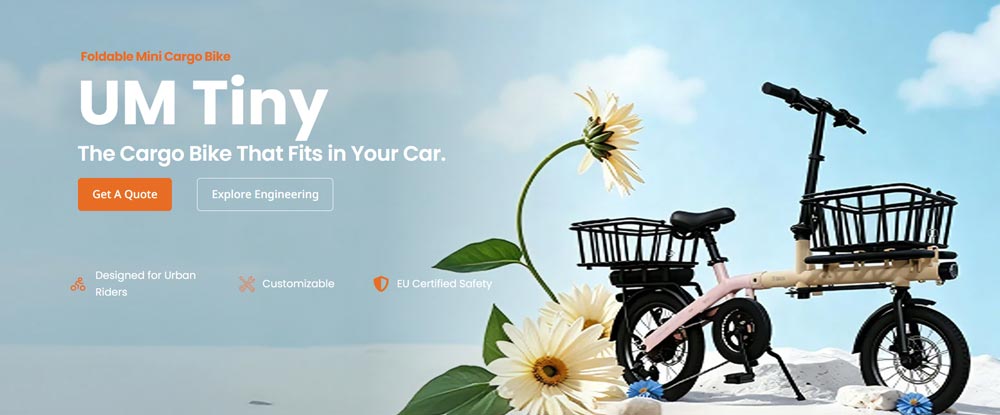
Como fabricante OEM/ODM, United Mobility configura y produce según las especificaciones de la marca; no vende unidades individuales al por menor. Una plataforma compacta se puede adaptar al terreno (mapeo de centro de control o de asistencia), personalizar con su marca y componentes, y obtener la certificación EN o UL que su mercado requiera, con un pedido mínimo flexible y plazos de entrega que suelen oscilar entre 45 y 60 días, según el volumen.
¿Está planificando una línea de carga compacta para Europa o Norteamérica? Obtén un plan de especificaciones, muestras y certificación diseñado en función de tu mercado objetivo, no de una bicicleta genérica de catálogo. Habla con el equipo de ODM de United Mobility →
Lectura relacionada: Mini bicicleta de carga plegable · Bicicletas de carga de tres ruedas · Bicicletas de carga eléctricas comerciales en Europa · Gama completa de carga UM
Preguntas frecuentes
¿Qué es una bicicleta de carga eléctrica compacta?
Se trata de una bicicleta eléctrica de carga acortada —normalmente una bicicleta de carga frontal tipo short-john, una compacta longtail o una mini plegable— que conserva una capacidad de carga útil (niños, compras, paquetes) sin dejar de ser lo suficientemente pequeña como para aparcarla, guardarla y manejarla como una bicicleta normal. La clave es la utilidad sin ocupar los 2,5 metros de espacio que ocupa una long-john de tamaño completo.
¿Qué certificaciones necesita una bicicleta eléctrica de carga para poder venderse en Europa?
La norma de referencia para la seguridad eléctrica de las bicicletas es la EN 15194, y se espera cada vez más la implementación de la nueva norma EN 17860 para bicicletas de carga y la norma EN 50604-1 para baterías, todas ellas con marcado CE. La EN 17860 es la primera norma europea armonizada específicamente para bicicletas de carga.
¿Es obligatoria la norma UL 2849 para las bicicletas eléctricas de carga en Estados Unidos?
La situación se está volviendo cada vez más común. La ciudad de Nueva York exige la certificación de terceros desde 2023, y tanto el estado de Nueva York como California implementarán la norma UL 2849 para las nuevas ventas en 2026. Incluso donde aún no es ley, los minoristas rechazan cada vez más los modelos no certificados.
¿Motor de buje o motor central para una bicicleta de carga compacta?
La transmisión central soporta mejor la carga y las pendientes, y es ideal para mercados con terreno montañoso; la transmisión en el buje es más económica y fácil de mantener, lo cual es importante donde el servicio posventa es limitado. La decisión debe basarse en el terreno de destino y la capacidad de reparación del distribuidor, no en la elección predeterminada.
Fuentes: ZIV (ziv-zweirad.de), datos de mercado y carga alemanes de 2024; SGS EN 17860 / informe sobre el tamaño del mercado de 2024; resumen de la certificación UL 2849 de UL Solutions. Las cifras se atribuyen a sus años de publicación.
Movilidad Unida (Wuxi United Mobility Technology Inc.) es un fabricante ODM/OEM de bicicletas de carga con casi dos décadas de experiencia en el suministro de bicicletas de carga personalizadas a operadores, municipios y marcas privadas en Europa y Estados Unidos.
 Spanish
  English
  German
  Dutch
Dutch  Danish
  French
  Polish
  Portuguese