
Elegir un fabricante de triciclos eléctricos para adultos no es lo mismo que elegir una fábrica de triciclos eléctricos. Un chasis de fácil acceso y una cesta no convierten automáticamente un vehículo en apto para personas mayores. La movilidad para personas mayores es una disciplina de ingeniería y posicionamiento, y la mayoría de los proveedores de triciclos eléctricos genéricos nunca la han aplicado. Así es como se distingue antes de realizar una compra.
Si has leído por qué El triciclo para personas mayores desmedicalizado es una categoría desatendida., La pregunta sobre el abastecimiento surge naturalmente: ¿quién puede construir un pozo, en el volumen que usted necesita y bajo su marca? Utilice las seis comprobaciones que se indican a continuación.
1. Capacidad de diseño para la movilidad de personas mayores: no es un triciclo de carga con otra marca.
Esta es la prueba que distingue a un verdadero fabricante de triciclos eléctricos para personas mayores de un simple intermediario. Pregunte cómo el proveedor diseña las piezas que determinan si un ciclista mayor puede seguir disfrutando de la bicicleta:
- Asiento y respaldo, No se trata de un sillín atornillado a un cuadro. El asiento es el factor más importante para la comodidad; debe brindar soporte a la espalda y redistribuir el peso, alejándolo de las muñecas, las caderas y la zona lumbar.
- Estabilidad a baja velocidad, Porque para este piloto, el verdadero miedo reside en volcarse estando parado o en una curva cerrada, no en la conducción a alta velocidad.
- Fuerza de frenado calibrada para baja fuerza manual. Si para detener el producto hay que apretarlo con fuerza, entonces el producto no cumple con su función.
- Ajuste de la capacidad Lo suficientemente amplio como para que un solo cuadro sirva para ciclistas muy diferentes, lo que también reduce la cantidad de referencias de productos.
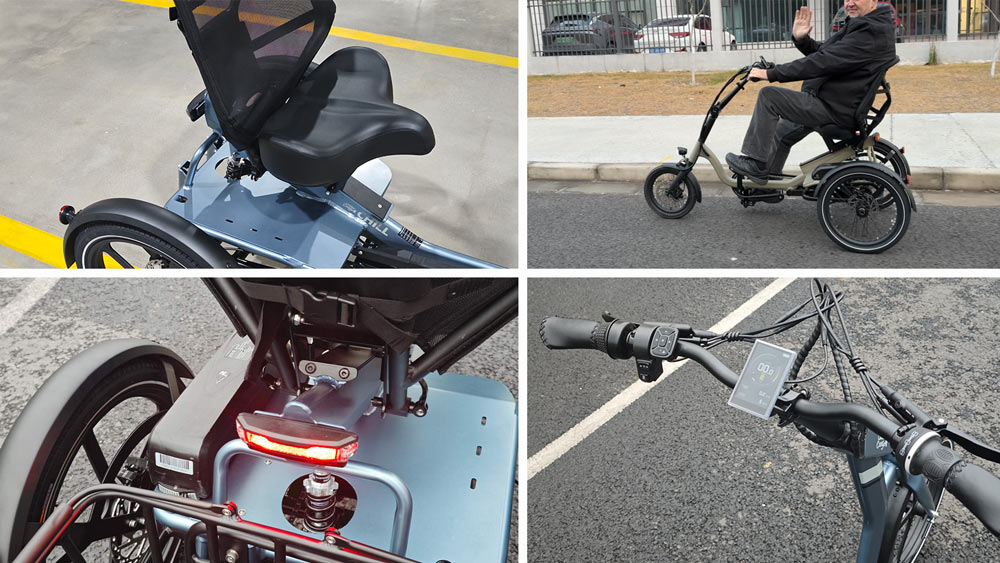
Un proveedor que responde a estas preguntas con detalles concretos ya ha trabajado con soluciones de movilidad para personas mayores. Un proveedor que muestra un triciclo de carga con un tubo superior más bajo no lo ha hecho.
2. Un lenguaje de diseño desmedicalizado
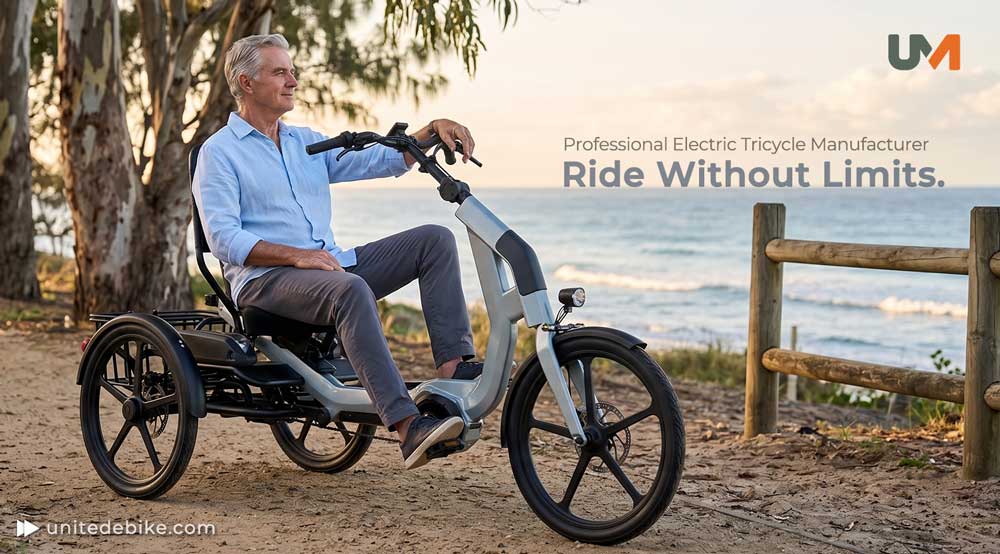
La investigación sobre la aceptación es contundente: los ciclistas mayores abandonan los productos que parecen ayudas médicas. Los dispositivos con estilo de equipo de ocio se usan; los de aspecto clínico se quedan en el garaje. Por lo tanto, su fabricante debe tratar apariencia como requisito funcional — Color, forma y acabado que transmitan la imagen de un vehículo cómodo para el día a día, no la de un aparato hospitalario adaptado. Si la fábrica considera el diseño como algo meramente estético en lugar de un elemento fundamental para la aceptación del cliente, le entregará un producto que sus clientes rechazarán tácitamente.
3. ¿Una ruta de conformidad documentada o simplemente “certificación CE sobre el papel”?
“Tenemos CE” es donde empiezan las verdaderas preguntas, no donde terminan.
Lo que la mayoría de los compradores desconoce es que no existe una norma armonizada específica para triciclos eléctricos. La norma EN 15194, conocida como norma EPAC, cubre formalmente las bicicletas de dos ruedas. La norma EN 17860 cubre las bicicletas de carga, diseñadas para transportar mercancías. Un triciclo de movilidad personal se sitúa entre ambas, lo que significa que su marcado CE se basa en la Directiva de Maquinaria de la UE (2006/42/CE), respaldada por ensayos realizados de acuerdo con la norma EN 15194 aplicada a triciclos, una evaluación de riesgos documentada y la certificación de seguridad de la batería (EN 50604-1, UN 38.3).
Esa diferencia es precisamente lo que distingue a un fabricante real de un simple proveedor. Una fábrica que comprende esta categoría puede explicarle sin dudarlo su proceso de conformidad: qué directiva cita la Declaración de Conformidad, qué normas referencia cada informe de ensayo y qué abarcó la evaluación de riesgos. Una fábrica que solo repite “tenemos el marcado CE” suele haber comprado un certificado, pero no ha elaborado un expediente de conformidad.
Por lo tanto, la pregunta que hay que hacer no es "¿tienen la certificación CE?" —todos responden que sí—. En cambio, pregunte: "¿Qué proceso de conformidad sigue su expediente técnico para este triciclo y puedo ver la evidencia de las pruebas?". La rapidez y la especificidad de la respuesta le dirán casi todo.
Lecturas recomendadas: Cumplimiento de la normativa europea para bicicletas de carga: guía completa para importadores.
4. Flexibilidad real de ODM y marca privada para triciclos eléctricos para personas mayores
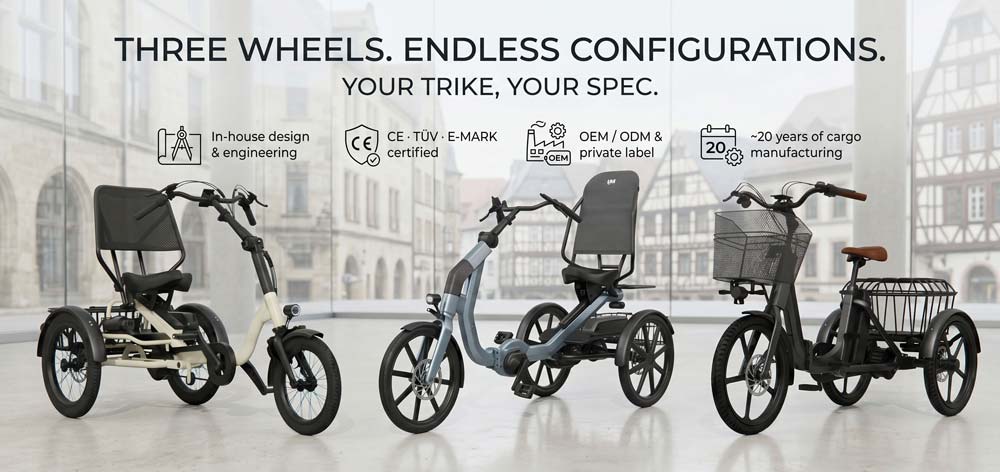
Una unidad estándar con su etiqueta no es una línea de productos. El ODM genuino de triciclos de movilidad para personas mayores significa que puede configurar sistema de transmisión, controles, marca, accesorios y cumplimiento regional para que la gama se ajuste a su mercado y se lea como tuyo. Esa flexibilidad es lo que permite a un distribuidor crear una línea coherente de dos o tres modelos —una opción compacta y otra más grande— en lugar de revender lo que la fábrica ya produce. Si su objetivo es un triciclo eléctrico para personas mayores con marca propia, este es el factor decisivo.
5. Trayectoria, escala y servicio posventa: Evaluación de un proveedor sénior de triciclos eléctricos
La movilidad para personas mayores es un negocio a largo plazo, a menudo programático: los municipios, las residencias para la tercera edad y los centros de rehabilitación compran por años, no por una sola temporada. Por lo tanto, un proveedor confiable de triciclos eléctricos para personas mayores debe demostrar su trayectoria: años de experiencia en el diseño de triciclos para adultos, I+D y producción propias (no comercialización), disponibilidad de repuestos y una garantía que se extienda más allá del primer envío. Una fábrica que no puede suministrar repuestos en tres años representa un riesgo para un contrato de flota.
6. Conocimiento del mercado en el que puedes apoyarte
Los mejores socios asesoran, no solo fabrican. Si un mercado determinado toma un vertical triciclo (familiar, visible en el tráfico, menor necesidad de subir al conductor) o un semirreclinado ¿Uno (menor fatiga, a menudo se lee incluso menos “médico”)? Un proveedor que pueda razonar eso con usted, utilizando el tipo de compensaciones en nuestro Comparación entre posición reclinada y posición erguida — vale más que uno que simplemente envía el SKU que usted indica.
Una guía rápida para evaluar a un fabricante de triciclos eléctricos para adultos mayores.
| Controlar | El pase parece | El fracaso parece |
|---|---|---|
| Capacidad de diseño | Asiento de ingeniero, estabilidad, frenado, apto para personas mayores. | “Tiene un acceso bajo”.” |
| Diseño desmedicalizado | El estilismo se considera fundamental para la adopción. | El estilismo tratado como cosmético |
| Cumplimiento | EN 15194 (y UL cuando sea necesario), con evidencia | “Tenemos CE” y nada más |
| Flexibilidad del fabricante de diseño original (ODM) | Sistema de transmisión, controles, marca y cumplimiento configurables. | Unidad de stock fija + su logotipo |
| historial | Años de I+D en triciclos para adultos, producción propia, repuestos, garantía. | Empresa comercial, sin canal de repuestos |
| Asesoramiento de mercado | Recomienda el formato por mercado y canal. | Toma el pedido, no pregunta nada. |
Donde United Mobility encaja como su fabricante de triciclos eléctricos para personas mayores
Construimos nuestras plataformas para personas mayores basándonos exactamente en esta lista de verificación. United Mobility es un fabricante OEM/ODM de triciclos eléctricos para personas mayores con Casi dos décadas de experiencia con triciclos para adultos. y con ingeniería y producción propias, no una marca comercial que revende cuadros de otra persona. Nuestros modelos senior están construidos con la última tecnología. EN 17860 Viene de serie con componentes certificados, y cada plataforma admite la configuración ODM del sistema de transmisión, los controles, la marca y el cumplimiento de las normativas regionales.
La gama se compone de dos modelos que, deliberadamente, cubren las necesidades de diferentes motoristas:
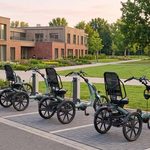
- Chill — La plataforma semirreclinada más grande y de gama alta. Un motor central de 120 N·m, cambio interno que permite cambiar de marcha incluso estando detenido, frenos de disco hidráulicos con rotores más gruesos, luces e intermitentes integrados, un chasis modular desmontable para facilitar el transporte y un asiento con riel deslizante apto para usuarios de hasta 1,95 m de altura. Diseñado para compradores que buscan un triciclo para personas mayores con especificaciones completas y seguro para la carretera.
- Vita — La hermana pequeña, compacta y ligera. Un cuadro más corto, una rueda delantera más pequeña y un radio de giro más reducido la hacen notablemente más ágil en espacios reducidos y la convierten en la opción ideal para ciclistas de menor estatura y mujeres, el segmento de mercado europeo que los cuadros de gran tamaño suelen excluir. Acceso bajo, asiento ajustable extra ancho, autonomía opcional con doble batería.
- Trío — Triciclo eléctrico vertical estándar: familiar, estable y fácil de usar. Adopta una postura de ciclismo tradicional, que resulta inmediatamente familiar para muchas personas mayores. La posición de conducción mantiene el torso vertical, lo que ofrece buena visibilidad en el tráfico y un control sencillo.
Ambos modelos son semi-reclinados y priorizan la comodidad, diseñados para ser percibidos como vehículos de ocio más que como ayudas para la movilidad, y ambos se pueden adaptar a su mercado. Si sus compradores prefieren un formato vertical, también lo fabricamos.
En resumen: elegir un triciclo eléctrico para personas mayores no se trata tanto de quién ofrece el modelo más barato, sino de quién ha resuelto realmente los problemas que experimentan los usuarios de mayor edad. Empiece por la lista de verificación, solicite pruebas y seleccione a los proveedores que respondan de forma específica.
Para dar el siguiente paso, explore la Gama completa de plataformas de triciclos eléctricos para personas mayores o la más amplia catálogo de triciclos eléctricos, y consúltenos sobre una configuración ODM para su mercado. O bien, póngase en contacto con nuestro gerente de ventas para obtener un presupuesto rápido. Contáctanos.
Preguntas frecuentes
¿Qué debo buscar en un fabricante de triciclos eléctricos para personas mayores?
Capacidad de diseño genuina para la movilidad de personas mayores (asiento, estabilidad a baja velocidad, fuerza de frenado, rango de ajuste), un lenguaje de diseño desmedicalizado, cumplimiento de las normas EN 17860 / EN 15194 (y UL cuando corresponda), verdadera flexibilidad de ODM/marca privada, historial comprobado con repuestos y garantía, y un socio que puede asesorar sobre el formato según el mercado.
¿Es importante la norma EN 17860 a la hora de adquirir triciclos eléctricos para personas mayores en Europa?
Sí. La norma EN 17860 es la norma europea específica para triciclos con asistencia eléctrica. El proveedor debe diseñar y certificar sus vehículos conforme a esta norma, junto con la EN 15194 para el sistema de asistencia y la certificación de seguridad de la batería, en lugar de basarse en una declaración CE genérica.
¿Se puede comercializar un triciclo eléctrico para personas mayores con marca propia?
Sí, con un verdadero socio ODM. Debería poder configurar la transmisión, los controles, los accesorios, la marca y el cumplimiento de las normativas regionales para que el resultado sea una línea coherente bajo su propia marca, no una unidad estándar con un logotipo añadido.
 Spanish
  English
  German
  Dutch
Dutch  Danish
  French
  Polish
  Portuguese