
The largest electric trike market opportunity is not the shoppers comparing models this week. It is the far bigger group of people who have every reason to ride one and never consider it at all. Most brands size the market by counting active buyers — the people already typing “electric trike for seniors” into a search bar. The growth sits somewhere else: in the people who never enter that funnel, and reaching them is a positioning problem, not a spec-sheet one.
For a brand, distributor or retailer, that shifts where growth comes from. The visible market is crowded and priced to the floor. The invisible one — people who could use a trike but rule it out before they ever look — is larger, barely contested, and unlocked by understanding why they say no. This piece breaks down those reasons, how they differ between the US and Europe, and what they mean for the range you build and the story you tell.
The market you measure, and the one you miss
The visible market is easy to count and hard to win. It is made of people already shopping, and they mostly decide on price and features, which pushes margins down and turns the category into a race. The invisible market is the opposite: people with a real need — short local trips, a wish to stay active, a bicycle they no longer trust — who never put a trike on their list. Converting that non-consideration into consideration grows the whole category rather than fighting over the slice everyone else is already chasing. That is where the real opportunity is, and it is a marketing and positioning job before it is a manufacturing one.
Why people who could use a trike rule it out
Two barriers do most of the work, and neither is about price.
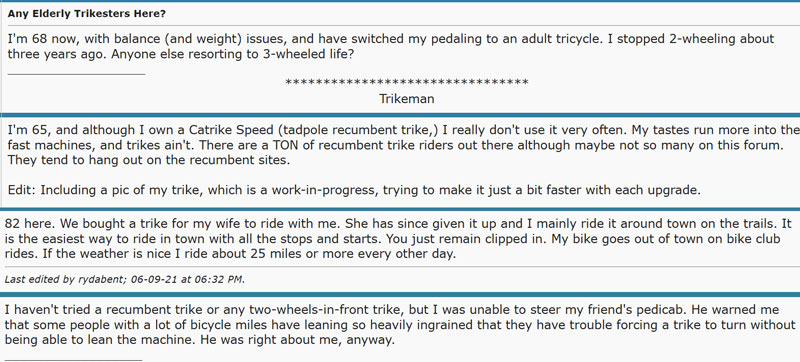
The first is identity. For anyone who has cycled, a trike can read as an admission — that they have aged out, that this is what you ride once you have given up. That signal, not the specification, is what stops them. You can see it in the open: riders who buy a trike for the stability and then barely touch it because it does not fit who they believe they are, and lifelong cyclists who describe three wheels as a last resort rather than a next step. The objection is emotional, and it is invisible to any brand that only studies people who are already shopping.
The second is a category gap. The trike falls into an unoccupied middle. On one side is the bicycle, which the person can no longer ride with confidence. On the other is the mobility scooter, which carries a heavier “medical” and “elderly” signal that most people resist for as long as they can. Very little sits comfortably between the two — a way to stay active and independent without either the balance demand of a bike or the associations of a scooter. That gap is the opportunity, and almost no brand positions for it deliberately. It is worth remembering that nearly one in ten UK adults never learned to ride a bicycle at all — an entire segment for whom “just ride a bike” was never even an option.
The US and European non-buyer do not think alike
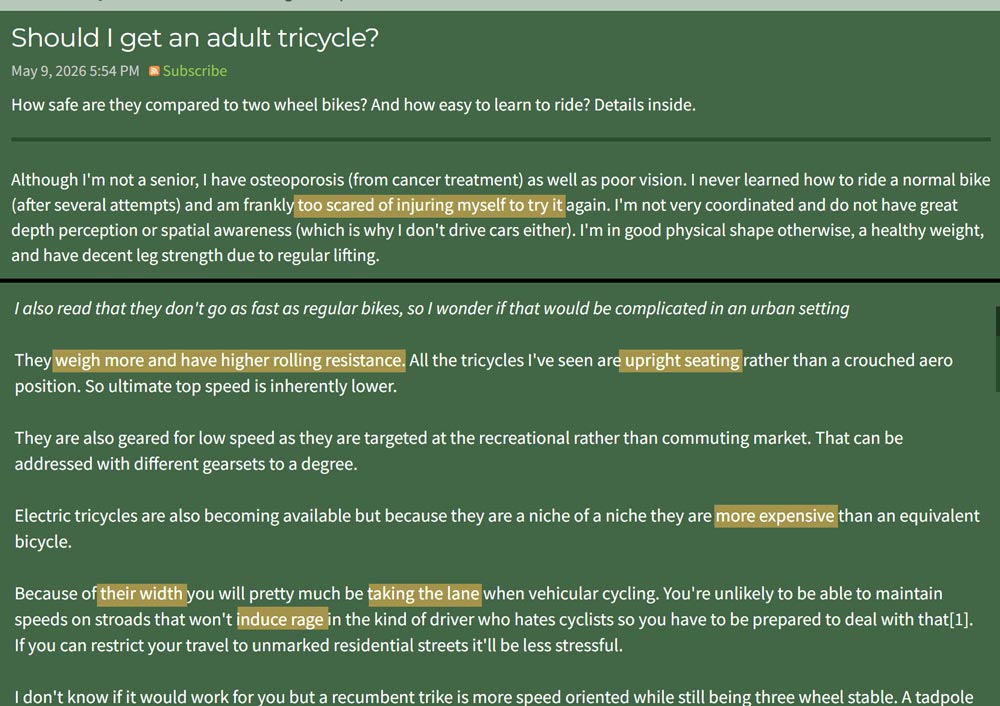
The regulatory split between the two markets runs deeper than the hardware. In the US, where throttles are permitted, the trike competes in the buyer’s mind with the mobility scooter and the golf cart — it is about independence and effortless movement. The barrier there is the scooter’s medical association, and the reframe that works is freedom: staying in charge of your own movement. The throttle matters because it promises that the effort is optional.
In Europe, where assistance is pedal-only, the trike competes instead with the person’s own identity as a cyclist. The barrier is the quiet worry that switching means they have stopped being a rider. The reframe that works there is continuity — you are still cycling, still active, just with support — and pedal-assist reinforces it, because the rider is still doing the work. The practical consequence is simple: the same trike needs a different story in each market, and often a different configuration, throttle-led where it is legal and wanted, pedal-assist where it is required.
What this means for your range and your positioning
Four things follow directly, and they are the difference between selling into the crowd and opening the market up.
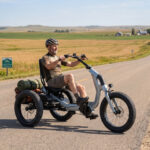
Reframe the product from decline to independence. The language that converts turns “you have aged into a trike” into “you are still on the road.” The market has already shown this works — a generation of ageing motorcyclists moved to three wheels not by being told they were past it, but by being sold on staying out there. The same reframe is available to any brand willing to lead with independence instead of infirmity.
Occupy the gap on purpose. Position the trike explicitly between the bicycle and the scooter: more capable and more dignified than a scooter, more secure than a bike. That middle is where the non-buyer actually sits.
Configure for the market, not the catalogue. Throttle-led builds and independence messaging for the US; pedal-assist and active-cycling messaging for Europe. The same platform can be configured either way, which is what lets one range serve both mindsets.
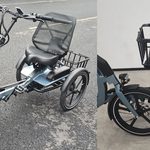
Answer the trust objection with substance, not slogans. Behind the “is a trike safe” hesitation is one genuine engineering point — cornering stability on a three-wheeler — and it is answered by design, not reassurance: a differential, a low centre of gravity, and considered geometry. That is something to demonstrate rather than claim, which is exactly how our Chill and Vita models are built.

The opportunity, in one line
The electric trike market opportunity is non-consumption — the people who never look. The brands that grow the category reframe the product from decline to independence, occupy the space between the bicycle and the scooter, and configure for the market they are actually in. Building that range — folding, fat-tyre, dual-battery, throttle or pedal-assist, on one validated platform — is what lets you go after it rather than talk about it.
Common questions
What is the biggest untapped segment in the electric trike market?
The non-consumers — people who have a real need for a stable, low-effort way to get around but never consider a trike, held back by identity and by the gap between the bicycle and the mobility scooter. They are larger in number than active shoppers and far less contested.
Why don’t more older adults buy an electric trike?
Mostly because of what a trike signals rather than what it costs. For former cyclists it can read as giving up, and for everyone else it sits awkwardly between a bicycle they can no longer ride and a mobility scooter they would rather not. Reaching them is about changing that signal.
How does the US electric trike market differ from Europe?
The US permits throttles, so the trike is sold on independence and effortless movement and competes with mobility scooters. Europe is pedal-assist only, so the trike is sold on staying an active cyclist. Same product, two different stories and often two different configurations.
How can a brand reach non-buyers?
By reframing the product around independence rather than decline, positioning it deliberately in the gap between the bike and the scooter, configuring it for the market’s rules and mindset, and proving stability through engineering rather than claims.
If you are building or extending a trike range, the opportunity is in who you can reach, not just what you can spec. Tell us the market you want to open up, and we will help you configure a range to reach it. Talk to our team.
 English
  German
  Dutch
Dutch  Danish
  French
  Polish
  Portuguese
  Spanish