Three-Wheeled Cargo Bikes
- Home
- Products
- Three-Wheeled Cargo Bikes
Qualified By:

What Are Three-Wheeled Cargo Bikes?
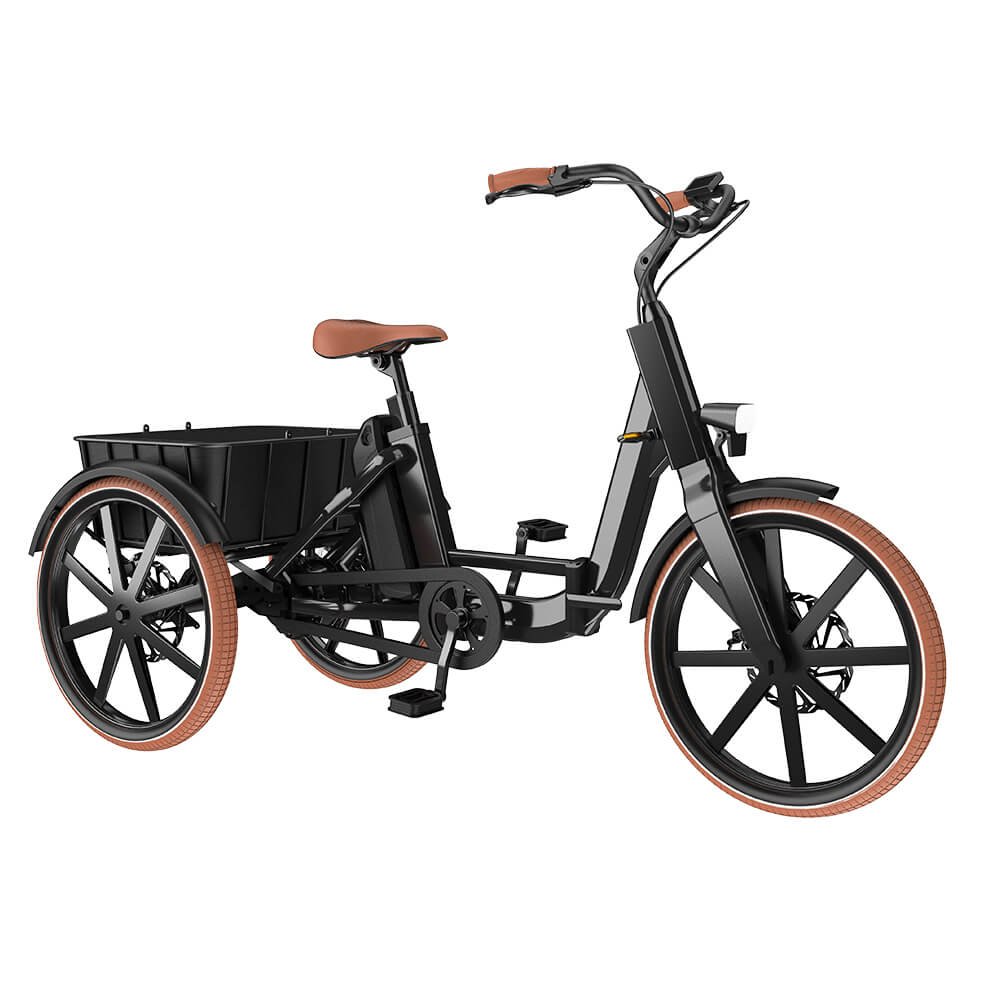
Three-wheeled cargo bikes —also called three wheel cargo bike or 3 wheels bicycle, are purpose-built utility bicycles designed to provide enhanced stability, higher payload capacity, and easy handling for both commercial and family-oriented applications. Unlike two-wheel front loader cargo bikes, the three-wheeled format distributes weight across a wider base, enabling slower-speed maneuverability and safer loading operations.
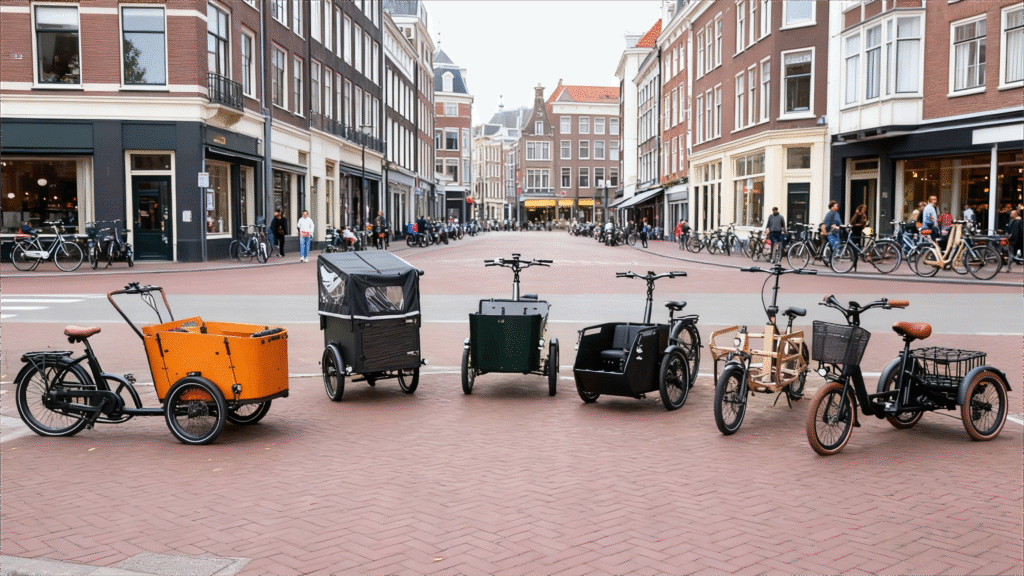
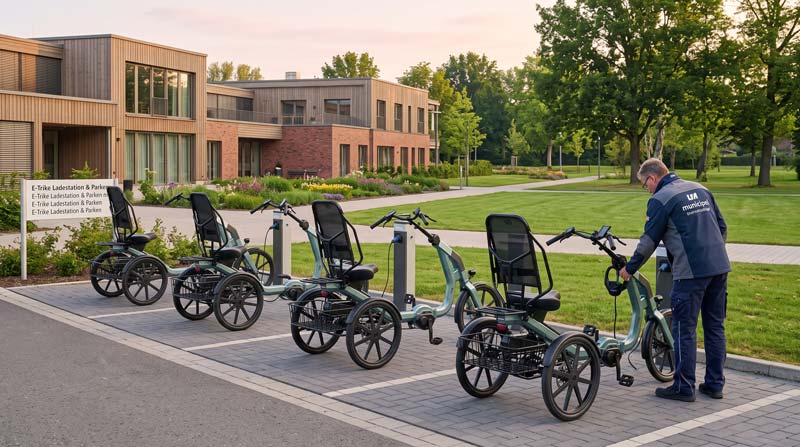
In Europe, this category continues to expand rapidly, supported by city logistics needs, low-carbon mobility goals, and increasing demand for safe family transport. As many cities transition to e-mobility and micro-transportation solutions, three wheel cargo bikes are taking over Europe for courier fleets, campus mobility, retail delivery, elderly mobility, and municipal services.
Explore the models below to find the right fit — or contact us for tailored OEM & ODM support.
Main Types of Three-Wheeled Cargo Bikes
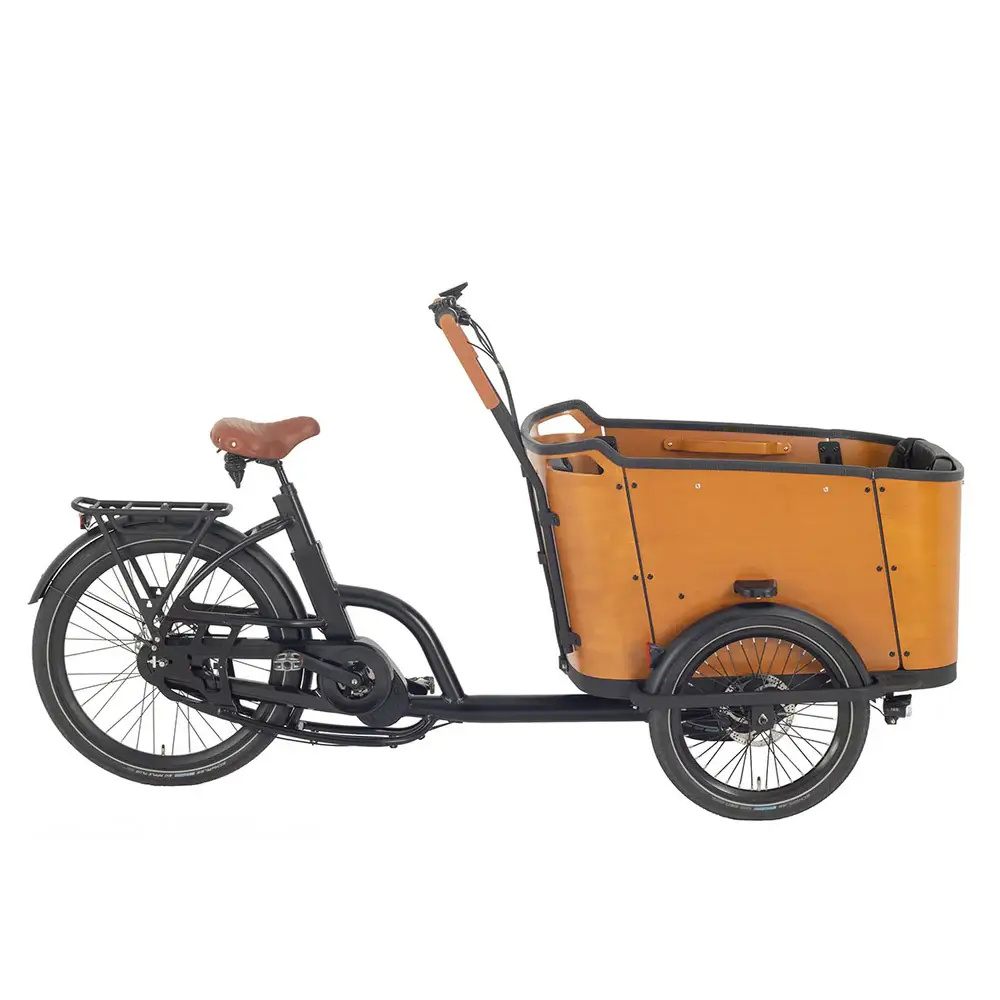
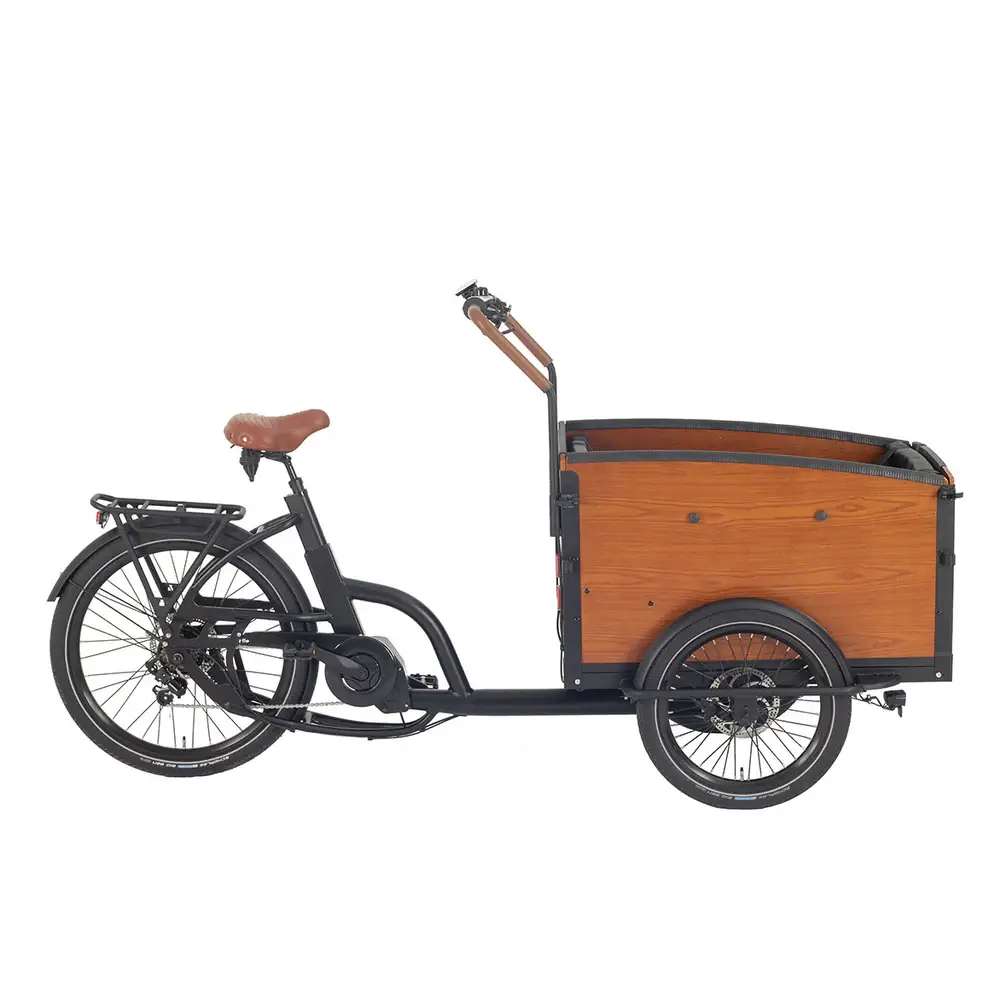
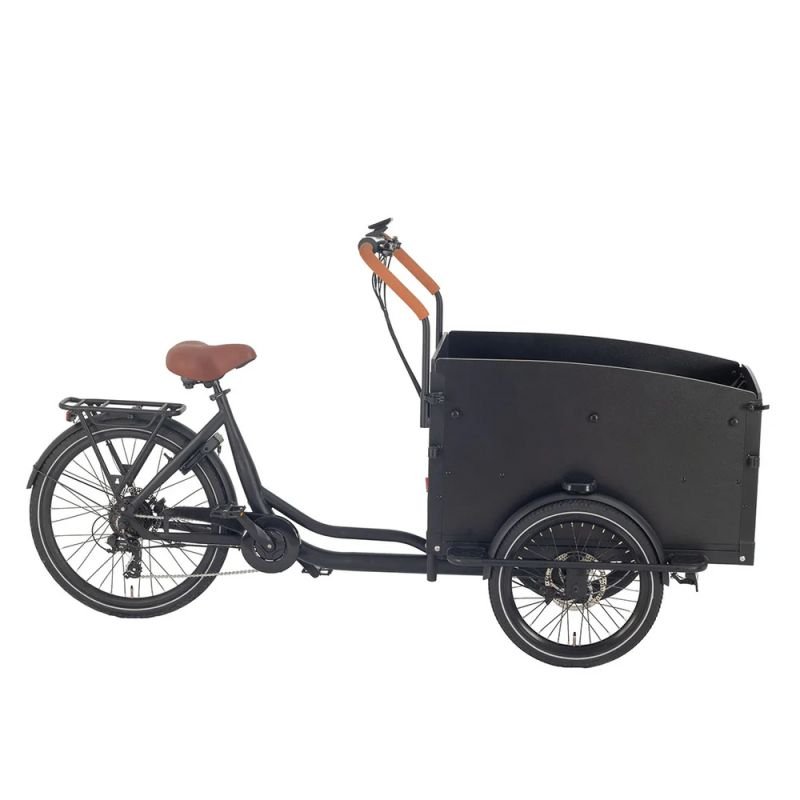
1. Front-Load Tadpole Cargo Bike (Two Wheels in Front)
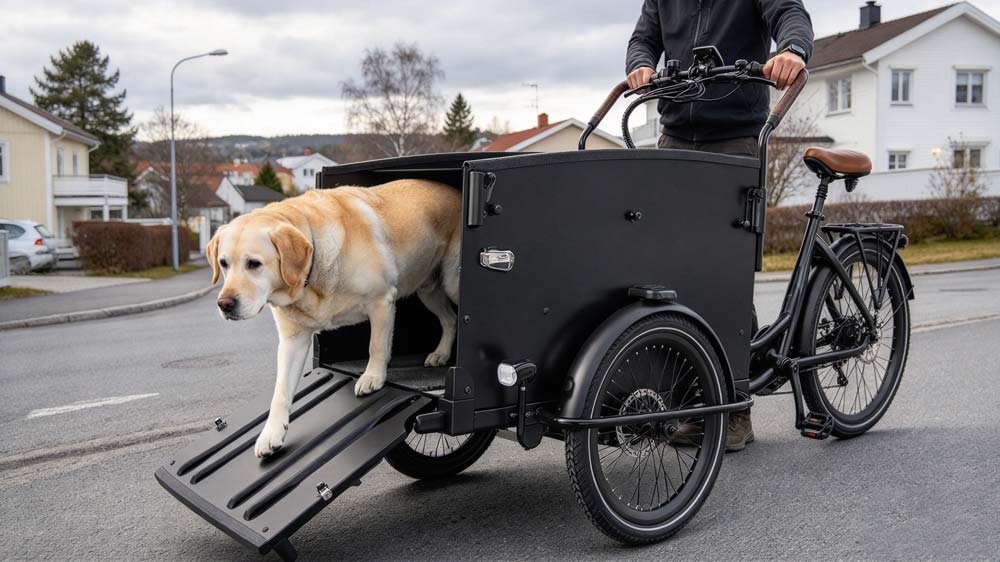
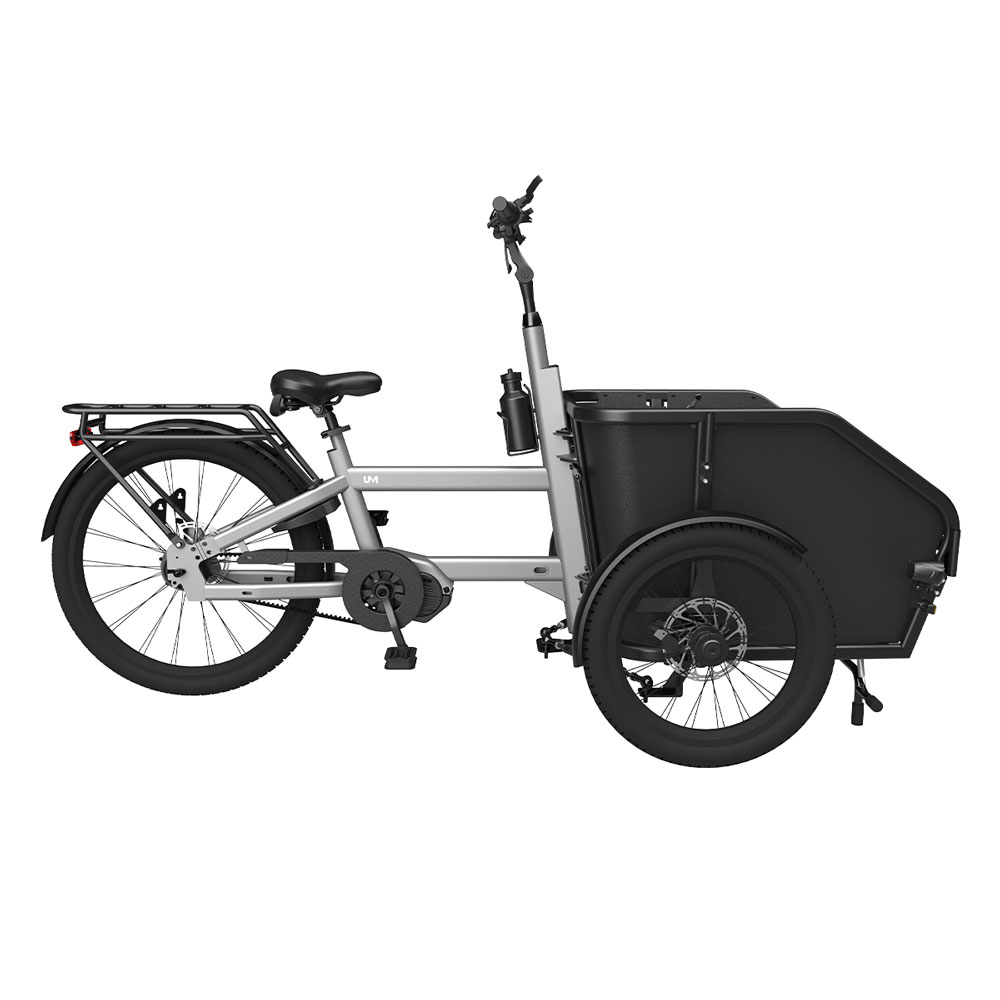
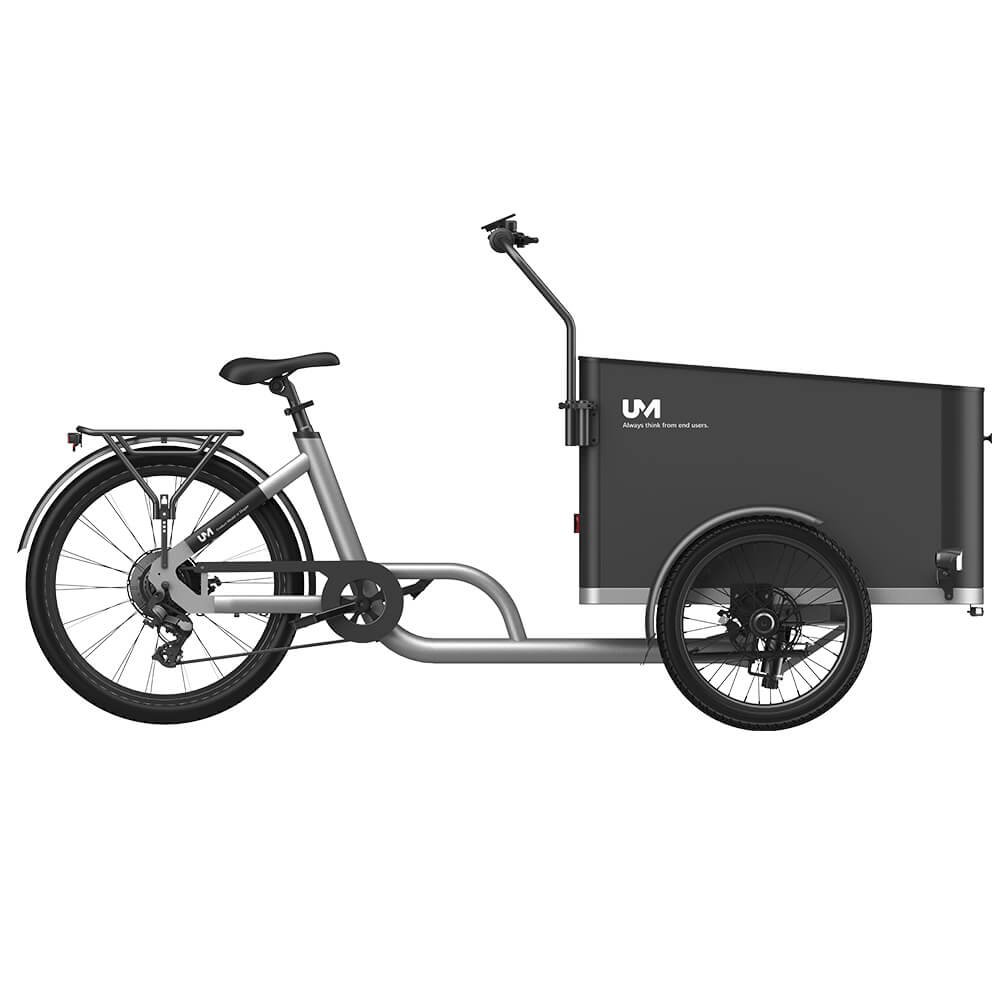
Often referred to as three wheel front-loading cargo bike or traditional bakfiet, this design places two wheels at the front with a spacious box positioned between them. This configuration offers:
- Excellent low-speed stability
- Direct view of cargo or children
- Large-volume box options (e.g., 200–350L)
- Suitable for family cargo e-bike applications, kindergarten shuttles, and commercial use
This is the most recognizable style in Northern Europe and commonly associated with Dutch-style bakfiets.
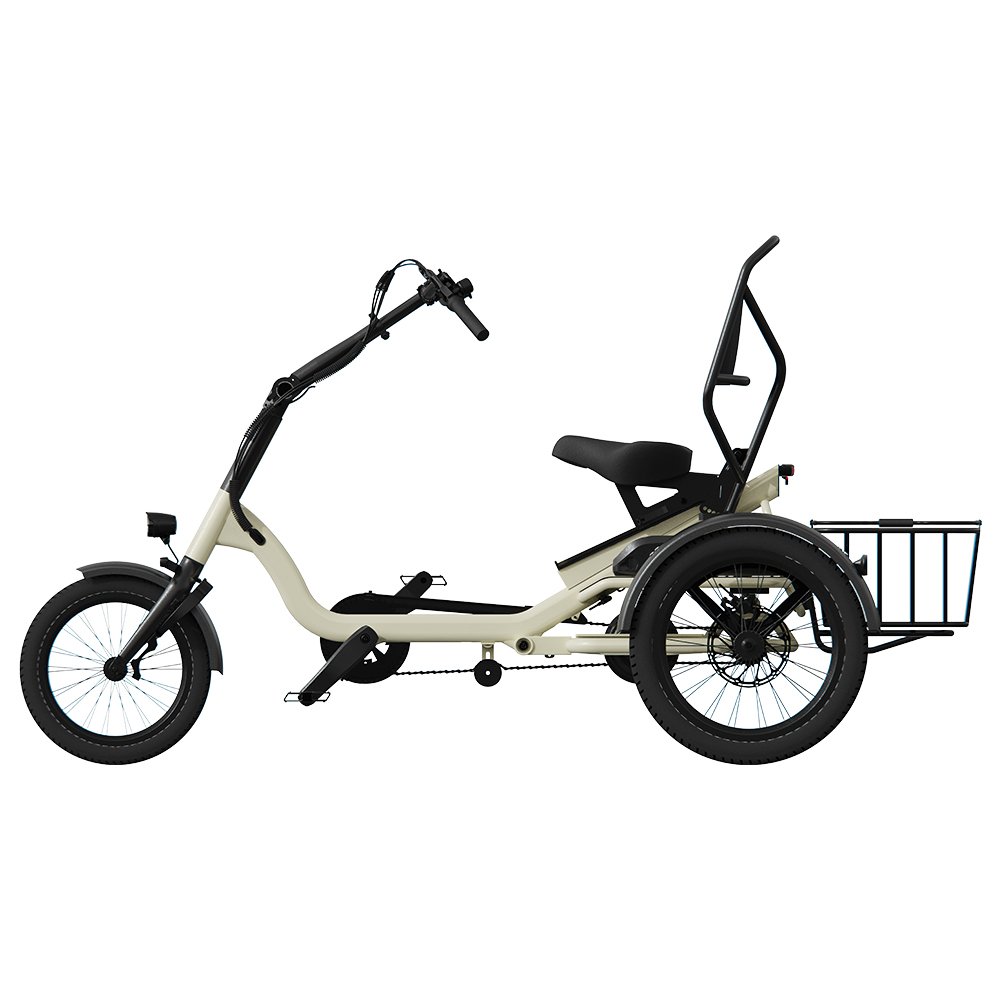
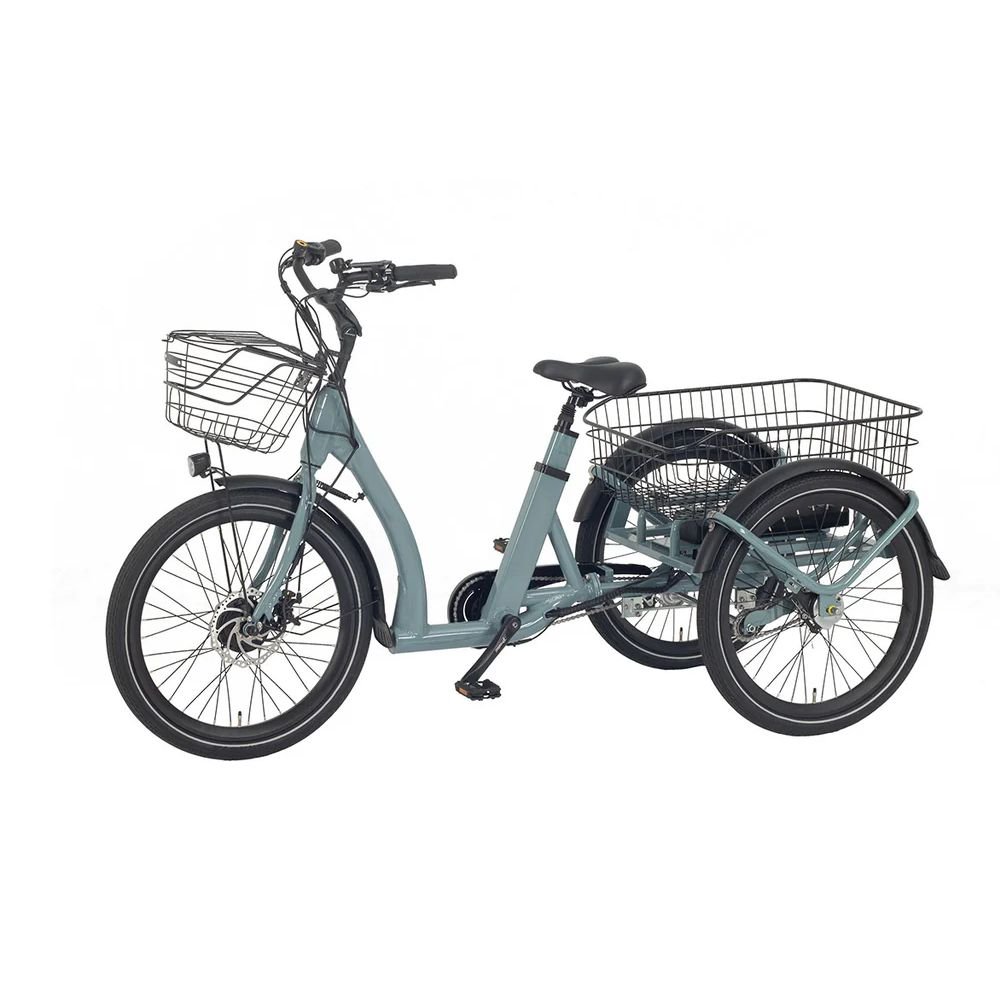
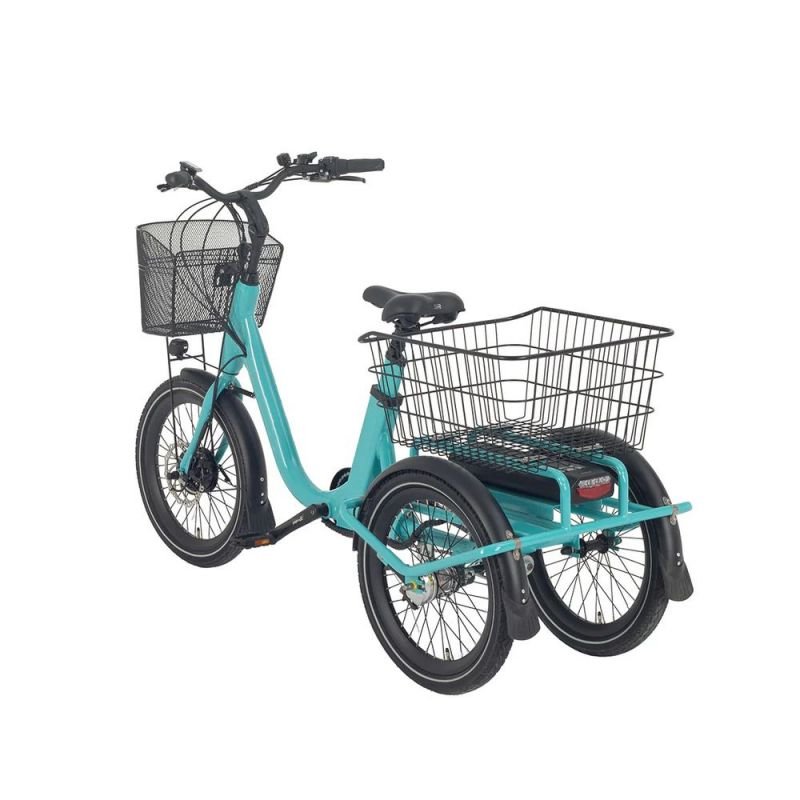
2. Rear-Load Adult Tricycles (Two Wheels at the Rear)
Rear-load models place the cargo platform, rack, or basket behind the rider. In practice, buyers evaluating rear-load adult tricycles tend to focus on ride stability, load access, and how easily the bike fits into everyday routines—factors that often influence resale performance and long-term demand. For a closer look at real buyer expectations and decision logic, see What People Really Look for in an Electric Tricycle — And How You Can Choose the Right Models to Sell.
Rear-load electric tricycle cargo bike come in two subtypes:
Semi-Recumbent / Recumbent 3-Wheel Bikes for Adults
A more ergonomic, relaxed riding posture with a supportive backrest.
Benefits:
Less strain on shoulders and wrists
Comfortable long-distance riding
Better weight distribution
Ideal for older adults, riders with limited mobility, or leisure touring. This aligns with the customer’s query of recumbent 3 wheel bikes for adults.
As interest grows around aging-friendly and comfort-oriented mobility in developed countries, this category is increasingly viewed not as a niche, but as a long-term solution for daily riding. A deeper look can be found in Electric Recumbent Tricycles Built for Comfort, Stability, and Long-Term Riding.
Upright Adult Trikes
A practical option for senior riders and mobility-assistance needs.
Benefits:
- Less strain on shoulders and wrists
- Comfortable long-distance riding
- Better weight distribution
Ideal for older adults, riders with limited mobility, or leisure touring.
This category also responds to a frequent customer request for trikes with a lower center of gravity — a feature many buyers typically associate with “bakfiets-style” stability. Upright rear-load trikes provide exactly that enhanced balance and confidence for adult riders.
Applications in Real Scenarios
- Urban parcel delivery
- Food & grocery delivery
- School transportation
- Elderly shopping mobility
- Campus maintenance logistics
- Green city mobility projects
- Pet transport
- Tourism and resort mobility
Whether you wish to create a fully customised design from scratch or select from our extensive range of pre-designed models, we provide tailored cargo bike solutions to meet your needs.

Electric 3-Wheeler Cargo Bike Market
The electric three-wheeler cargo bike market is becoming a noteworthy growth segment within the broader sustainable mobility landscape.
From a commercial perspective, three-wheel bikes offer inherent advantages over two-wheel cargo platforms when payload stability and ease-of-use are key decision criteria. Their static stability at stops, predictable cornering, and generous cargo capacity have made them attractive not only for last-mile delivery and logistics but also for households with significant transport needs. Indeed, user conversations on cycling forums show that many individuals considering family cargo solutions explicitly explore cargo trikes because they don’t want to worry about balance while starting or stopping, especially when transporting young children or heavy loads on local trips.
While the front-load three-wheeled cargo bike remains the mainstream format due to its intuitive loading and direct visibility, a newer trend is emerging that links functionality with rider comfort for a different kind of user need: semi-recumbent tricycles. This format is already gaining traction in Europe as part of a broader shift toward inclusive mobility solutions. Semi-recumbent electric trikes lower the center of gravity, reduce effort at the pedals, and make mounting/dismounting easier—features that resonate strongly with the elderlys, people with balance concerns, and anyone valuing ergonomic comfort over athletic posture. This trend, which we explore in more detail in Beyond Three Wheels: The New Trend of Semi-Recumbent Trikes in Europe, reflects how mobility products are evolving beyond pure utility into emotionally and functionally supportive tools.
Another real-world signal comes from community feedback: many riders interested in a European cargo trike for large families appreciate the intuitive stability but also highlight trade-offs. In online discussions, potential buyers often weigh the ease of use of trikes against maneuverability in tight urban spaces, with seasoned cargo bike users suggesting careful consideration of turning radius and handling dynamics.
For B-end stakeholders—OEMs, distributors, fleet operators—this segment’s growth presents both opportunities and challenges. On one hand, the integration of advanced battery platforms (extending range and reducing downtime) and modular cargo configurations aligns with commercial fleet needs. On the other, regulatory fragmentation across EU countries and payload certification standards still require strategic attention as adoption scales.
In summary, the electric 3-wheeler cargo bike market is not just expanding in volume; it is becoming more differentiated. Aligning product portfolios with these nuanced needs positions brands and partners to capture both the traditional logistics segment and the expanding personal mobility segment in one comprehensive strategy.
As A Bike Factory, We Can Offer More Than These
Frequently Asked Questions (FAQ)
Have a really
great ides?
Leave A Message
Tell Us Your Demand
Our experienced team is ready to provide tailored solutions to support your business growth.
Our Blog
Latest Blog & Articles
Discover more about the latest innovations, industry trends, and product introductions from the leader in Bike Industry.
Cargo Bike Fleet for Sharing Programs: The 2026 Hardware Sourcing Playbook for European Operators
A cargo bike fleet for sharing programs lives or dies on two decisions made long before launch day: which bike you spec, and which factory builds it. The app, the brand colours, and the press release matter far less than whether each unit can survive thousands of rides from strangers, get located when it goes missing, and be repaired with parts you can actually stock. If you are scoping a shared fleet of electric cargo bikes — for city streets, food delivery, or a scenic resort — this guide skips the program-overview talk most articles stop at and goes straight to the hardware and ODM sourcing layer that decides whether your fleet scales or stalls. Why Shared Electric Cargo Bikes Are Scaling Across Europe The demand signal is no longer subtle. The European e-cargo bike market is estimated at around USD...
Commercial Cargo Bike Maintenance & Uptime Guide 2026
Uptime is the metric that quietly decides whether a commercial cargo bike fleet renews. It rarely shows up in the procurement RFP. It almost always shows up in the year-three financial review. The reason it's so often underweighted at purchase is that uptime depends on dozens of small decisions made well before the bike ever rolls — drivetrain spec, brake compound, bearing rating, warranty fine print, service network density, parts inventory strategy. Each one individually feels too granular to optimise. Together, they decide whether your fleet runs at 95 percent or 78 percent. For last mile delivery companies running daily commercial routes, those decisions compound faster than for any other operator profile. This article walks through the maintenance and uptime decisions that have the largest financial leverage over the life of a commercial cargo bike fleet, in roughly the order they...
Cargo Bike Fleet Deployment: What Actually Happens After the Bikes Arrive
The procurement side of a commercial cargo bike rollout gets the attention. Trade-show demos, spec comparisons, OEM negotiations, certification compliance — months of work, often with senior management oversight. Then the bikes arrive, get rolled out to riders, and within ninety days a meaningful share of fleet operations are running below projection. We've seen first-year fleet failure rates between 25 and 35 percent in real operations, and almost none of those failures trace back to the bike itself. They trace back to deployment. This article covers what we've learned working with European brands and fleet operators about the operational decisions that decide whether a cargo bike fleet performs to its TCO model. None of it is glamorous. All of it costs less than a single fleet write-off. The Procurement-to-Deployment Gap Cargo bike fleets fail in four predictable places: route design, micro-hub...