
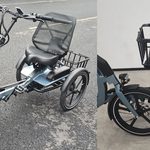
Every product occupies a position in the buyer’s mind, and the electric trike’s is unusually valuable: it is the only thing that sits between a bicycle the rider can no longer manage and a mobility scooter they are not ready to accept. Get electric trike positioning right and you own that middle ground outright, because almost no brand claims it on purpose. Get it wrong and you land at one pole or the other, competing with products the buyer has already rejected.
For a brand, distributor or retailer, this is where the growth quietly lives. The middle is not a compromise — it is a category of its own, and the people standing in it (able to pedal, unwilling to be seen on a scooter, no longer confident on two wheels) are the largest untapped segment in the market. This piece maps that gap, explains why it stays empty, and sets out what it takes to own it.
The map: a bike on one side, a scooter on the other
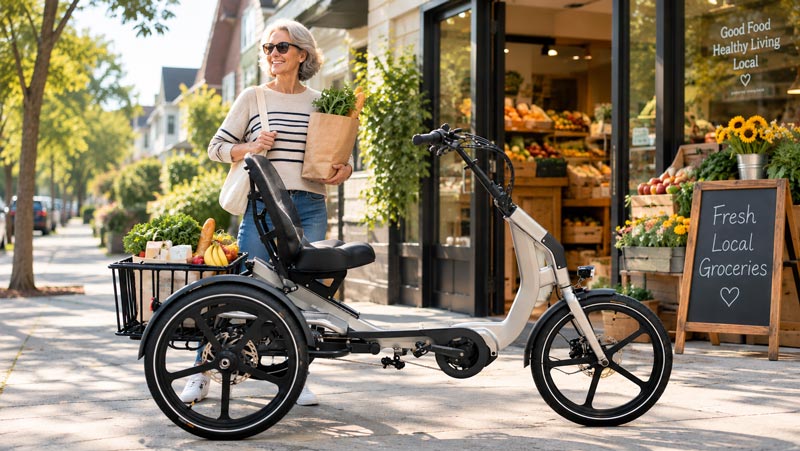
Picture the buyer’s options as a line. At one end is the bicycle — the thing they may have loved, and can no longer ride with confidence once balance becomes a question; for a sizeable minority of adults, a two-wheeler was never an accessible option to begin with. At the other end is the mobility scooter — capable and comfortable, but carrying a heavy signal. Academic research into how older adults perceive scooters finds what the market shows: the scooter reads as an admission of impairment, a device taken up once you have stopped being active. Between those two ends sits a wide, largely empty space — a way to keep moving under your own power, with stability underneath, that is neither a bike you can’t ride nor a scooter you won’t be seen on. The electric trike is the only product that naturally lives there.
Why the gap stays empty
Most trike brands position at a pole rather than in the middle. Some sell the trike as “just a bike,” which reassures nobody who lost confidence on two wheels. Others slide it toward “senior mobility aid,” which drifts straight into the scooter’s stigma. Neither claims the middle, where the demand actually is.

You can hear the gap in buyers’ own words. On one forum, a rider whose stability is declining says he is not ready for a mobility scooter yet — that he “probably needs to get over himself, but here we are” — while looking hard at a trike precisely because it would let him get further afield. In product reviews, buyers put it more bluntly, praising a trike as “not another boring mobility scooter” and valuing that it does not leave them sitting low to the ground. The resistance to the scooter is real, the wish to stay active is real, and the space between them is exactly where a trike wins — but only if a brand positions it there on purpose.
The would-be scooter buyer is the segment to win
The most valuable people in that gap are the ones currently weighing a mobility scooter. Many can still pedal and want to; they are considering a scooter only because they do not know a better-fitting option exists. Reaching them is pure category growth — you are not fighting other trike brands for a shopper already sold on three wheels, you are converting someone who was about to buy a different category, or buy nothing at all.
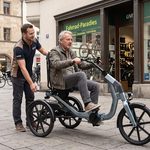
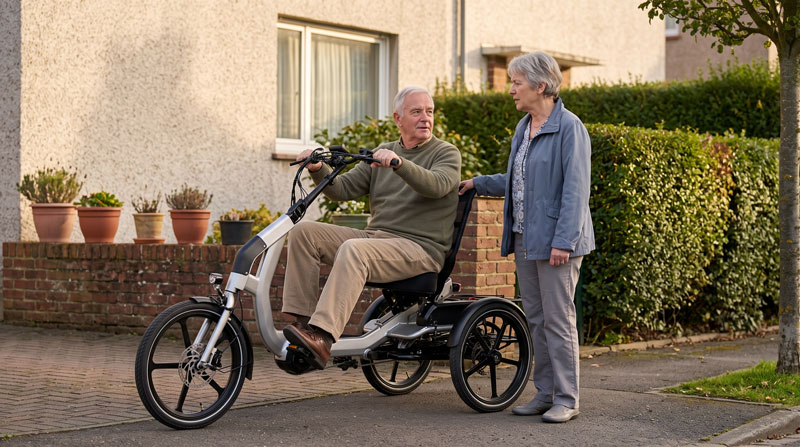
The trike’s edge in that decision is that it keeps the rider active rather than passive, and staying active is not a soft benefit: health authorities are clear that regular movement is one of the strongest protectors of independence in later life. One 87-year-old rider profiled in his local paper calls his trike a “senior mobility vehicle” that liberated him from being housebound and works like adding an extra car to the household — mobility and independence, not infirmity. That is the story a scooter cannot tell, and it is the one that converts the buyer standing in the gap.
What owning the gap actually requires
The position only holds if the product earns both halves of it. It has to be reassuring enough that someone who lost confidence on a bike will trust it — real stability from a differential, a low centre of gravity and considered geometry, not the balance demand of a two-wheeler.
Buyers are honest that a poorly set-up trike fails this test and warn each other off a wobbly one, which is why the engineering is not optional. And it has to be capable and dignified enough that it never collapses back into the scooter: real range, real cargo, a proper ride, and an upright, visible seating position. A brand that claims the middle with a product that cannot hold it loses the buyer on the first ride. That is why nasze modele Chill i Vita are engineered the way they are, and why the platform is configured to the market rather than sold off a shelf.
Wersja jednoliniowa
Electric trike positioning is simple to state and hard to hold: own the gap between the bicycle and the scooter. The brands that plant themselves there stop competing for the small pool already shopping for a trike and start converting the much larger one that sees only two options it does not want. Reframing the product to reach those people is the marketing job; understanding how big that group is sits in the market opportunity behind it.
Często zadawane pytania
Where does an electric trike sit between a bicycle and a mobility scooter?
In the middle: more secure and reassuring than a bicycle for someone whose balance has changed, and more active, capable and dignified than a mobility scooter. It is the only common product that occupies that space.
Why is the mobility scooter market an opportunity for electric trike brands?
Because many people weighing a scooter can still pedal and would rather stay active — they simply do not know the trike is an option. Converting them grows the category instead of fighting over existing trike shoppers.
How should a brand position an electric trike?
Squarely in the gap — as the way to keep moving under your own power without the balance demand of a bike or the stigma of a scooter. Positioning at either pole competes with a product the buyer has already ruled out.
What makes that positioning credible?
The product has to earn both halves: stable and reassuring enough for a former cyclist to trust, and capable and dignified enough never to read as a scooter. If it cannot hold both, the position collapses on the first ride.
Deciding where to place a trike in your market? Tell us the buyer you want to reach, and we will help you build a trike that can hold the position credibly. Porozmawiaj z naszym zespołem.
 Polish
  English
  German
  Dutch
Dutch  Danish
  French
  Portuguese
  Spanish