

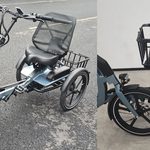

In ons vorige artikel, Frames voor bakfietsen: Waarom de meeste problemen al lang voor de productie beginnen., We hebben al besproken hoe belangrijk het is om inzicht te hebben in de frames van bakfietsen voordat je aan een project begint. Nu is het tijd om dieper in te gaan op een kernaspect van bakfietsframes: materiaalselectie. Deze keuze is een van de meest controversiële onderwerpen in de ontwikkeling van bakfietsen – en helaas ook een van de meest verkeerd begrepen.
De vraag wordt zelden gesteld. “Welk materiaal is het beste?”
De echte vraag is “Welk materiaal is geschikt voor dit type bakfietsframe, wat is het toepassingsgebied ervan, en de overeenkomstige toeleveringsketen in de loop der tijd?”
Waarom discussies over materialen vaak mislukken
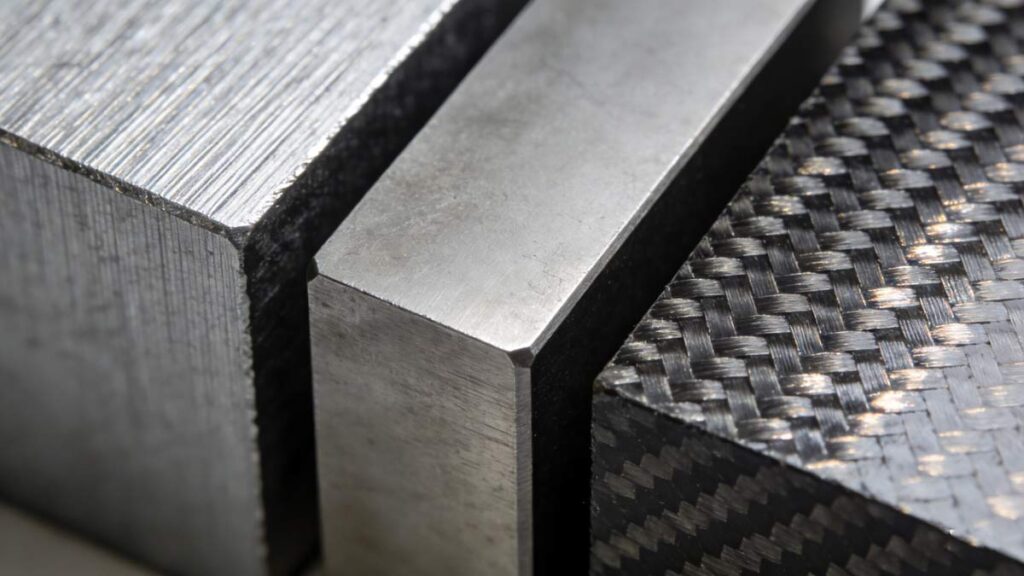
Veel materiaalkeuzes voor bakfietsframes beginnen met een simplistische benadering: gewichtsvergelijkingen, sterktegrafieken of marketingtrends. Maar bakfietsen functioneren onder omstandigheden die dergelijke vergelijkingen onvolledig maken.
De frames van bakfietsen moeten bestand zijn tegen herhaalde hoge belastingen, blootstelling aan de omgeving en een lange levensduur—vaak in gedeelde of commerciële omgevingen. De prestaties van het materiaal moeten in context worden beoordeeld, niet geïsoleerd.
Wat is een frame van legering 6061 en waarom is het zo populair?
Een frame van 6061 aluminiumlegering is gemaakt van een warmtebehandelbare aluminiumlegering die aluminium, magnesium en silicium combineert. De populariteit ervan bij bakfietsen is te danken aan de goede balans.
6061 aluminium biedt voorspelbare mechanische eigenschappen, een goede corrosiebestendigheid en beproefde productieprocessen. Dit maakt het gemakkelijker om schaalproductie terwijl het handhaven van een constante kwaliteit—een van de redenen waarom veel kopers op zoek zijn naar het beste frame van aluminiumlegering 6061 voor bakfietsen.
Vanuit een B2B-perspectief is deze voorspelbaarheid vaak belangrijker dan marginale winsten in kracht of gewicht.
Hoe duurzaam is een fietsframe van 6061-legering in de praktijk?
Duurzaamheid is niet alleen een materiaaleigenschap. Het is het resultaat van materiaal, geometrie en productiekwaliteit samenwerken.
Een goed ontworpen fietsframe van aluminium 6061 kan een uitstekende levensduur bieden bij stedelijke bezorging en gezinsvervoer scenario's. Storingen komen meestal voort uit agressieve gewichtsvermindering of een slechte lastverdeling, niet uit inherente materiaalzwakte.
Dus als er naar gevraagd wordt, “Zijn aluminium frames een goede keuze?” Het eerlijke antwoord is ja, mits correct ontworpen.
Frame van aluminiumlegering 6061 versus koolstofvezel: een onevenwichtige vergelijking
Koolstofvezel komt vaak ter sprake vanwege zijn indrukwekkende eigenschappen. sterkte-gewichtsverhouding. Bij bakfietsen nemen de voordelen echter af.
Carbon is gevoelig voor puntinslagen, duur om te repareren en minder vergevingsgezind in gedeelde omgevingen of wagenparken. Aansprakelijkheid, verzekering en onderhoud maken het gebruik ervan nog complexer.
Om deze redenen geven de meeste fabrikanten van bakfietsen bij de afweging tussen een frame van aluminiumlegering 6061 en koolstofvezel nog steeds de voorkeur aan aluminium, om praktische, en niet zozeer esthetische, redenen.
Stalen frames voor bakfietsen: nog steeds relevant, maar specifiek
Stalen frames zijn niet achterhaald. Ze bieden hoge ductiliteit, uitstekende vermoeidheidsweerstand, En eenvoudiger reparatie in het veld.
Voor zware toepassingen, lage snelheden of industriële toepassingen blijven stalen frames van bakfietsen een verstandige keuze. De nadelen – hoger gewicht en corrosiebestendigheid – moeten bewust worden geaccepteerd.
De kern is het besef dat staal niet inferieur is; het is situationeel.
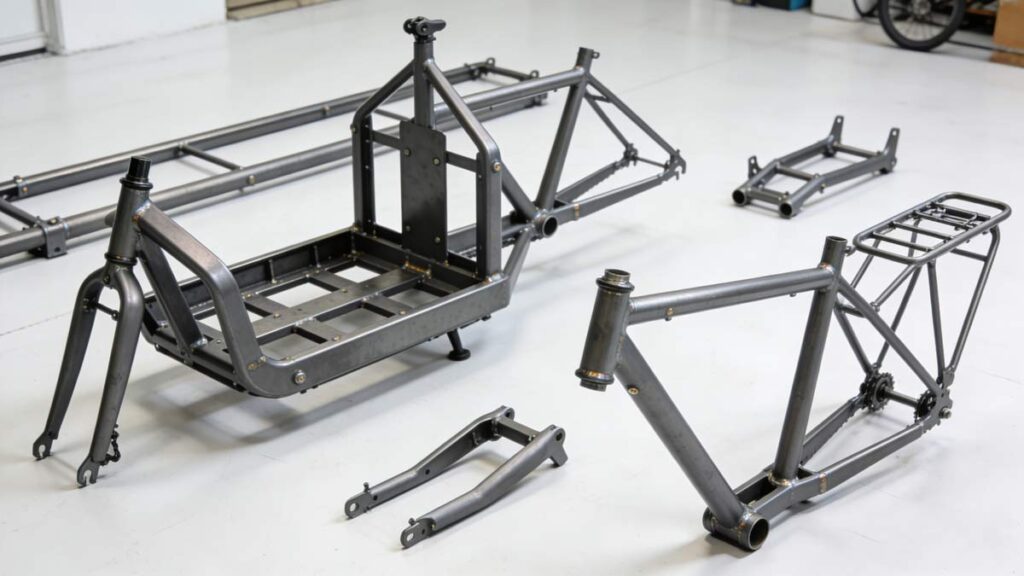
Staal versus 6061 aluminium: kiezen op basis van toepassing, niet op basis van ideologie.
Het vergelijken van staal en legering 6061 als absolute maatstaven doet geen recht aan de kern van de zaak. Elk materiaal blinkt uit onder verschillende omstandigheden:
- Staal staat bekend om zijn robuustheid en repareerbaarheid.
- Legering 6061 biedt voordelen op het gebied van gewichtsefficiëntie en schaalbaarheid.
Veel succesvolle platforms voor bakfietsen combineren beide., Het gebruik van staal in zones met hoge spanning en aluminium waar gewicht en efficiëntie het belangrijkst zijn.
Materiaalstrategie over soorten bakfietsen
De materiaalkeuze verschilt afhankelijk van de constructie van het frame:
- Lange-staart vrachtfietsen Vaak profiteren ze van legering 6061 voor balans en handling.
- Voorlader bakfietsen Geef prioriteit aan stijfheid en torsiebeheersing boven de sterkte van het basismateriaal.
- Driewielige bakfiets frames, inbegrepen ligfietsen met drie wielen, hangen meer af van de structurele indeling dan van de materiaalkeuze alleen.
Inzicht in deze interacties voorkomt overengineering en onnodige kosten.
Het bouwen van betaalbare, duurzame frames voor bakfietsen
Betaalbaarheid komt niet voort uit goedkopere materialen. Het komt voort uit minder herwerk, een eenvoudigere productie en een langere levensduur.
Daarom blijven frames van aluminiumlegering – met hun stabiele verwerking en voorspelbare prestaties – een hoeksteen van de kosteneffectieve productie van bakfietsen.
Voor inzichten over inkoop gericht op de EU, zie
👉 Betrouwbare frames voor elektrische bakfietsen voor B2B-kopers in de EU
Eindperspectief
Er bestaat geen universeel "beste" materiaal voor bakfietsframes. Wat er echt toe doet, is de afstemming tussen budget, gebruiksdoel, marktverwachtingen en betrouwbaarheid op lange termijn.
Een verantwoordelijke partner voor de productie van bakfietsen zal niet de duurste optie opdringen, noch kiezen voor wat het gemakkelijkst te produceren is. In plaats daarvan werken ze binnen uw commerciële kaders, helpen ze u weloverwogen afwegingen te maken en configureren ze de frameoplossing die echt aansluit op uw operationele realiteit. Dat proces werkt alleen als beide partijen duidelijk en transparant zijn: u begrijpt uw eindmarkt en prioriteiten, en uw partner is bereid om aannames ter discussie te stellen, beperkingen uit te leggen en vanaf het begin open te communiceren.
Dit soort samenwerking vermindert kostbare herzieningen, verkort de ontwikkeltijd en leidt tot producten die in de praktijk presteren zoals bedoeld – niet alleen op papier.
Die filosofie bepaalt hoe we werken bij United Mobility (UM). Wij ondersteunen merken van bakfietsen met materiaalkeuze op basis van actuele productiegegevens en feedback uit de markt. 👉 Neem contact met ons op Voor praktische inzichten die u helpen uw bedrijf met vertrouwen uit te breiden, in plaats van te gissen.
 Dutch
Dutch  English
  German
  Danish
  French
  Polish
  Portuguese
  Spanish