





Halbliegedreirad vs. aufrechtes Elektrodreirad Die Aufteilung eines US-Sortiments wird üblicherweise als Geschmacksfrage diskutiert. Für alle, die ein US-Sortiment zusammenstellen, ist dies jedoch keine Frage der Präferenz, sondern eine Frage des Vertriebskanals. Ein Fehler in der Vertriebskanalwahl ist kostspieliger als eine falsche Farbkombination. Die beiden Formate sprechen unterschiedliche Käufergruppen zu unterschiedlichen Preisen an, werden in unterschiedlichen Einzelhandelsumgebungen angeboten und erfordern unterschiedliche Dokumentationen. Der häufigste Fehler in diesem Sortiment ist, nur ein Format anzubieten und anzunehmen, dass dies das andere abdeckt. Dieser Artikel erklärt, wie ein US-Sortiment auf die beiden Formate aufgeteilt wird und welche Anforderungen jedes Format erfüllen muss.
Drei Schlussfolgerungen vorab:
- Es handelt sich nicht um zwei Versionen ein und desselben Produkts. Sie unterscheiden sich in der Sitzgeometrie, dem Schwerpunkt, der Preistoleranz und – ganz entscheidend – dem Ort des Verkaufs.
- Die meisten US-Schießstände benötigen beides, gewichtet. Aufrechte Sitzpositionen decken Lautstärke und Vertrautheit ab; halbliegende Sitzpositionen hingegen Margen, Differenzierung und den adaptiven Kanal. Die Gewichtung hängt davon ab, welchen Kanal Sie tatsächlich bedienen können.
- Die Formate weisen unterschiedliche Fehlermodi auf. Ein aufrechtes Dreirad scheitert an der Stabilität; ein Halbliegedreirad scheitert an der Einstiegshöhe und dem Wendekreis. Beides sind technische Probleme mit einer bekannten Lösung, und beides sollten Sie Ihrem Hersteller als Frage stellen.
Dieser Artikel befasst sich mit der Sortimentsgestaltung. Die zugrundeliegenden Käuferdaten finden Sie in unserer [Website-Link einfügen]. US-Markt- und Käuferanalyse; Die hier erwähnte Physik ist in der folgenden Quelle beschrieben: Stabilitätstechnik.
Worin besteht der eigentliche Unterschied zwischen den beiden Formaten?
Wenn man das Marketing außer Acht lässt, bleibt ein einziger physischer Unterschied übrig, der alle anderen Unterschiede bedingt: dort, wo der Fahrer sitzt, und somit auch dort, wo die Masse sitzt.
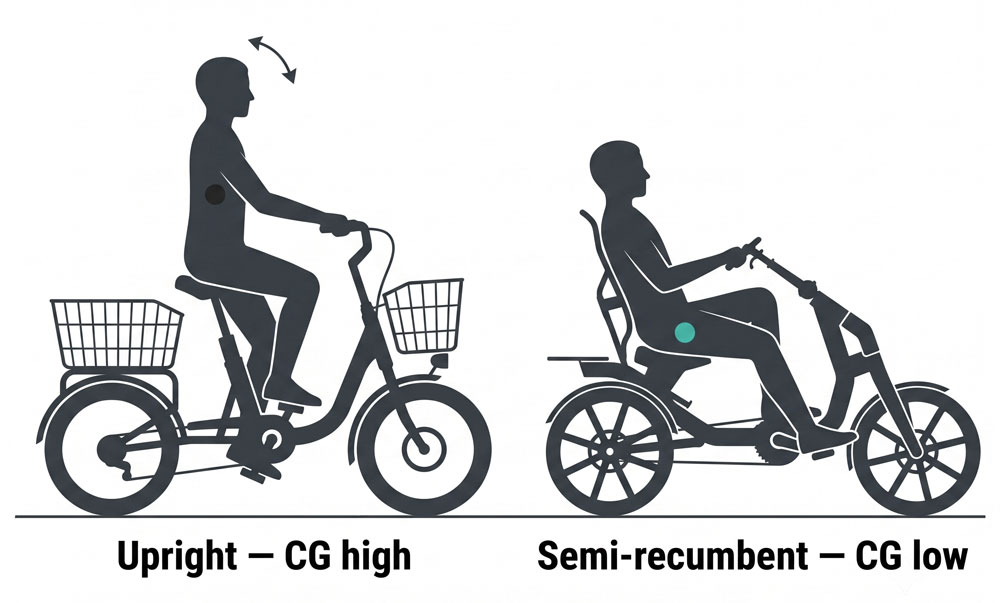
Ein aufrechtes Dreirad Der Fahrer sitzt mit aufrechtem Oberkörper auf einem Sattel oberhalb des Rahmens. Im US-amerikanischen Seniorensegment basiert dieses Fahrrad fast immer auf einem Tiefeinstiegsrahmen – der Fahrer kann mit beiden Füßen den Boden erreichen, und zum Aufsteigen ist kein Beinschwung über das Oberrohr nötig. Es fährt sich wie das Fahrrad, das der Käufer bereits kennt, und genau das ist sein größter Vorteil: Es bedarf keiner Anpassung und keiner Erklärung.
A halbliegendes Dreirad Der Fahrer sitzt tief in einem bequemen, stuhlähnlichen Sitz mit Rückenlehne, der Oberkörper leicht zurückgelehnt – eher wie in einem Sessel, nicht wie in einem Liegerad im Rennsport. Er setzt sich so in den Sitz, wie er sich auf einen Stuhl setzt. Dadurch verändern sich vier Dinge gleichzeitig: Der Rücken wird gestützt, Handgelenke und Schultern werden entlastet, die Aufstehbewegung verschwindet vollständig und der Schwerpunkt sinkt.
An diesem letzten Punkt verliert die Komfortfrage bei der Wahl des Formats an Bedeutung. Da der Fahrer die größte bewegliche Masse im Fahrzeug darstellt, bestimmt die Sitzhöhe maßgeblich die Schwerpunktlage und damit die Kippsicherheit. Ein Halbliegesattel bietet aus demselben Grund strukturelle Vorteile hinsichtlich der Stabilität wie auch hinsichtlich des Komforts – es handelt sich um eine einzige Konstruktionsentscheidung, nicht um zwei.
Wer kauft was und wo?
Der aufrichtige Käufer Die Zielgruppe ist typischerweise zwischen 60 und 80 Jahre alt, fährt noch Motorrad oder hat kürzlich damit aufgehört, fühlt sich körperlich fit und möchte ein Motorrad, das stabil ist, ohne sonst etwas zu verändern. Der Kauf wird als Fortsetzung der bestehenden Gewohnheiten betrachtet: Erledigungen, Einkäufe, Fahrten in der Nachbarschaft, Mobilität auf dem Campingplatz. Die Preissensibilität ist hoch, die Recherche findet größtenteils online statt, und der Kauf wird oft ohne Probefahrt abgeschlossen. Hier ist der Wettbewerb im Einstiegssegment am größten, und hier ist Vertrautheit der Käufer ausschlaggebend.
Der Käufer eines halbliegenden Sitzes Sie kommen mit einem konkreten Grund – Rückenschmerzen, Gelenkempfindlichkeit, Neuropathie, verminderte Rumpfmuskulatur, Belastung der Handgelenke oder Schultern oder eine benannte Gleichgewichtsstörung. Sie benötigen Unterstützung für den Rücken und eine entspannte Haltung. Sie sind bereit, mehr zu zahlen, möchten das Produkt fast immer vor dem Kauf testen und finden es eher über Mobilitäts- und Behindertenfachgeschäfte als über Online-Marktplätze. Sie sind auch die Käufergruppe, für die die Rabattkategorien für Behindertenprodukte entwickelt wurden – und, wie unsere Anreizanalyse Wie bereits erwähnt, ist für einige US-Programme ein Anprobetermin für adaptive Modelle erforderlich, der nur in einem Fachgeschäft möglich ist.
Die Kanalimplikation ist der Kernpunkt dieses Artikels. Wenn Sie Ihre Produkte über Marktplätze und Direktvertrieb vertreiben, eignet sich ein Sortiment an aufrechten Fahrrädern am besten für diesen Vertriebskanal – die Produktbilder sprechen für sich. Wenn Sie hingegen über gute und flexible Händlerbeziehungen verfügen oder diese aufbauen können, bietet das Sortiment an halbliegenden Fahrrädern die besten Gewinnmargen, Differenzierungsmöglichkeiten und subventionierten Segmenten. Die meisten Importeure sollten nicht wählen, sondern die Produkte nacheinander aufstellen.
Wie man einen US-Schießstand gewichtet
Eine praktikable Standardeinstellung, angepasst an die Gegebenheiten Ihres Kanals:
Wenn Sie zuerst online verkaufen: Führen Sie zunächst aufrechte Sessel an, wobei ein halbliegendes Modell das Topmodell darstellt. Die aufrechten Sessel decken den größten Absatz und die höchste Nachfrage ab; der halbliegende Sessel bietet Käufern mit Rückenproblemen eine Alternative und regt später das Gespräch mit Händlern an.
Wenn Sie über Mobilitäts- und barrierefreie Einzelhandelsgeschäfte verkaufen: Drehen Sie es um. Beginnen Sie mit halbliegenden Sesseln – dieser Vertriebskanal existiert genau deshalb, weil der Käufer etwas benötigt, was ein Marktplatz nicht liefern kann – und führen Sie ein oder zwei aufrechte Sessel für den Kunden mit, der sich herausstellt, dass er das vollständige Format nicht benötigt.
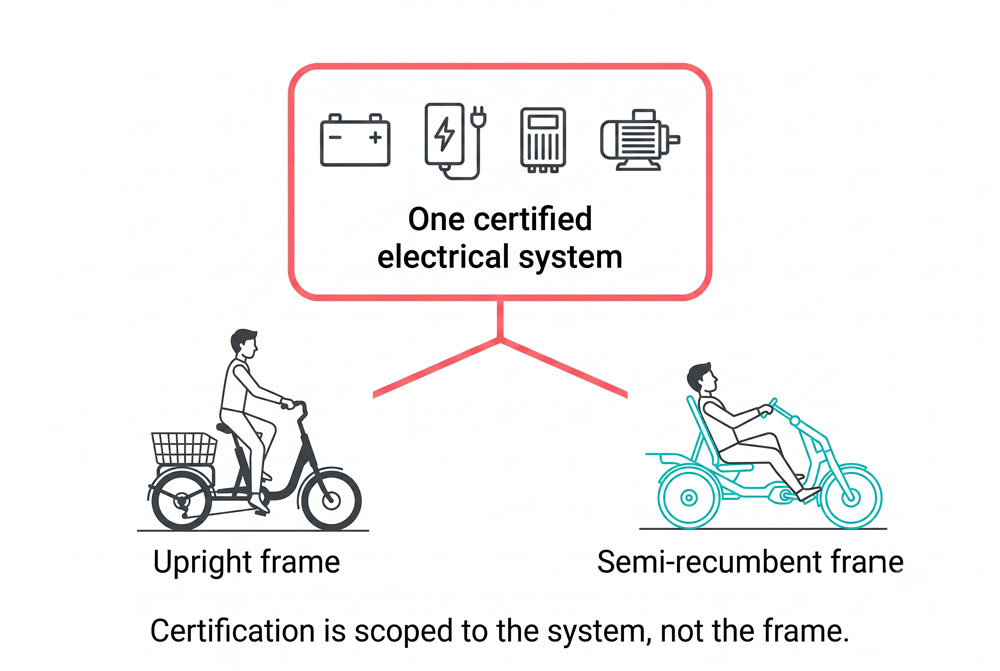
Wenn Sie beides bauen: Die Verwendung gemeinsamer Komponenten ist bewusst gewählt. Der Einsatz von Akku, Ladegerät, Steuerung und Antrieb bei aufrechten und halbliegenden Modellen bedeutet nur eine zertifizierte Systemgrenze anstatt zweier. Dies ist insbesondere in den USA relevant, da sich die Zertifizierung dort auf das elektrische System und nicht auf den Rahmen bezieht. Zwei Rahmenformate mit gemeinsamer elektrischer Architektur bieten eine deutlich kostengünstigere Lösung für die Einhaltung der Vorschriften als zwei unabhängige Produkte.
Dieser letzte Punkt verdient besondere Beachtung, denn er ist das stärkste Argument dafür, beide Formate von einem einzigen Werk anstatt von zweien zu beziehen. Er ist auch der Grund, warum dieses Gespräch geführt werden sollte, bevor die Werkzeuge für eines der Produkte gefertigt werden.
Was jedes Format leisten muss
Aufrechte Dreiräder scheitern an der Stabilität. Der Fahrer sitzt hoch, was den Schwerpunkt erhöht und den Kippwiderstand verringert – genau diese Bauweise ist in den USA besonders anfällig für die häufigen Kippbeschwerden. Die technischen Lösungen sind bekannt: ausreichende Spurbreite, möglichst niedrige Sitz- und Rahmenhöhe, ein Differenzial für vorhersehbares Fahrverhalten der Antriebsräder in Kurven, eine Bremsanlage, die auch bei kombiniertem Bremsen und Lenken zuverlässig wirkt, und eine Anfahrgeschwindigkeitsbegrenzung im Steuergerät. Auch die Kippsicherung gehört in diesen Zusammenhang. Heal Middle verfügt über eine Kippschutztechnologie, gerade weil das aufrechte Format die Unterstützung benötigt, die das halbliegende Format durch die Geometrie erhält.
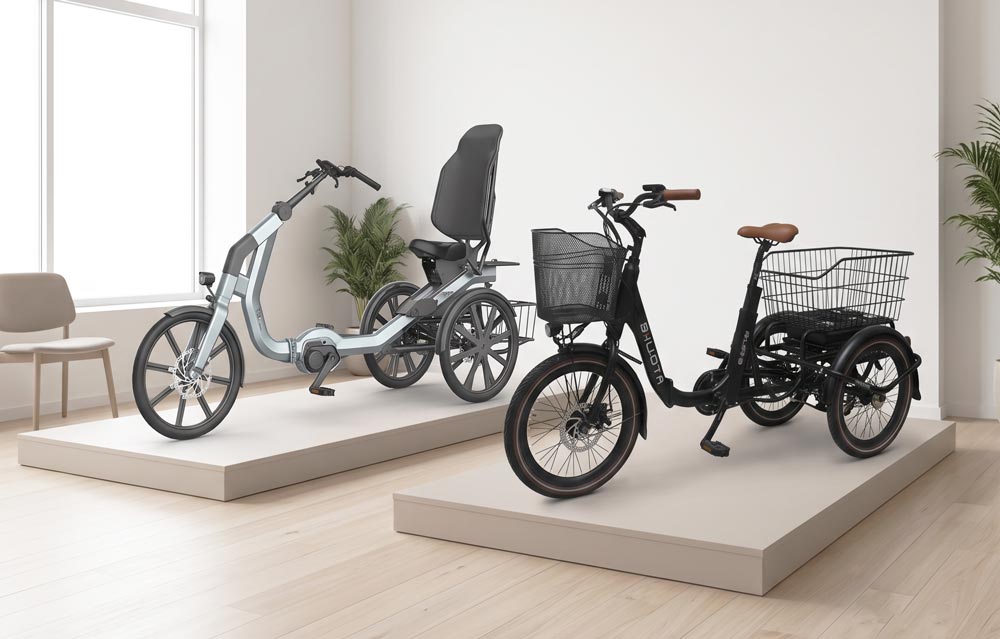
Halbliegende Dreiräder stoßen bei der Zugänglichkeit und Manövrierbarkeit an ihre Grenzen. Der niedrige Sitz, der für Stabilität sorgt, positioniert den Fahrer auch näher am Boden. Daher entscheiden Sitzhöhe, Sitz-Pedal-Geometrie und der freie Platz vor dem Sitz darüber, ob ein 78-Jähriger ohne Hilfe ein- und aussteigen kann – was den gesamten Kaufprozess ausmacht. Ein weiterer häufiger Einwand betrifft den Wendekreis und die Gesamtlänge: Ein längerer Radstand erschwert das Parken und vergrößert den Wendekreis. Die Lösung ist eine kompakte Plattform, die genau darauf ausgelegt ist, anstatt eines verkleinerten Liegerads in voller Größe. UM Chill Und UM Vita basieren auf dieser Einschränkung, wobei der niedrige Einstieg und die Möglichkeit zum Sitzen den Ausgangspunkt und nicht eine Anpassung darstellen.
Beide Formate müssen denselben US-Umschlag enthalten.750 W, 32 km/h Motorleistung, voll funktionsfähige Pedale und ein zertifiziertes elektrisches System. Dies ist nicht formatspezifisch und wird in unserer Dokumentation behandelt. Zertifizierungsanalyse.
Die Fragen, die man einer Fabrik stellen sollte
Die Planung von Testgeländen verläuft nicht optimal, wenn sie auf Modellebene verharrt. Sinnvolle Fragen sind architektonischer Natur:
Können beide Bauformen ein gemeinsames elektrisches System nutzen, sodass die Zertifizierung nur einmal erforderlich ist? Wie hoch sind Sitzhöhe und Einstiegshöhe beim Liegerad und die Überstandshöhe beim aufrechten Rad – jeweils in Millimetern, beladen? Wie breit ist die Spurweite bei beiden Modellen und wie hoch liegt der geschätzte Schwerpunkt unter Last? Wie groß ist der Wendekreis des Liegerads? Verfügt das aufrechte Rad über ein Differenzial, eine Kippsicherung und eine Anfahrgeschwindigkeitsbegrenzung? Kann der Hersteller Sitz, Spurweite und Fahrverhalten an das Fahrergewicht in den USA anpassen, oder ist die Geometrie fest vorgegeben?
Eine Fabrik, die diese Fragen beantworten kann, hat für den jeweiligen Anwendungsfall gebaut. Eine, die nur einen Katalog verschickt, hat dies nicht getan.
Zusammenarbeit mit United Mobility auf einem US-amerikanischen Markt
Die meisten Anbieter in dieser Kategorie spezialisieren sich auf ein Format, was einen Händler zwingt, zwei Lieferantenbeziehungen, zwei Compliance-Projekte und zwei Dokumentationssätze zu verwalten. United Mobility erstellt beides: das Vita Und Chill halbliegende Plattformen und die Heal Mini, Heal Middle Und TRIOGO 1 Auf der aufrechten Seite. Für einen US-Partner bedeutet dies, dass ein Sortiment als einheitliche Architektur geplant werden kann – gemeinsames elektrisches System und ein einheitlicher Zertifizierungsumfang, sofern die Spezifikation dies zulässt, wobei die Rahmenformate nach Vertriebskanal und nicht danach ausgewählt werden, welcher Lieferant gerade welches Produkt herstellt.
Der Zertifizierungsumfang, die Klassifizierungsgrenzen und die marktspezifische Konfiguration werden gemeinsam mit Ihnen in der Entwurfsphase festgelegt. Wenn Sie eine US-Produktpalette planen, Sprechen Sie mit unserem Ingenieurteam bevor das Sortiment festgelegt ist, und beginnen Sie mit dem US-Marktkarte.
Häufig gestellte Fragen
Ist ein halbliegendes Dreirad besser als ein aufrechtes?
Keines der beiden Modelle ist besser; sie sprechen unterschiedliche Käufergruppen an. Das aufrechte Fahrrad eignet sich für Fahrer, die Stabilität wünschen, ohne ihre Fahrweise ändern zu müssen, und die online kaufen. Das halbliegende Fahrrad ist für Fahrer mit Rücken-, Gelenk-, Handgelenks- oder Gleichgewichtsproblemen geeignet, die eine gestützte Haltung benötigen und das Produkt vor dem Kauf bei einem Händler probegefahren haben.
Sind halbliegende Dreiräder stabiler?
Strukturell gesehen ja – die niedrige Sitzposition verlagert die Masse des Fahrers näher an den Boden und senkt so den Schwerpunkt, was die Kippsicherheit beeinflusst. Aufrechte Trikes können zwar stabil konstruiert werden, erfordern aber durch Spurbreite, niedrige Rahmenkonstruktion, Differenzialverhalten und Kippsicherung mehr Aufwand.
Sollte ein US-amerikanischer Vertriebshändler beide Formate vorrätig halten?
In der Regel ja, abhängig vom Vertriebskanal. Online-orientierte Sortimente sollten mit aufrechten Modellen beginnen und ein halbliegendes Topmodell anbieten; bei mobilen und anpassungsfähigen Händlern sollte es umgekehrt sein. Durch die gemeinsame Nutzung einer elektrischen Architektur für beide Sortimente wird die Zertifizierung nur einmalig erforderlich.
Welches Format kommt für adaptive Rabattkategorien in Frage?
Die Programme variieren und die Anspruchsberechtigung richtet sich eher nach den jeweiligen Programmdefinitionen als nach dem Rahmenformat. Am häufigsten fallen halbliegende Produkte jedoch in die Kategorie der adaptiven Produkte, und für einige Programme ist ein Anpassungstermin für adaptive Anschaffungen erforderlich – wofür ein physischer Händler benötigt wird.
Worin besteht der Unterschied zwischen einer halbliegenden und einer vollständig liegenden Position?
Sitzwinkel. Ein Halbliegesessel bietet dem Fahrer eine stuhlähnliche Sitzposition, wobei der Oberkörper nur leicht zurückgelehnt und der Kopf deutlich über der Rückenlehne liegt – konzipiert für bequemen Einstieg und den täglichen Gebrauch. Ein Vollliegesessel hingegen bietet dem Fahrer eine nahezu horizontale Sitzposition, die zwar sportlich ausgelegt ist, aber den Zugangsanforderungen dieses Marktes nicht gerecht wird.
 German
  English
  Dutch
Dutch  Danish
  French
  Polish
  Portuguese
  Spanish