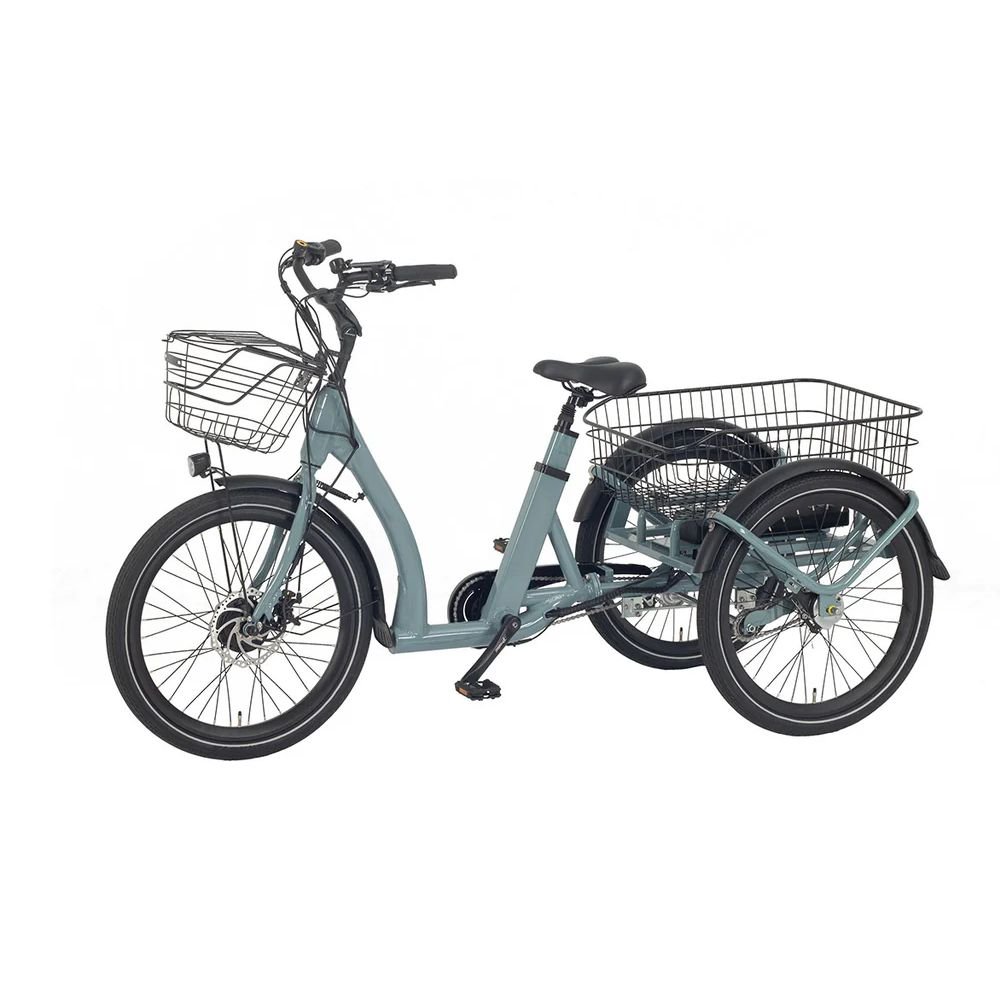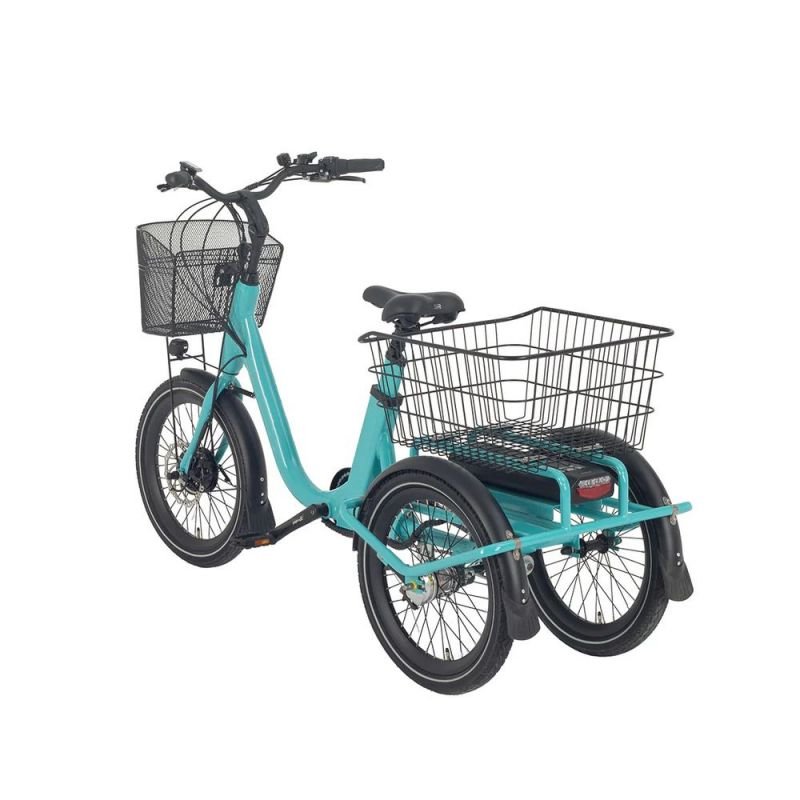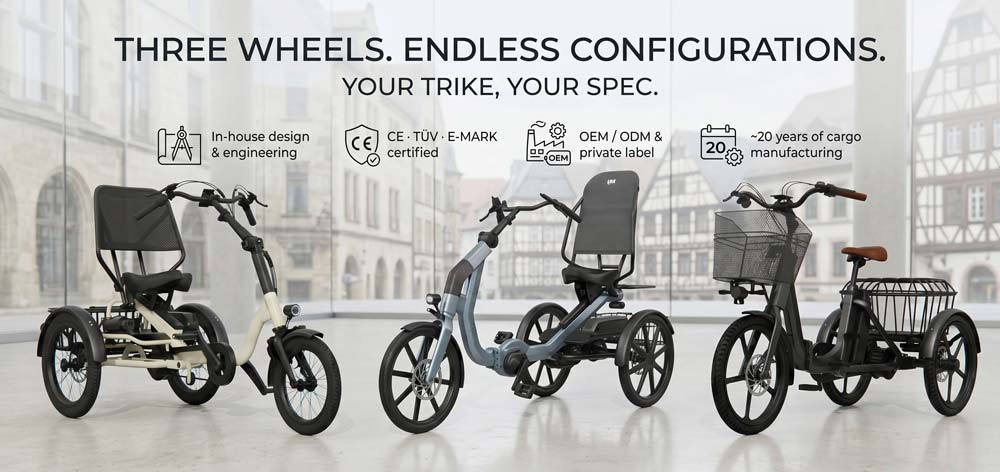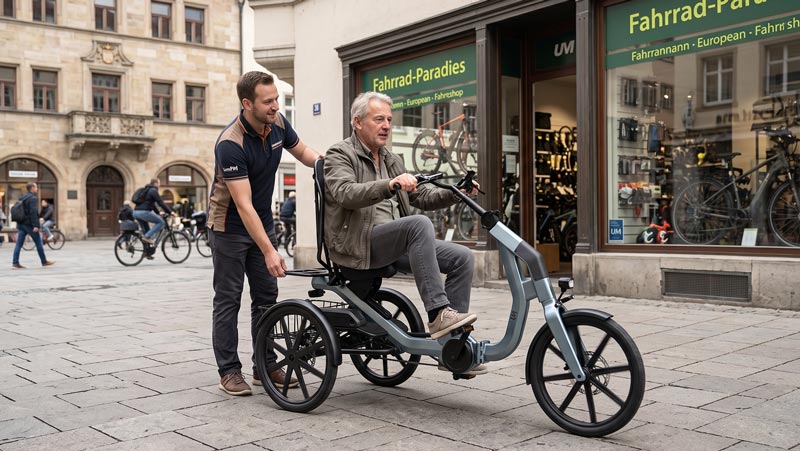
Electric Trike for Seniors in Europe: Five Markets, Five Mechanisms

De electric trike for seniors in Europe is not one market. It is five different machines wearing one continent’s name — each deciding, in its own way, who buys a trike, through which channel, and at what price. This hub maps the five markets we’ve analysed in depth, so a distributor, retailer or brand can answer the only question that matters at entry: which door, in which country, first?

Last updated: July 2026 · Built on national statistics offices and primary legal & scheme documents, cited per market in each full analysis.

TL;DR — the five mechanisms in one paragraph

De Netherlands built the category on municipal reimbursement and is now quietly withdrawing it, pushing demand to retail. Tyskland gates its insurance channel at the manufacturer level through the Hilfsmittelnummer, leaving the adult market to self-payers. The UK never had a reimbursement system at all — the fastest, most open entry in Europe. Denmark classifies the trike as an assistive device on paper but grants mobility scooters in practice. Belgium pays a fixed ±€1,700 through accredited providers, with everything above that line the customer’s to pay. In all five: demand is demographically guaranteed, supply is thin, and the decisive capabilities sit at the factory.

The comparison table

MarketThe mechanismFunding for older ridersWhere demand routesEntry speed 
NetherlandsWMO grants shrinking; scootmobiel offered insteadNarrowing; municipalities increasingly restrictiveRetail + PGB free choiceFastFull analysis
TysklandHilfsmittelnummer gates insurance at manufacturer levelReliable only for children ≤15; adults case-by-caseRetail; insurance later via partnershipRetail fast; insurance 12–24 moFull analysis
United KingdomNo reimbursement; trade-administered levers (VAT relief, Cycle to Work)None state-funded; 20–47% trade-side price leversRetail entirelyFastestFull analysis
DenmarkTrike = assistive device on paper (ruling 40-19); scooters granted in practice§112 loan for documented impairment; rare in practiceRetail, full 25% VATFastFull analysis
Belgium (Flanders)Fixed amount via accredited verstrekkers; top-up self-paid±€1,700 fixed, no age conditionVerstrekker counter + retail + leasingRetail fast; list entry in months

Full analysis

Need a professional E-Trike Manufacturer? Talk to An Expert>>

The Five Markets at A Glance

Netherlands

RETAIL SHIFT

The world's best-known reimbursement route for adapted cycles is closing: the Netherlands' largest seniors' organisation now openly advises members to buy privately, while national statistics recorded the worst year on record for older cyclists in 2025. The market is changing hands — from a channel one incumbent owned for decades to a retail channel nobody has organised.

Read the full Netherlands analysis →

Tyskland

REGISTRY GATE

Statutory insurers fund therapy trikes reliably for children up to 15; for adults, approval under §33 SGB V is discretionary — making the 60–75 rider in Europe's largest e-bike market a self-payer. The insurance channel is gated by the Hilfsmittelnummer at the manufacturer level: a 12–24 month project best entered later, through partnership, while retail funds the wait.

Read the full Germany analysis →

United Kingdom

OPEN MARKET

The UK has no NHS or council reimbursement for cycles and Motability excludes them — yet the ONS projects the over-75 population to nearly double towards ten million by 2039, and a quarter of UK e-bike buyers already say they chose electric because they can't manage a conventional bike for long. Every financial lever that exists is administered by the trade.

Read the full UK analysis→

Denmark

RETAIL BY DESIGN

Under Ankestyrelsen ruling 40-19, a three-wheeled cycle is an assistive device the kommune can grant free — but the grant is a loan under a cheapest-suitable-solution doctrine, and caseworkers report mobility scooters increasingly granted instead. In the world's second cycling nation, the active older rider buys at retail.

Read the full Denmark analysis →

Belgium

THE MEERKOST GAP

Flanders funds three-wheelers and seated trikes through the Vlaamse sociale bescherming with no age condition — a fixed amount on the order of €1,700, paid through accredited verstrekkers, with any upgrade cost explicitly the customer's. Reimbursement and premium retail happen in the same transaction, and the mid-price gap between the fixed amount and the premium imports is the market.

Read the full Belgium analysis →

Recommended E-Trikes

2025 UM New Electric Trike CHILL-2

UM Chill

A compact, transportable recumbent electric trike designed for riders who prioritize comfort, safety, and easy handling in urban environments.
Electric Trike Vita

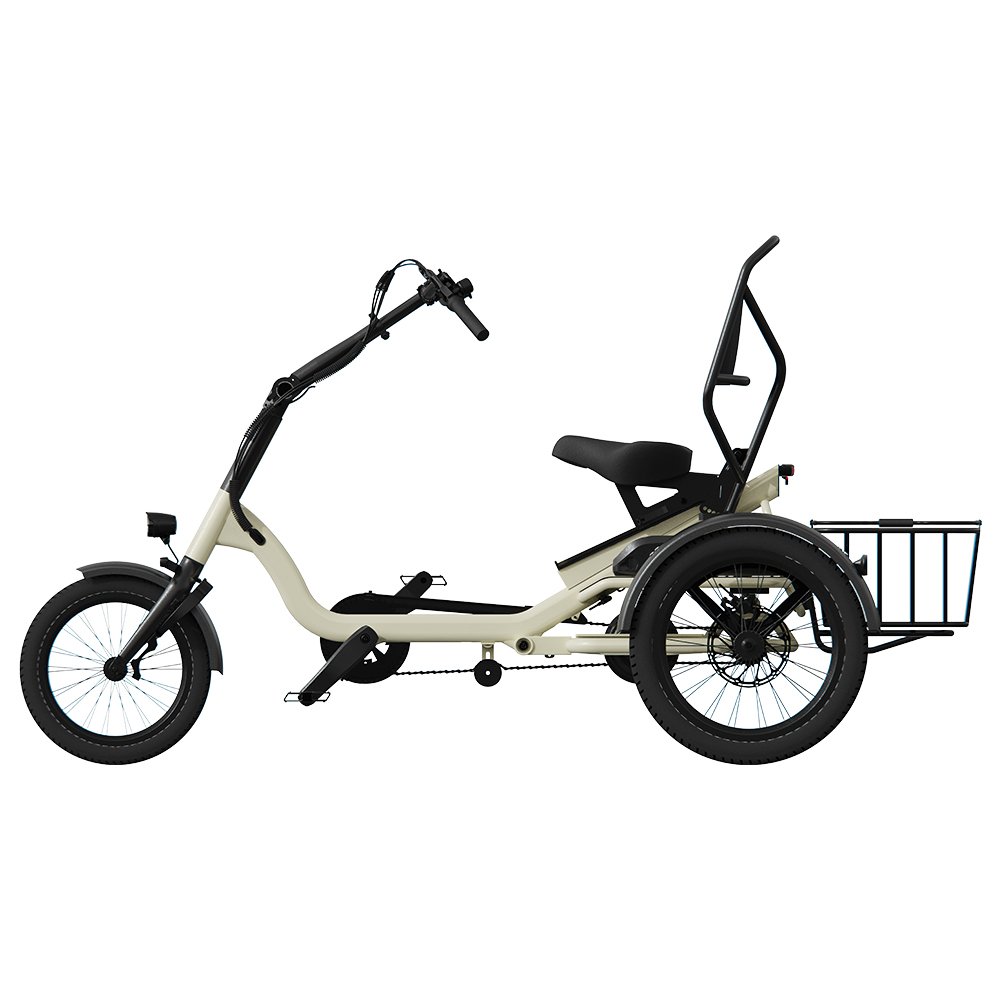
UM Vita

Daily-use lightweight compact recumbent electric trike: low step-through frame facilitates easy access for seniors and delivers stable, sure handling for comfortable rides.
2025 UM New Electric Trike TRIOGO 1 -2

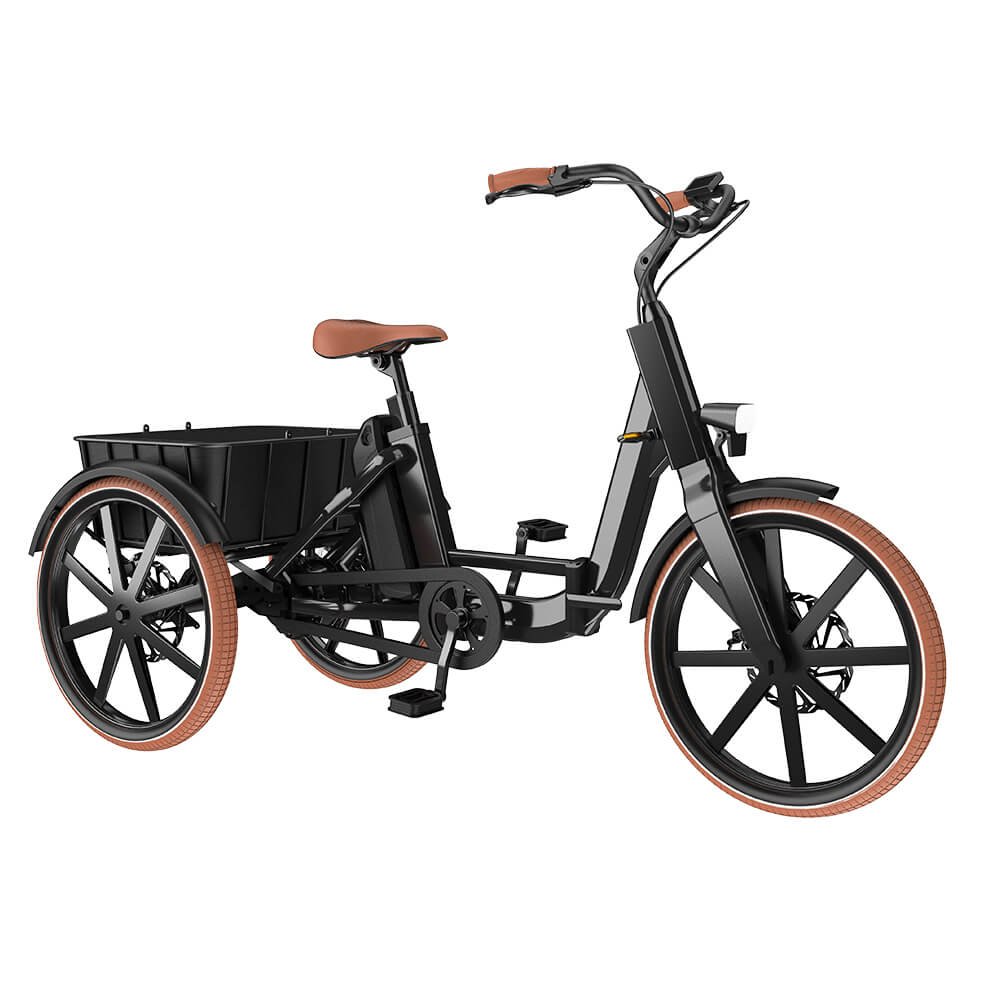
TRIOGO 1

A compact, stable electric cargo trike designed for modern urban families, senior riders, and light commercial use.
e trike heal middle

Helbred Midt

It features anti-tilt self-balancing technology for enhanced stability, especially for seniors or less experienced riders.
electric trike heal mini

Heal Mini

With a 20-inch tire design and low body for easy mounting, it’s perfect for seniors and beginners.

The pattern underneath: five markets, one factory question

Put the five machines side by side and the same conclusion falls out of each: every durable advantage in this category is created before the container ships. The Dutch retail buyer needs de-medicalised, seated-entry design. The German advisor channel needs ergonomics as measurable data. The UK’s VAT lever needs a documented accessibility-engineering dossier. Denmark’s design-literate buyer needs understated quality and winter-rated spec. Belgium’s verstrekker needs a file they can defend to a zorgkas — at a price that lives in the meerkost gap.

That is one brief, expressed five ways: a semi-recumbent platform engineered as a documented accessibility product, configured per market. It is what the semi-recumbent trend in Europe is converging on, what the buyer segmentation demands, and what our manufacturer evaluation checklist tells you to test any factory on — including us.


Which market first? A short decision logic

  • Speed is your constraint → UK first. A compliant product and a dealer network are the entire entry requirement; no regulatory queue.
  • Volume is your goal → Germany retail and Netherlands retail in parallel: the two largest demand pools, both shifting to self-pay, both underserved at mid-price.
  • Margin quality is your goal → Belgium (the institutionalised top-up) and Denmark (no incumbent price umbrella; small, loyalty-rich market) — enter once range and documentation are proven.
  • All roads → the same product requirements. Build the platform once, configure per market.

One platform, multi market configurations

De UM Vita og UM Chill are engineered as accessibility products and configured per market through our ODM programme.

senior electric trike models

Som en cykelfabrik kan vi tilbyde mere end disse

Frequently Asked Questions (FAQ)

Which European country has the best subsidies for senior electric trikes?

Flanders (Belgium) currently runs the most open scheme: a fixed reimbursement for three-wheel and seated trikes through the Vlaamse sociale bescherming, with no age condition. The Netherlands’ WMO route is narrowing; Germany funds adults only case-by-case; Denmark grants trikes on paper but scooters in practice; the UK has no reimbursement at all but strong trade-administered price levers.

Is the senior e-trike market in Europe growing?

The demand drivers are demographic arithmetic: national statistics offices project steep 75+ population growth through 2040 in every market covered here, e-bike adoption among older riders keeps rising, and purchase-motivation data already shows stability-driven buying inside e-bike sales. Dedicated mid-priced retail supply has not kept pace — that mismatch is the definition of a growth window.

What should a distributor look for in a senior e-trike manufacturer for Europe?

Documented accessibility engineering (boarding geometry as data, not claims), EN 15194 conformity, per-market ODM configuration (drive settings, weatherising, languages, price points), and support for market-specific cases such as a UK VAT dossier or a Belgian product-list entry. United Mobility’s manufacturer evaluation checklist covers the full test list.

Where can I read the individual market analyses?

Netherlands, Germany, United Kingdom, Denmark and Belgium — linked in the table above, each built on primary sources: national statistics offices, legal rulings and scheme documents.

Efterlad en besked

Fortæl os dit krav

Vores erfarne team er klar til at levere skræddersyede løsninger til at understøtte din virksomheds vækst.

Vores blog

Seneste blog og artikler

Oplev mere om de seneste innovationer, branchetrends og produktintroduktioner fra førende inden for cykelindustrien.

UL 2849 for Electric Trikes: What US Entry Actually Requires

UL 2849 certification for electric trikes is where most US entry plans either start correctly or go wrong expensively. The standard is not a document you obtain after the product exists; it evaluates the complete electrical system, which means the decisions it tests — battery architecture, charger pairing, controller behaviour, cut-off logic — are frozen long before a certificate is issued. Add three-wheel-specific variables like dual motors, reverse function and differential drive, and the scope grows further. This article sets out what a US-bound e-trike actually needs, where three-wheeled and semi-recumbent designs differ from two-wheeled ones, and what changes if the CPSC's proposed federal rule is finalized. Figures and regulatory status current as of July 2026. Certification requirements change; confirm scope with your testing body and, for state law questions, with US counsel before relying on any of this commercially. The...

Electric Trike for Seniors in Belgium: The Market Behind the Verstrekker’s Counter

The electric trike for seniors in Belgium is bought and reimbursed at the same counter — and that single fact organises the whole market. Flanders runs Europe's most unusual funding system for adapted cycles: the Vlaamse sociale bescherming pays a fixed amount towards a three-wheeler with no age condition at all, but only through accredited providers, only for products on an official monthly-updated list, and with anything above the fixed amount explicitly paid by the customer. Reimbursement and premium retail aren't two channels here. They are one transaction, split down an invoice. For a distributor or brand, that changes where the battle is fought: not in a ministry, not in a bidding war — on a provider's shop floor. This article maps the machinery, region by region, and what it means for market entry. It is one chapter of our five-market...

Electric Trike for Seniors in Denmark: A Retail Story in Disguise

The electric trike for seniors in Denmark sits inside a paradox worth a distributor's full attention. This is the world's second cycling nation — 15% of all Danish trips happen by bike, and cycling to the shops is the country's single most common form of everyday exercise. Yet only around half of Danes over 65 still own a bicycle, and when an older rider turns to the public system for a stable alternative, the kommune increasingly offers a mobility scooter instead of a trike. The most cycling-proud welfare state in Europe has, in effect, built a system that retires its riders — and a retail market for everyone who refuses to be retired. This article maps that market: the data, the legal machinery, and the cultural register a brand needs to sell into it. For how Denmark's retail-by-design market compares with...

da_DKDanish