Denne artikel kortlægger ODM-udviklingsprocessen trin for trin med realistiske varigheder: designbrief og gennemførlighed, prototyping, værktøjsfremstilling, EN 15194-certificeringstest og pilotproduktion. Den er skrevet til købere, der allerede har valgt ODM-ruten. Hvis du stadig afvejer ODM mod OEM, så læs prissammenligningen først.
Hvad er en ODM-proces for ladcykel?
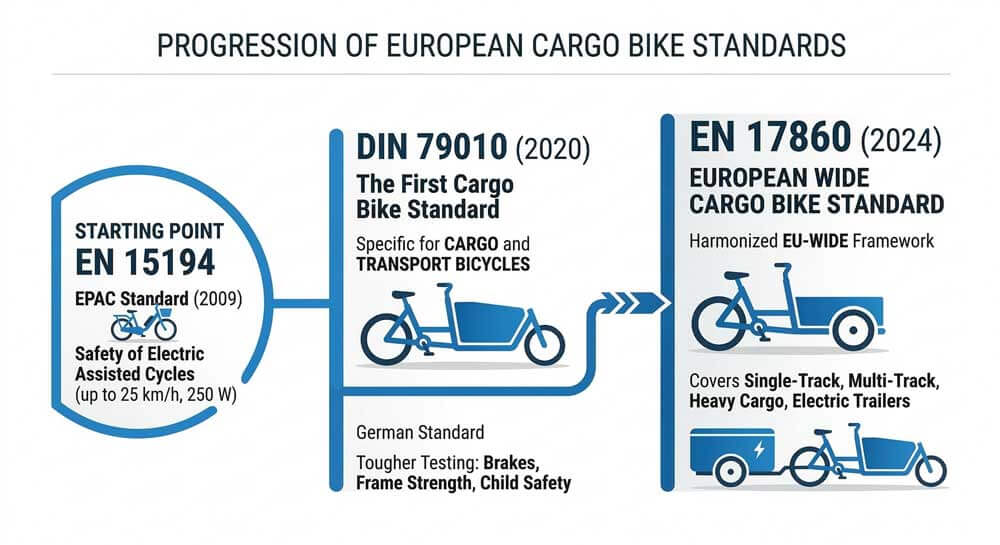
En ODM-proces (Original Design Manufacturer) til ladcykler er et struktureret, trinvis udviklingsprogram, hvor en producent designer, konstruerer, certificerer og producerer en brugerdefineret lad-elcykel på vegne af et private label-mærke. I modsætning til simpel OEM-branding dækker et fuldt ODM-engagement definition af produktkrav, industrielt design, CAE-simulering, validering af EVT/DVT-prototype, europæisk certificering (EN 15194 / EN 17860), NPI og skalerbar masseproduktion – hvor brandet bevarer ejerskabet af IP, værktøjer og certificeringsaktiver.
For europæiske mærker, der træder ind på markedet for el-ladcykler i 2026, har denne sondring en kommerciel betydning. Det europæiske marked for el-ladcykler anslås til at være 1,21 milliarder USD i 2026 og forventes at nå 1,46 milliarder USD inden 2031 (Mordor-efterretningstjenestenMærker, der kontrollerer deres ODM-output – deres designfiler, værktøjsforme og certifikater – har en strukturel fordel i forhold til dem, der lejer en platform fra en fabrik.
OEM eller ODM? Vælg dit program, før du starter din ingeniøruddannelse
Mange leverandører markedsfører "ODM", mens de leverer en rebrandet eksisterende platform. Før du forpligter dig til et budget, bør du bekræfte tre ting med enhver potentiel partner:
Er frame-arkitekturen virkelig ny, eller en eksisterende platform med ændringer i badges?
Er EN 17860-testrapporterne afledt af den nøjagtige foreslåede geometri og belastningsklassificering?
Kan ejerskabet af værktøj kontraktligt overdrages, hvis man skifter fabrik?
På United Mobility, begge spor tilbydes — en platformbaseret OEM-program (hurtigere, lavere startomkostninger) og en fuldt ODM-program (skræddersyet stel, lastmodul og elektrisk arkitektur). Det rigtige valg afhænger af din målstykliste, årlige volumenprognose og lovgivningsmæssig klassificering: EPAC (≤250W, ≤25 km/t), Speed Pedelec (≤500W, ≤45 km/t) eller L-kategori.
Strukturelle moduler: Ladgrænseflader, børnesæder eller passagerløsninger
Reservedelsstrategi: Hurtigt omsættelige forbrugsvarer, servicesæt, langsigtet tilgængelighed
Port: Fastfrysning af tilpasningsomfang. Enhver risiko for gennemførlighed, der er markeret af ingeniørerne, dokumenteres her – opdages ikke under værktøjsfremstilling.
Trin 2 — Markeds- og teknisk gennemførlighedsvurdering
Systemarkitekturen er defineret: drivlinjetopologi, elektrisk arkitektur, liste over nøgleleverandører og certificeringsruten for det europæiske marked. Outputtet er en certificeringsplan, der specificerer, om eksisterende laboratorierapporter kan forlænges, eller om et nyt testprogram er påkrævet.
Risikobemærkning: De fleste konkurrenter springer over: Genbrug af en fabriks eksisterende EN 15194 eller EN 17860 certifikat er en tidsbesparende taktik med alvorlig kommerciel risiko. Hvis din stelgeometri, belastningsklassificering eller batterikonfiguration afviger fra den certificerede enheds, dækker certifikatet ikke dit produkt – og du bærer ansvaret.
Trin 3 — Konceptudvikling og tilbudsbekræftelse
Industrielle designkoncepter, emballagelayout, foreløbig stykliste, omkostningsoversigt for værktøjer og en projekttidslinje leveres. Værktøjsejerskab og fremtidig enhedsprisfastsættelse skal kontraktligt fastsættes på dette tidspunkt. — genforhandles ikke, når formene er skåret.
Trin 4 — Industrielt design og strukturelt design
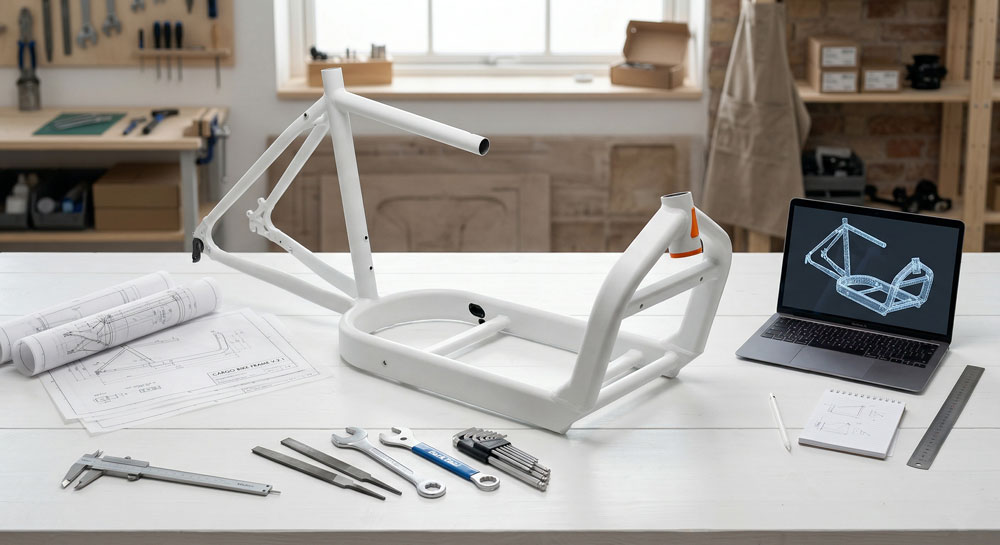
Fuld CAD-udvikling begynder: forfining af industrielt design, 3D-modeller af ramme- og laststruktur, 2D-produktionstegninger og grænsefladekontroldokumenter. United Mobilitys internt designteam ejer dette output og overfører det til brandet – ikke til fabriksgulvet.
Port: Designfrysning. Alle grænsefladedefinitioner er brandejede IP'er.
Trin 5 — CAE og strukturel simulering
Simulering af rammeudmattelse, belastningssimulering af lastmoduler og lokal armeringsanalyse køres, før der skæres fysisk materiale. CAE-rapporter fremmer designforbedringer – de erstatter ikke fysisk certificeringstestning, men reducerer antallet af dyre prototypeændringscyklusser.
Trin 6 — Opbygning af EVT-prototype (teknisk verifikationstest)
Den første fysiske prototype validerer mekanisk tilpasning, elektrisk integration, pakning og ledningsføring. En EVT-byggerapport og en problem-/handlingsliste udstedes. Modifikationsomkostninger og ændringscyklusgodtgørelser aftales på forhånd kontraktligt – et punkt, der adskiller strukturerede ODM-partnere fra ad hoc-leverandører.
Trin 7 — Komponenttestning og prototypeværktøjsfremstilling
Nøglekomponenter og delsystemer testes parallelt med udvikling af soft tooling og pilotværktøjer. Denne fase opfanger fejl på komponentniveau før DVT, hvilket komprimerer den samlede udviklingstidslinje.
Trin 8 — Opbygning af DVT-prototype (designverifikationstest)
DVT bekræfter strukturel holdbarhed, samlingsrepeterbarhed og toleranceopbygning. Pålidelighedsdata og en liste over uløste problemer styrer den endelige designiteration, før certificeringen påbegyndes.
Port: Godkendelse af designverifikation.
Trin 9 — Systemvalidering og europæisk certificering
Dette er den afgørende port til markedsadgang. Typiske standarder for europæiske elcykelprogrammer til fragt omfatter:
Standard
Omfang
EN 15194:2017+A1:2020
EPAC elektrisk og funktionel sikkerhed
EN 17860 (Del 1-7)
Strukturelle og sikkerhedskrav til ladcykler
EN 50604-1
Batterisikkerhed
ECE R10 / CISPR 25
EMC-overholdelse
TÜV/SGS laboratorietest
Tredjeparts strukturel validering
Ejerskab af certifikat er ikke til forhandling. Hvis fabrikken har certifikatet, kan du ikke skifte produktionssted uden at teste igen – en proces, der kan tage 8-16 uger og koste 15.000-40.000 euro pr. standard.
NPI omsætter det certificerede design til et repeterbart produktionssystem: linjelayout, arbejdsinstruktioner, kontrolplan og proces-FMEA. I denne fase indbygges kvalitet i processen, ikke inspiceres ved dens afslutning.
Trin 11 — Pilotproduktion (PP)
En pilotkørsel validerer udbytte, cyklustid, emballage og logistik. Korrigerende handlinger fra pilotkørslen afsluttes, før masseproduktionsgodkendelse gives.
Trin 12 — Masseproduktion (MP)
Stabil serieproduktion med aktiv styring af kvalitetskonsistens, kontrol af tekniske ændringer, leveringskontinuitet og levering af reservedele.
Vi stopper ikke ved "vi designer det, du brander det". De fleste ladcykelproducenter diskuterer ikke de tre ejerskabsrisici, der afgør, om dit brand har ægte uafhængighed i forsyningskæden:
1. Risiko ved ejerskab af grænsefladen
Hvis 3D-modeller, produktionstegninger og grænsefladekontroldokumenter forbliver på fabriksserveren, kræver leverandørskift et fuldstændigt redesign – typisk 6-12 måneder og 50.000-150.000 euro i reengineeringomkostninger. United Mobility overfører alle designfiler til brandet ved designfrysning.
2. Risiko ved ejerskab af værktøjer
Stelforme og lastboksbeslag kan repræsentere 20.000-80.000 euro i sunkne investeringer. Hvis værktøjet ikke er kontraktligt ejet og fysisk overførbart, kontrollerer fabrikken din gearing til genbestilling. Hver United Mobility ODM-kontrakt specificerer formejerskab og overførselsbetingelser, før værktøjsfremstillingen påbegyndes.
3. Risiko ved certificeringskontrol
Certifikater knyttet til et enkelt produktionssted eller en enkelt fabriksenhed skaber regulatorisk skrøbelighed. Hvis den pågældende fabrik mister akkreditering, står over for en compliance-revision eller lukker en produktionslinje, suspenderes dit produkts markedsadgang. United Mobilitys certificeringsstrategi sikrer, at testrapporter dækker brandets produktspecifikation – ikke en fabriksvariant.
United Mobilitys strukturelle fordele inden for ladcykler ODM
Med næsten 20 års erfaring med produktion af elcykler og intern produktion af rammer, forme og rør, tilbyder United Mobility en vertikalt integreret ODM-forsyningskæde, som de fleste platformbaserede konkurrenter ikke kan kopiere:
Intern produktion af rammer og forme — fuld geometrikontrol, ingen afhængigheder fra tredjeparts formværksteder
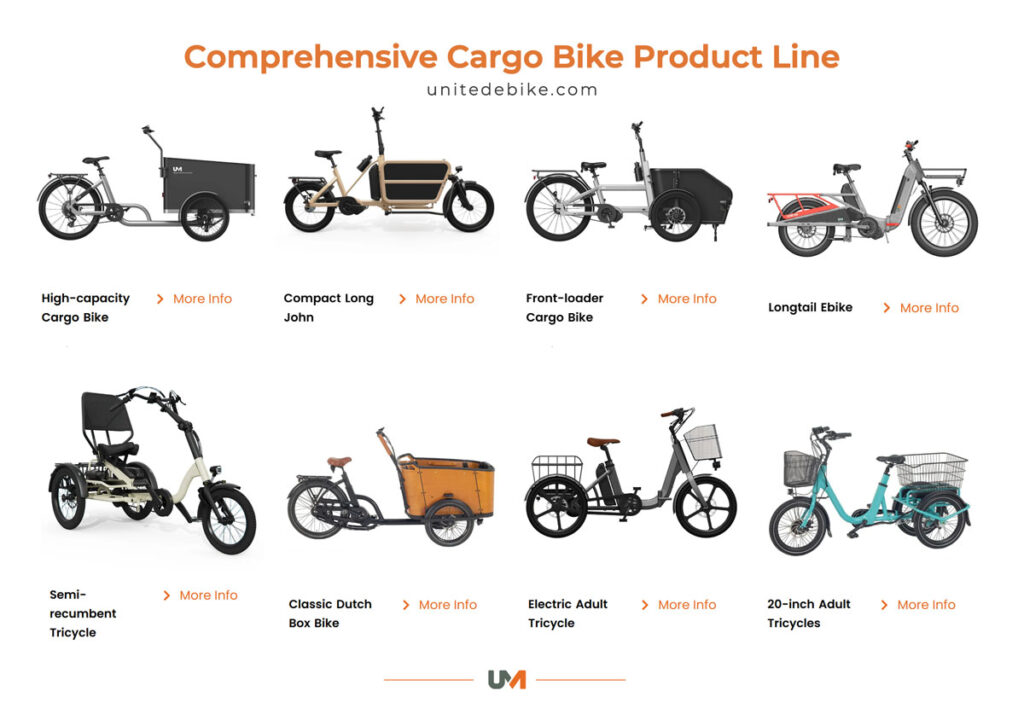
8 validerede ladcykelplatforme (long john, longtail, trehjulet cykel, kompakt foldbar cykel) fås som ODM-basisarkitekturer, hvilket reducerer udviklingstiden med 30-40% i forhold til nyt design
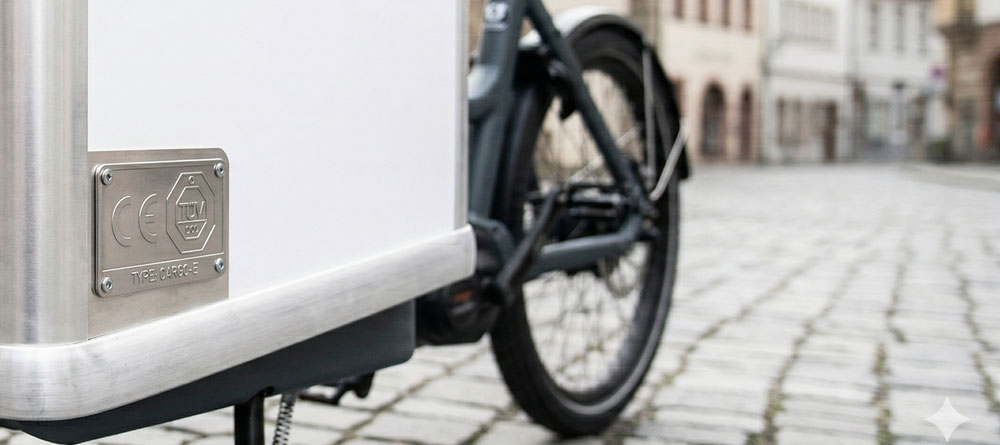
EN 15194, EN 17860, CE, TÜV, E-mærke certificeret på tværs af det nuværende sortiment, med certificeringsplaner for mærkespecifikke varianter
ODM-projektets tidslinje: 8-12 uger (komponenttilpasning) til 20-28 uger (helt nyt rammeudvikling), afhængigt af programmets omfang
Gennemsnitlig svartid: 3 timer — tekniske og kommercielle forespørgsler løst inden for samme hverdag
Garanti: 2–8 år på kernekomponenter (motor, batteri), hvilket reducerer risikoen for brandets eftersalg
📌 Kontakt os for at starte dit ODM-projekt nu:Kontakt os
Virkelig anvendelse: Tilpasning af kommunal rengøringsflåde
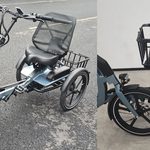
Et eksempel fra United Mobilitys leveringsportefølje: en rengøringsmyndighed i byen krævede en trehjulet ladcykel udstyret med affaldsbeholdere, værktøjsholdere og et forstærket lavt lasteområde — tilpasset fra UM Starter-platform. Tilpasningsomfanget omfattede design af strukturelle beslag, omstrukturering af lastmoduler og brugerdefineret farvespecifikation. Programmet gik fra PRD til pilotproduktion på under 14 uger, med den endelige EN 17860 strukturel testrapport opdateret for at afspejle den ændrede lastgeometri.
Denne type program – hvor en eksisterende platform strukturelt modificeres, omprogrammeres og recertificeres til en specifik anvendelse – repræsenterer den praktiske mellemvej mellem ren OEM-branding og fuld greenfield ODM-udvikling. Det leverer branddifferentiering uden den 24+ uger lange tidslinje for et nyt rammeprogram.
Start dit ODM-program for ladcykel
United Mobilitys ODM-team for ladcykler reagerer inden for 3 timer til nye forespørgsler. Indledende konsultationer dækker programomfang, certificeringsrute, platformvalg og et foreløbigt BOM-prisinterval – ingen forpligtelse kræves.
Eller udforsk United Mobilitys nuværende udvalg af ladcykler for at identificere den platform, der bedst passer til din målgruppe, før du sender en e-mail til [email protected]:


 Danish
  English
  German
  Dutch
Dutch  French
  Polish
  Portuguese
  Spanish