Du har udvalgt to eller tre OEM'er til ladcykler, og tilbuddene ligner hinanden. Denne tjekliste er til netop det øjeblik: syv forsyningskædekontroller, der adskiller producenter, der leverer til tiden, fra dem, der går glip af højsæsonen. Hver kontrol indeholder det specifikke spørgsmål, der skal stilles, og det dokument, der skal anmodes om. Ny sourcing-medarbejder? Start med vores førstegangskøberens guide i stedet.
I de senere år har mange ladcykelmærker lært en hård lektie: det er lettere at sælge cykler end at støtte dem. Fra forsinkede reservedele til ubrugelige proprietære systemer er svagheder i forsyningskæden nu en af de største risici, som ladcykel- og elcykelindustrien står over for.
På Reddit, Facebook-grupper og branchefora stiller produktchefer, administrerende direktører, forhandlere og endda fabriksrepræsentanter de samme spørgsmål – ofte efter en tilbagekaldelse, en forsinkelse eller et brud på kundernes tillid.
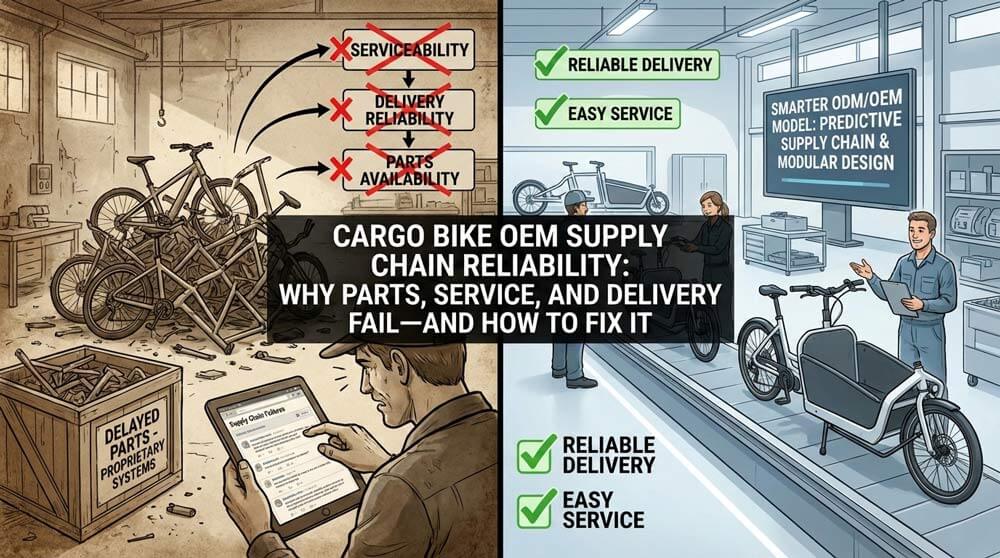
Denne artikel fokuserer på ét konkret problem:
hvorfor reservedels tilgængelighed, servicevenlighed og leveringspålidelighed svigter – og hvordan en smartere ODM/OEM-model til ladcykler forhindrer det.
Hvorfor er pålideligheden af OEM-forsyningskæden til ladcykler en voksende bekymring for EU-mærker?
Proprietære systemer og kortsigtede sourcingbeslutninger skaber langsigtet skade
En af de mest almindelige klager fra forhandlere og flådeoperatører er simpel: “"Vi kan ikke få fat i reservedele – og selv hvis vi gør, er der ingen værksteder, der ønsker at servicere cyklen."”
I adskillige AMA-lignende diskussioner indrømmer produktchefer fra elcykelmærker med direkte forbindelse til forbrugerne, at:
Motorer og batterier er låst til proprietære systemer
Diagnostiske værktøjer er ikke tilgængelige for forhandlere
Reparationer erstattes af udskiftning af hele enheder
Uafhængige cykelbutikker nægter service på grund af ansvar og kompleksitet
For ladcykler – især tunge el-ladcykelmodeller, der bruges til levering – er dette ikke bæredygtigt.
Fra et OEM-perspektiv opstår dette problem sjældent på forhandlerniveau. Det begynder meget tidligere, i løbet af:
Komponentvalg
Firmware- og motorpolitikbeslutninger
ODM-ramme og systemintegration
En professionel ladcykelproducent skal designe med henblik på reparationsmuligheder, ikke kun monteringshastighed. For ladcykel-OEM'er til EU-mærker omfatter dette:
Ikke-proprietære eller semi-åbne komponentøkosystemer
Motorer og batterier i overensstemmelse med EN 15194 og EN 50604-1
Klar udskiftningslogik i stedet for "sorte boks"-systemer
At ignorere dette fører direkte til de serviceflaskehalse, der nu åbent kritiseres af forhandlerne.
Hvordan påvirker ODM/OEM-valg af ladcykler tilgængeligheden af reservedele og eftersalgssupport?
Mangler i kvalitetskontrollen og leverandørskift er ofte usynlige – indtil det er for sent
Adskillige fremtrædende tilbagekaldelser af ladcykler og elcykler har fulgt et lignende mønster:
Leverandørudskiftninger uden fuld validering
Efterspørgselsstigninger efter COVID overstiger QC-kapaciteten
Inkonsistente stel- eller batteribatcher
Lange ventetider på udskiftningsenheder eller reservedele
I offentlige reaktioner har selv erfarne administrerende direktører erkendt, at leverandørændringer – ofte foretaget under pres – stille og roligt kan kompromittere pålideligheden.
For ladcykler forstærkes effekten:
Højere belastninger på rammer og bremsesystemer
Leveringscykler bruges dagligt kommercielt
Fejl påvirker ikke kun ryttere, men også virksomheder
Det er her, hvor ODM/OEM-strukturen for ladcykler er vigtig. ODM handler ikke kun om tilpasning – det handler om proceskontrol.
Hvilken rolle spiller ladcykelproducenten i at forhindre kvalitetssvigt og tilbagekaldelser?
Lagerrisiko og usikkerhed omkring service betyder mere end marginer
Cykelbutiksejere stiller ofte et vanskeligt spørgsmål: “"Hvorfor skal vi have en stor, langsomt kørende ladcykel på lager, der er dyr at servicere?"”
I modsætning til almindelige elcykler gælder følgende for ladcykler:
Optager mere gulvplads
Kræver uddannet personale
Har højere lønomkostninger til montering og reparation
Bevæg dig i lavere volumener
For engros-ladcykelprogrammer skaber dette friktion mellem mærker og forhandlere.
Løsningen er ikke aggressiv prisfastsættelse – det er en OEM-supportstruktur:
Præmonterede eller CKD/SKD-muligheder tilpasset forhandlerens kapacitet
Standardiserede dele delt på tværs af modeller
Tydelige leveringstider og reservedelsprognoser
Dokumentation, der reducerer servicetiden
For ladcykler til erhvervsbrug eller levering bliver dette endnu mere kritisk, da nedetid direkte påvirker omsætningen.
OEM'er, der aktivt designer til forhandlerlogistik, opnår langsigtet distributionsstabilitet.
Kan EU-baserede partnerskaber for montering af ladcykler forbedre stabiliteten i forsyningskæden?
Distribueret samling forbedrer robusthed, ikke kun branding
Mange diskussioner spørger, om "lokal samling" virkelig tilfører værdi – eller om det blot er en markedsføringspåstand.
I praksis kan EU-baserede partnerskaber for ladcykler, når det gøres korrekt,:
Forkort leveringstider for udskiftning af dele
Muliggør hurtigere feedback-loops af høj kvalitet
Forbedre overholdelsen af regionale regler
Reducer forsendelsesforsinkelser under forstyrrelser
Til frontlæssende ladcykel, longtail ladcykel, og long john ladcykelplatforme, lokal samling tillader også:
Markedsspecifik konfiguration
Hurtigere iteration baseret på forhandlerfeedback
Bedre tilpasning til lokale kørevaner
Nøglen er integration. Samlepartnere skal være forbundet med ODM-processen – ikke tilføjes efterfølgende.
Hvorfor tøver forhandlere med at forpligte sig til engrosprogrammer for ladcykler?
Fejl i forsyningskæden i ladcykelindustrien skyldes sjældent en enkelt forstyrrelse. De er resultatet af tidlige design- og sourcingbeslutninger som ikke tager højde for langsigtet service, forhandlerens realiteter og den faktiske brug.
For sourcingchefer, administrerende direktører og fabrikspartnere er lektien klar:
OEM er ikke bare produktion
ODM er ikke bare tilpasning
Pålidelighed er designet, ikke inspiceret i
Pålidelige OEM-partnere sørger for ensartet kvalitetskontrol og reservedelsflow, hvilket gør det muligt for forhandlere at fokusere på salg og support i stedet for at bekymre sig om uforudsigelige forsyningsmangler. 1
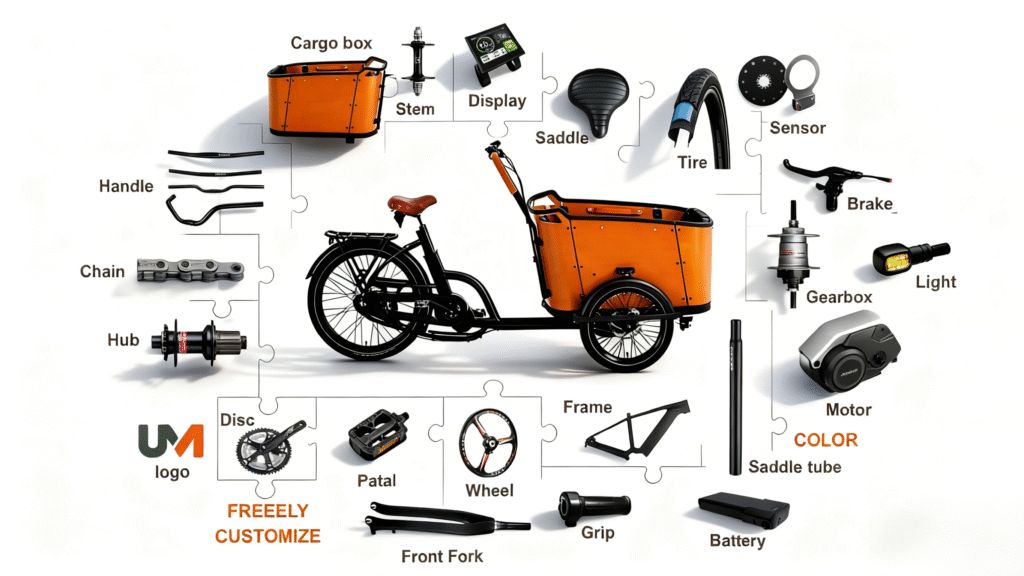
UM arbejder med brands for at omdanne disse indsigter til holdbare produkter – der understøtter ladcykel ODM/OEMprogrammer, der prioriterer servicevenlighed, skalerbar produktion og markedsklar pålidelighed. Tal med os i dag for et gratis tilbud til sammenlign OEM- og ODM-sourcingomkostninger, og begynd at bygge din næste markedsledende ladcykel.




 Danish
  English
  German
  Dutch
Dutch  French
  Polish
  Portuguese
  Spanish