


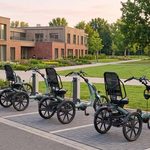
Den elektriske trehjulede cykel til seniorer i Storbritannien er en lille kategori i dag – og det er netop argumentet for den. Storbritannien har den samme aldringskurve som Holland, den samme disponible indkomst som Tyskland, og den ældre voksens cykeldeltagelse er ikke den samme som nogen af delene: Storbritannien rangerer som nummer 25 i Europa for hverdagscykling, og landets over 70-årige cykler mindre end nogen anden voksen aldersgruppe. Læs det som et modent marked, og du ville forlade det. Læs det som, hvad det rent faktisk er – strukturel uopfyldt efterspørgsel, der møder en udbudsside, som ingen har organiseret – og du ser på et af de få ægte "white space"-vinduer, der er tilbage i europæisk e-mobilitet. Hvad disse ryttere har brug for fra selve køretøjet, er detaljeret i vores elektrisk trehjulet cykel til seniorer oversigt. Denne artikel fremlægger dette argument med britiske data og kortlægger derefter, hvad en distributør eller et brand bør gøre ved det.
De tre konklusioner forude:
- Efterspørgslen er demografisk garanteret. ONS-fremskrivninger – den mest pålidelige prognose i britisk økonomi – viser, at befolkningen over 75 år vil fordobles og nå op på ti millioner inden 2039. Ingen markedsdimensioneringsmodel i denne branche hviler på et mere fast grundlag.
- Den lave base er muligheden, ikke indvendingen. Britiske ældre voksne cykler ikke mindre, fordi de har lyst; forskningen viser, at de bliver presset ud af udstyr og forhold. Hver procentdel af den deltagelse, der genvindes, er et nyt marked, ikke et omstridt et.
- Vinduet er åbent nu og vil ikke forblive åbent. De økonomiske rammer (momsfritagelse, en ubegrænset "Cycle to Work"-ordning), efterspørgselsinfrastrukturen (inklusive cykelcentre) og normaliseringen af elcykler blandt ældre cyklister er alle modnet i de sidste fem år – mens det dedikerede udbud ikke er det. Denne uoverensstemmelse er definitionen af et vindue.
Storbritannien er den hurtigste adgang blandt fem europæiske markeder, vi har analyseret — den eneste uden nogen regulatorisk kø overhovedet.
Hvor stort er markedet for elektriske trehjulede cykler til seniorer i Storbritannien – og hvorfor vokser det nu?
Først et ærligt svar: i dag er det en niche. Tilpasset cyklusdetailhandel er tynd uden for en håndfuld byer, og intet refusionssystem har nogensinde bygget kategorien op på samme måde som forsikringsselskaber på kontinentet. Men markedsstørrelse er et øjebliksbillede; markedsretningen er investeringsargumentet, og alle indikatorer fra Storbritannien peger i samme retning.
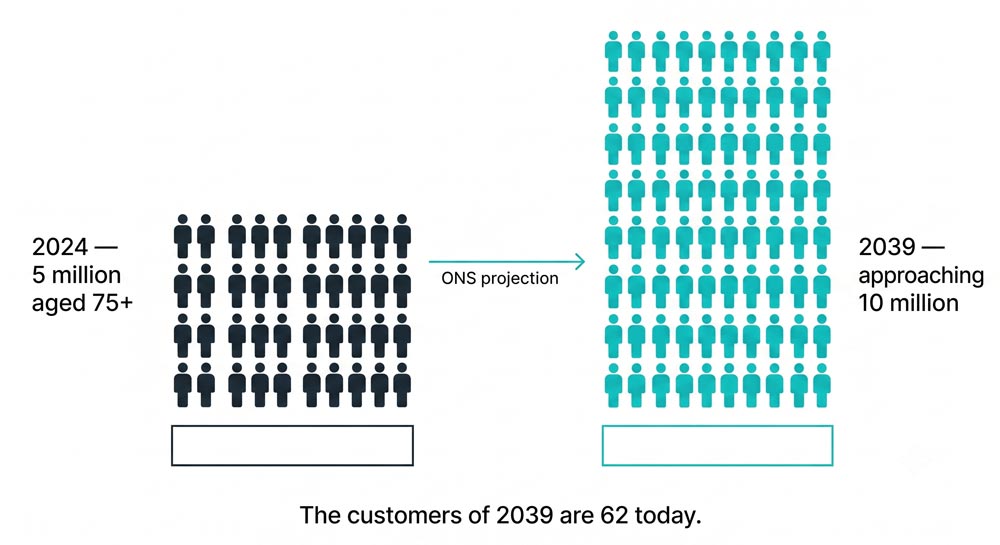
Demografien er ikke en prognose – de er aritmetiske.
I 2022 var 19% af den britiske befolkning 65 år eller derover; ONS-prognoser viser, at dette tal stiger til 27%. Gruppen over 75 år - 5 millioner mennesker - er på vej til næsten at fordobles til 10 millioner inden 2039, og gruppen over 85 år vil næsten fordobles inden 2045. De personer, der vil være 75 år i 2039, er 62 år i dag. De er denne kategoris kunder, og de findes allerede.
Sølvpundet er reelt og stadig mere aktivt.
Storbritanniens over 65-årige har en uforholdsmæssig stor andel af husholdningernes formue, og de nypensioneredes forbrugsmønster har ændret sig afgørende mod fritid, sundhed og at holde sig aktiv – præcis den klynge af anvendelser, som dette køretøj tjener: turen på trækstien, smutten til butikkerne, køreturen til kolonihaven, børnebørnenes skoleport.
Adaptiv efterspørgsel gemmer sig allerede inde i elcykelboomet.
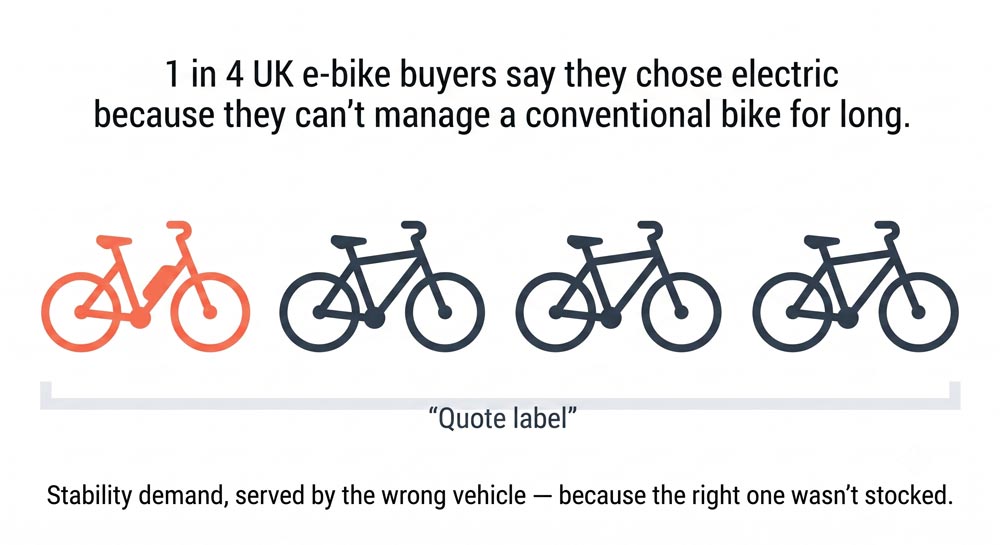
I en undersøgelse af købsmotivation i Storbritannien nævner 54% af købere af elcykler "mindre anstrengelse end en konventionel cykel", og – det tal, der betyder noget – en fjerdedel siger, at de købte en, fordi de kan ikke cykle på en almindelig cykel i lang tid. Det er et krav om stabilitet og udholdenhed, der opfyldes af en tohjulet bil, fordi trehjulsmodellen ikke er på lager. Kunden kom ind; kategorien var ikke på lager.
Hvorfor holder ældre op med at cykle i Storbritannien? (Svaret er muligheden)
Her er gåden, der er værd at lægge mærke til en investor. I Holland cykler personer over 65 år for en højere andel af deres ture end næsten nogen anden voksen aldersgruppe. I Storbritannien falder cykeldeltagelsen markant efter 70. Samme fysiologi, samme klimabånd - et vidt forskelligt resultat.
Britisk transportforskning giver den ubehagelige forklaring: selv hvor britisk cykling har vokset, repræsentationen af ældre voksne i den vækst har faldne. Barrieren er ikke begær; det er fit. Veje med blandet trafik, en fitnesspræget cykelkultur bygget op omkring sport med et sænkbart styr snarere end hverdagens anvendelighed, og – afgørende – et køretøjsformat, der kræver balancen og selvtilliden hos en fyrreårig. Britiske ældre voksne har ikke afvist cykling. De er blevet priset ud af det, hvad angår selvtillid.
Det er det, der gør den lave base bullish. Det hollandske tal er ikke en kulturel særhed; det er et bevis på, hvordan deltagelse ser ud, når køretøjet og miljøet passer til cyklisten. Og den britiske miljøhalvdel er endelig i bevægelse: et nationalt netværk af inkluderende cykelcentre sætter nu ældre og handicappede cyklister på tilpassede cykler hver uge i sikre, trafikfri omgivelser - gratis efterspørgselsgenerering på nationalt plan, finansieret af den tredje sektor. Hvad bevægelsen selv indrømmer er, at skridtet efter Prøveperioden eksisterer knap nok: sparsomme forhandlere, lange ventetider på kontinentale importvarer, priser fastsat for forsikringsfinansierede markeder. Efterspørgslen produceres hurtigere end udbuddet. Det hul er forretningen.
Er der statslig finansiering til elektriske trehjulede cykler i Storbritannien?
Der er ingen recept fra NHS og ingen kommunal bevilling – Motability, Storbritanniens flagskibsmobilitetsordning, dækker biler, scootere og elkørestole, men slet ingen cykler. I stedet findes der tre økonomiske systemer, og hver af dem administreres af branchen, hvilket netop er grunden til, at branchen bør lære dem at kende:
Momsnulsats — 20%-håndtaget.
Cykler, der udelukkende er designet til brug for handicappede, kan sælges momsfrit til berettigede kunder, som selv deklarerer ved kassen på en formular på én side. Fangsten sidder på produktsiden: "udelukkende designet" er en design- og dokumentationstest, og HMRC's vejledning til liggecykler er anerkendt i sektoren som værende uklar. En generisk fritidstrøje med et marketingklistermærke vil ikke overleve en granskning; en ægte tilgængelighedsdesignet platform med et designdokument har en sag. Den, der besidder dette dokument, giver deres forhandlere en automatisk 20%-prisfordel.
Cykl til arbejde — den uhættede skinne.
Siden loftet på £1.000 blev fjernet i 2019, dækker lønopofferingen e-cykler og tilpassede cykler til realistiske prispunkter, hvilket sparer 32-47%. Seniorvinklen er underudnyttet: med en folkepensionsalder på 67 år og stigende er den stabilitetsbevidste køber på 60-67 år stadig på lønningslisten - inden for ordningens rækkevidde og usynlig for etablerede kontinentale aktører, der aldrig har behøvet at tænke på arbejdsgiverkanaler.
Adgang til arbejde — den bevilling, som ingen sælger.
Hvor en cykel gør det muligt for en handicappet person at arbejde, har Access to Work finansieret den. Mængderne er beskedne; kunderne er fuldt finansieret, og en forhandlervejledning på én side til ansøgningen er den billigste differentiering på dette marked.
En juridisk bemærkning, der afslutter salget for den aktive køber: en el-trike, der opfylder EAPC-reglerne – 250 W maksimal kontinuerlig effekt, assistanceafbrydelse ved 25 km/t, bruger 14 år eller ældre – er juridisk set en cykel. Intet kørekort, ingen registrering, ingen forsikring, fuld adgang til cykelstier. En mobilitetsscooter er begrænset til gang- til joggetempo, forbudt fra cykelinfrastruktur og varsler noget, som en el-trike ikke gør.
Hvad skal en distributør kigge efter i en elektrisk trehjulet cykel til seniorer i Storbritannien?
Den britiske brief adskiller sig fra den kontinentale på måder, som et specifikationsark enten respekterer eller ikke respekterer:
- Moment før tophastighed. Assistancen er begrænset til 25 km/t overalt, men Storbritannien har bakker, som Holland ikke har. Det tal, der betyder noget, er at sætte i gang op ad bakke fra stilstand uden balancemoment - hvilket er grunden til 120 Nm midtertrækket i UM Chill bruger sin loftshøjde præcis der, hvor britiske ryttere har brug for den.
- En skurtest, ikke en udstillingstest. Opbevaring i rækkehuse, campingvognsferier og en "driving-to-the-ride"-klubkultur belønner alle en kompakt eller modulær ramme. UM Vita‘'s transportable fodaftryk besvarer det spørgsmål, som britiske forhandlere rapporterer at høre først: "Vil den være i skuret, campingvognen, bagagerummet?"“
- Vejrberedskab som et troværdighedssignal. Komplette skærme, forseglede elektriske dele, korrosionsbestandige fastgørelseselementer, punkterfri dæk. Ikke premium-muligheder – bevis på, at produktet blev specificeret af en person, der har set en britisk February.
- Afmedicinsk design. Den britiske køber, som denne artikel beskriver, har aldrig været i nærheden af en vurdering. Det er bycykeldesignet, der gør det muligt for en forhandler at sælge til en 63-årig, der "ikke har brug for en af dem endnu".
Hvorfor producenten afgør, om du kan konkurrere
Se tilbage på denne liste – momsdesigndossieret, EAPC-konform drevkonfiguration, dokumenteret step-in geometri, vejrbestandighed i henhold til britiske specifikationer, momentjustering – og bemærk, at ikke én eneste ting kan repareres senere. Enhver fordel på det britiske åbne marked skabes eller fortabes på fabrikken.
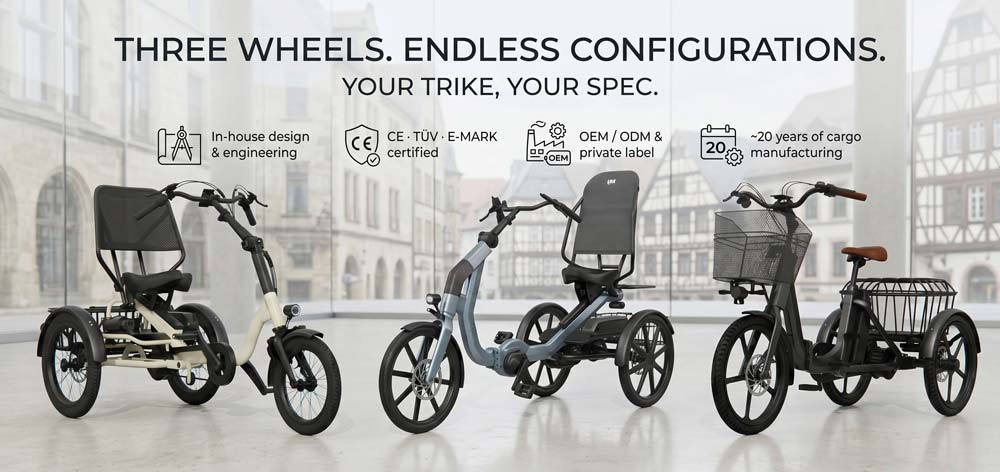
Det er her, hvor seniormobilitet holder op med at være en produktkategori og bliver til en ingeniørdisciplin – og det er disciplinen. United Mobility har brugt næsten to årtier på at øve sig. En indstigningsramme og en kurv gør ikke et køretøj seniorparat. Vita og Afslappet halvt liggende Platforme er konstrueret som dokumenterede tilgængelighedsprodukter: siddende indstigning designet omkring det balancemoment, hvor ældre passagerer rent faktisk stiger af, målbare ergonomiske data (sædehøjde, indstigningshøjde, indstigningsvinkel), som dine forhandlere kan oplyse, EN 15194-overensstemmelse og ODM-konfiguration pr. marked — britiske køreindstillinger, vejrpakker, branding og finish til din sortimentsplan. Se den fulde elektrisk trike-serie tilgængelig til UK-specifikationskonfiguration.
Det britiske vindue belønner den, der først ankommer med et troværdigt produkt, fordi der ikke er nogen kø at gemme sig bag – og ingen at beskytte sig af. Hvis Storbritannien er på din køreplan som distributør, en forhandler af inkluderende mobilitet eller et elcykelmærke, der udvider sig til stabilitetsprodukter, instruer vores ingeniørteam på din kanalplan — og tag vores tjekliste til evaluering af producenter med dig, når du sammenligner os med andre.
Næste i denne serie: Danmark — hvor det offentlige system giver tilladelse til mobilitetsscootere i stedet for trehjulede scootere, i verdens næststørste cykelnation.
FAQ
Hvor stort er markedet for elektriske trehjulede cykler til seniorer i Storbritannien?
Lille i dag og strukturelt set forventet at vokse: ONS forudser, at antallet af over 75-årige næsten vil fordobles mod 10 millioner inden 2039. Data om køb af elcykler i Storbritannien viser allerede, at en fjerdedel af køberne vælger elektriske cykler, fordi de ikke kan klare en konventionel cykel i længden, og dedikeret detailhandel med tilpassede cykler er fortsat sparsom. Lav base, hårde efterspørgselsfaktorer, tyndt udbud – profilen af et vækstvindue snarere end en moden niche.
Er der nogen statslig finansiering til en elektrisk trehjulet cykel til seniorer i Storbritannien?
Ingen refusion fra NHS eller kommunen, og Motability ekskluderer cykler. Der findes tre mekanismer på detailsiden: momsnulsats for cykler designet udelukkende til handicappede (kunden selvangiver ved køb), lønofferordningen "Cycle to Work" (uden loft siden 2019) og tilskud til adgang til arbejde, hvor en cykel muliggør beskæftigelse.
Har du brug for et kørekort eller en forsikring til en elektrisk trehjulet cykel i Storbritannien?
Nej — forudsat at den opfylder EAPC-reglerne: 250 W maksimal kontinuerlig effekt, assistanceafbrydelse ved 25,8 km/t, rytter på 14 år eller derover. Det er derefter lovligt en cykel med fuld adgang til cykelstier og -stier.
Hvorfor cykler så få ældre i Storbritannien sammenlignet med Holland?
Britisk forskning peger på tilpasning, ikke begær: trafikblandede veje, en sportspræget cykelkultur og køretøjsformater, der kræver balance mellem unge og voksne. Hvor miljøet og køretøjet passer til cyklisten – som i Holland – cykler personer over 65 år lige så meget som enhver voksengruppe. At lukke dette hul er netop, hvad den tilpassede el-trike-kategori er til for at gøre.
Hvad gør en producent troværdig på det britiske marked for senior el-trikes?
Dokumenteret tilgængelighedsteknik (den understøtter momsnulsats-argumentet), EAPC/EN 15194-overensstemmelse, UK-korrekt drejningsmoment og vejrbestandighed samt ODM-kapacitet til at konfigurere pr. marked. United Mobility bygger sine Vita- og Chill-halvliggende platforme præcis efter denne beskrivelse med den ergonomiske dokumentation, som forhandlere og rådgivere kan tilbyde.
 Danish
  English
  German
  Dutch
Dutch  French
  Polish
  Portuguese
  Spanish