

Kort version: En ramme, der opfylder EN 17860-standarden, giver dig en holdbar ladcykel. Det giver dig ikke en flådeklar en. Forskellen viser sig seks måneder senere, når en cykel er offline og venter på en reservedel, en rytter ikke kan justere sadlen mellem vagterne, eller du ikke kan se, hvor halvdelen af din flåde er. Det er ikke stelproblemer. Det er driftsspecifikationer - og de fleste af dem bestemmes i konfigurations- og integrationsfasen, ikke plukkes fra en hylde. Her er de fem, der stille og roligt bestemmer din oppetid, og hvordan du indbygger dem.
Vores Guide til kommerciel ladcykel dækker hardwaregulvet - steltræthed, lejer, bremser, drivlinje. Denne artikel fortsætter, hvor det slutter: det operationelle lag, der forvandler et stærkt køretøj til en flåde, der rent faktisk bliver ved med at køre.
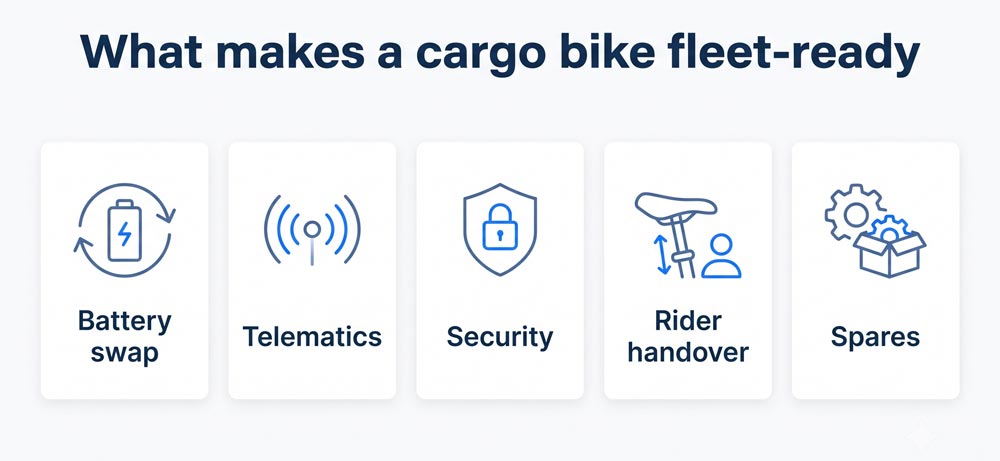
1. Batteri og opladning er bygget omkring depotet, ikke specifikationsarket
Det er forkert at optimere rækkevidden. I tæt bytrafik – korte sløjfer, hyppige stop, en depot inden for rækkevidde – er et større batteri ofte bare en vægt, man bærer med sig og aldrig bruger.
Det tal, der betyder noget, er oppetid pr. vagt. En cykel på fire timers opladning midt på dagen er en cykel, der ikke tjener penge. En cykel med en aftageligt batteri og et 90-sekunders batteriskift bliver ved med at virke, mens en reserve oplades på et rack på depotet. For en flåde med høj udnyttelsesgrad overgår swap-arkitekturen næsten hver gang råkapaciteten.
Derfor er det rigtige træk at designe opladningen operation, ikke kun batteriet:
- Aftagelige, udskiftelige pakker så køretøjet aldrig venter på en oplader.
- Et depotopladningsstativ eller batteripool dimensioneret til dit gearskiftemønster — mikronavet er aktivet, cyklen er udskiftelig.
- Kapacitet tilpasset ruten, enkelt eller dobbelt, så du ikke betaler for at transportere batteri, du ikke bruger.
Dette er en konfigurationsbeslutning, og det er et af de klareste steder ODM-partner tjener sin plads — specificerer pakkeformat, byttedesign og depotafgift omkring din rute, i stedet for at give dig en fast standard. Se vores batterisystemstrategi for den fulde logik.
2. Telematik og integration af flådesystemer
Når du har mere end en håndfuld cykler, kan du ikke længere styre det, du ikke kan se. Flådeoperatører har i stigende grad brug for placering, batteristatus, brugstimer og et feed ind i deres egen flådestyringssoftware – den samme synlighed, de allerede har på varevogne.
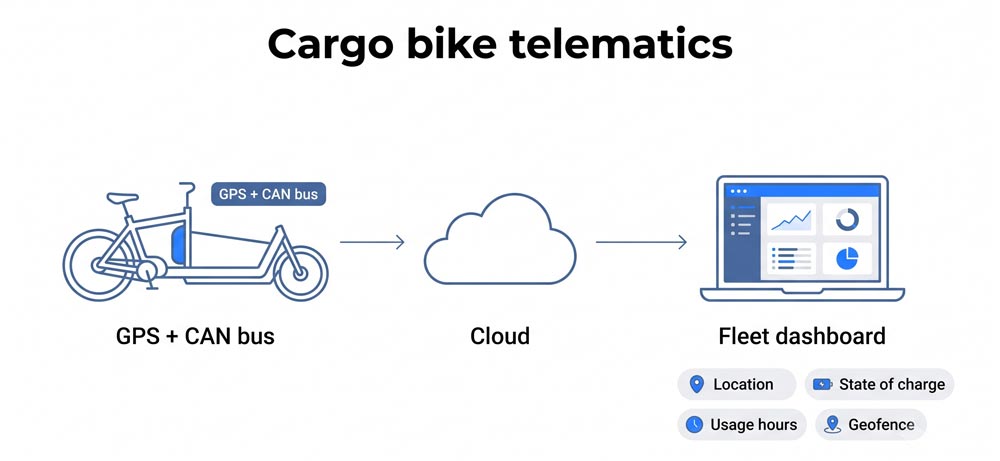
Du behøver ikke producenten til at bygge softwaren. Du har brug for, at køretøjet er integrationsklar:
- Plads og et strømudtag til et GPS/IoT-modul.
- Et åbent styresystem (CAN-bus eller API), så en tracker eller flådeplatform kan læse dataene.
- En sti til prædiktiv vedligeholdelse — brugsbaserede serviceintervaller i stedet for gætværk.
De fleste standard ladcykler behandler dette som en eftertanke. At specificere det på forhånd – et rent monteringspunkt, en dokumenteret strøm- og datagrænseflade – er præcis den slags krav, som en ODM-model håndterer rent, og en generisk katalogcykel ikke gør. Bed om telematikklarhed skriftligt; "vi kan tilføje en tracker senere" er ikke det samme som en designet grænseflade.
3. Sikkerhed, der forudsætter, at cyklen står udenfor
En erhvervsladcykel er parkeret på gaden, læsset, ofte uden opsyn, nogle gange natten over. Tyveri og læsning er reelle udgifter, ikke marginale sager.
En rammelås, der er klassificeret til ART-2 (den hollandske forsikringsbenchmark) er gulvet, ikke loftet. Flådesikkerhed tilføjer:
- GPS-sporing med geofencing — bjærg cyklen, og få en advarsel, når den forlader sin zone.
- En elektronisk startspærre eller strømafbryder så en stjålet cykel er dødvægt.
- Et aflåseligt lastrum der beskytter lasten, ikke kun køretøjet.
Igen er låsen en katalogvare; integration — tracker, startspærre, geofence knyttet til det samme system — er en beslutning fra byggeriet. Det hører hjemme i specifikationerne før produktion, ikke monteres efter den første motorcykel forsvinder.
4. Overdragelse til flere ryttere: specifikationerne, som ingen skriver ned
En familieladcykel har én bruger. En erhvervscykel kan have tre på en dag. Hver overdragelse er dødtid, hvis cyklen kæmper mod den næste bruger – og hver akavet cykel øger brugerudskiftningen, hvilket er en af de dyreste og mindst modellerede omkostninger i en flåde.
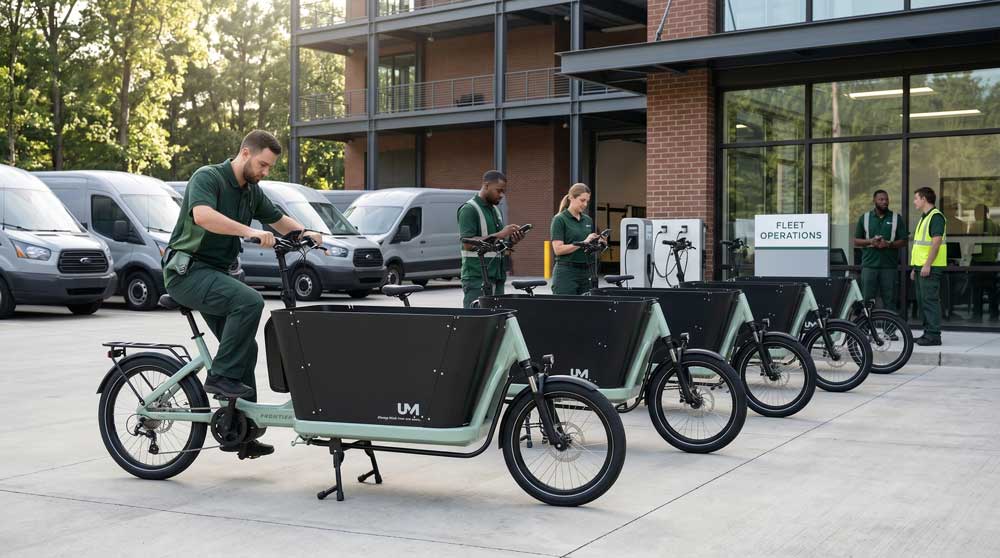
Fleet-ready betyder, at cyklen tilpasser sig rytteren på få sekunder, uden værktøj:
- Værktøjsfri justering af sadel og frempind, så et vagtskift tager sekunder.
- Lav indstigning og intuitiv betjening, så en ny eller midlertidig rytter er produktiv fra dag ét.
- Forudsigelig håndtering under belastning, så læringskurven ikke bliver en sikkerhedskurve.
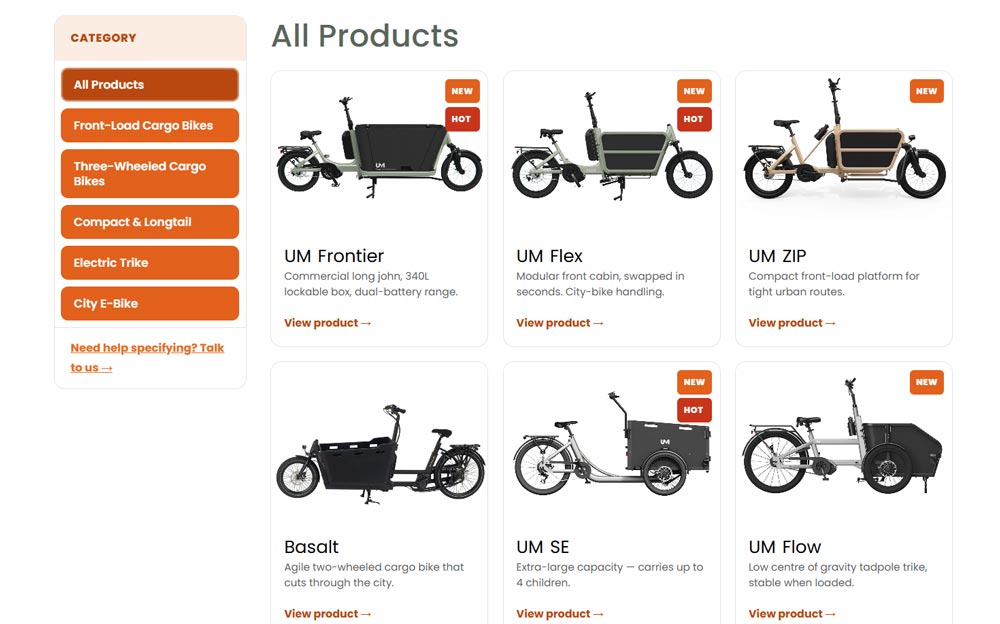
Det er også her, man har en portefølje at vælge imellem betyder noget. En kurervirksomhed med stor passageromsætning kører ofte bedre på en longtail ligesom UM Stretch — den kører som en normal cykel, så træningstiden falder — mens kernearbejdet på en long john og kommunalt arbejde med høj rotation på en trehjulet cykel som UM Flow eller UM SE der står stabilt ved konstant montering og afmontering. Format er en flådebeslutning, ikke en standardstørrelse.
5. Reservedele, standardisering og servicevenlighed
Oppetid handler mest om reservedele og service. Den bedste ramme i verden er offline, hvis den del, den skal bruge, er seks uger ude.
Tre ting adskiller en flådeklar forsyningsposition fra en skrøbelig en:
- Standardisering på tværs af flåden. Fælles batterier, opladere, bremseklodser og sliddele på tværs af dine modeller betyder et mindre reservedelslager, hurtigere reparationer og mindre genoptræning af førere. Jo flere platforme I deler, jo billigere er det at holde jeres flåde i live.
- En forpligtelse til reservedele. En defineret leveringstid for dele og et "lagersæt pr. N "cykler"-programmet, aftalt på forhånd — så en fejl er en 24-timers løsning, ikke fjorten dage væk fra vejen.
- Indbygget servicevenlighed. Modulær, værktøjsfri udskiftning af batteri, hjul, bremse og controller, plus en servicemanual og træning til dine mekanikere, så de fleste reparationer sker lokalt i stedet for at skulle tilbage til et værksted.
Dette er forskellen mellem en vedligeholdelsesplan og et vedligeholdelsesproblem – og vi går dybere ind i det i Vejledning til vedligeholdelse af kommercielle ladcykler.
Hvorfor det meste af dette er en ODM-samtale
Se tilbage på de fem specifikationer. Ingen af dem er en enkelt produktfunktion, du sætter kryds i en brochure. Opladning med bytte-og-afleveringsfunktion, telematikberedskab, integreret sikkerhed, føreruafhængig ergonomi, standardisering af dele – de er konfigurations- og integrationsbeslutninger, lavet før produktion, omkring dine operation.
Det er tilfældet for en ODM-konstruktion i forhold til et katalogkøb: det operationelle lag specificeres, ikke eftermonteres. Og det er tilfældet, når man arbejder med en producent, der kører en portefølje af platforme i stedet for en enkelt model — long john, longtail og trehjulet cykel — så formatet følger din ruteprofil i stedet for at tvinge dine ruter til at passe til én cykel.
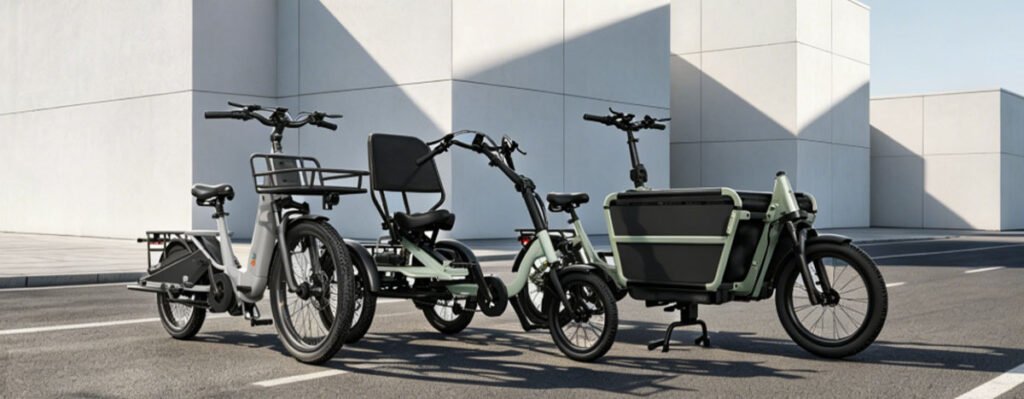
UM bygger kommercielle ladcykler til europæiske mærker, distributører og flådeoperatører, med fuld OEM- og ODM-tilpasning på tværs af området. Den UM Frontier forankrer den mest almindelige flådeprofil — bymonteret parkering — med en modulær long john-lader med udskifteligt batteri; Stretch, Flow og SE dækker formaterne omkring den.
Opbygning eller skalering af en flåde til 2026? Send os din ruteprofil og skiftemønster — vi specificerer det operationelle lag, ikke kun cyklen. Tal med UM-teamet →
FAQ
Hvad gør en ladcykel "flådeklar" i stedet for blot kommerciel?
En stel i erhvervsklassen overlever driftscyklussen. En flådeklar cykel tilføjer det operationelle lag: udskiftelige batterier og depotopladning, telematikklarhed, integreret sikkerhed, værktøjsfri justering for flere ryttere og en reservedele- og standardiseringsplan, der holder oppetiden høj på tværs af mange køretøjer.
Er et større batteri bedre til en leveringsflåde?
Normalt ikke. I tæt bytrafik med adgang til depoter er oppetiden længere end forventet. Et aftageligt batteri med hurtig udskiftning holder en cykel kørende, mens et ekstra batteri oplades – ofte mere værdifuldt end kapacitet, du aldrig bruger.
Kan telematik og GPS tilføjes til en ladcykel?
Ja, og den er bedst designet ind. En flådeklar cykel har et monteringspunkt, et strømudtag og en åben datagrænseflade (CAN/API), så en tracker eller flådeplatform integreres rent – langt bedre end at bolte en til senere.
Hvorfor er overdragelse af passagerer vigtig for flådeomkostningerne?
Kommercielle cykler roterer ryttere, nogle gange dagligt. Værktøjsfri justering og en nem, forudsigelig tur reducerer overleveringstiden og reducerer rytterudskiftningen – en af de største skjulte omkostninger i en flåde.
 Danish
  English
  German
  Dutch
Dutch  French
  Polish
  Portuguese
  Spanish