
Kommerciel ladcykel: En praktisk guide til flådekøbere og brandoperatører
- Hjem
- Produktion af ladcykler
- Kommerciel ladcykel
En kommerciel ladcykel er defineret mindre af nyttelast end af arbejdscyklus. Den kører 6-10 timer om dagen, skifter ofte førere, står udendørs og skal forblive servicedygtig inden for 48 timer, hvis den svigter. Indkøbsbeslutninger truffet på forbrugerspecifikationsark vil ikke overleve denne driftscyklus. Denne guide gennemgår, hvordan man evaluerer køretøjstyper, samlede ejeromkostninger, EN 17860-overholdelse, implementeringsplanlægning og løbende vedligeholdelse - med konkrete tal fra europæiske flådeimplementeringer - og viser, hvor UM Frontier modulære platform passer ind.
Hvad denne vejledning dækker
- Hvad "kommerciel" egentlig betyder i en ladcykel
- Hvorfor flåder køber ladcykler i 2026
- De tre køretøjstyper og hvad hver især er bygget til
- Seks krav, som enhver kommerciel ladcykel skal opfylde
- Samlede ejeromkostninger: de tal, der betyder noget
- EN 17860 og det europæiske compliance-landskab
- Hvordan UM Frontier-platformen imødekommer disse krav
- Dybdegående artikler om hvert beslutningsområde
- Ofte stillede spørgsmål
Hvad "kommerciel" egentlig betyder i en ladcykel
De fleste markedsføringstekster for ladcykler bruger "kommerciel" som synonym for "“kraftig."Det er ufuldstændigt. En kommerciel ladcykel defineres mindre ud fra dens nyttelastkapacitet end ud fra dens driftsprofil:
Den kører 6 til 10 timer om dagen, 5 til 7 dage om ugen
Det skifter ryttere ofte - nogle gange dagligt
Den er parkeret udendørs i al slags vejr
Den absorberer stød fra kantsten, skub i læsserampen og rytterfejl, som almindelig forbrugerbrug aldrig ser
Den skal forblive funktionsdygtig inden for 24 til 72 timer, hvis noget fejler
Dette ændrer alt fra specifikationerne for steludmattelse til lejetætningskvalitet og bremseklodsens blanding. familie ladcykel der kører tre gange om ugen, oplever mindre end en tiendedel af en budcykels driftscyklus på den samme platform. Det samme modelnummer kan fungere fremragende i én rolle og fejle i den anden.
Sondringen er vigtig, fordi de fleste B2B indkøb af ladcykler sker stadig via specifikationsark, og specifikationsark angiver peak-tal, ikke duty cycle-udholdenhed. En 250 W motor, der er klassificeret til EU's pedelec-klasse, kan levere den effekt i korte intervaller på ubestemt tid; spørgsmålet er, om controlleren, kablerne og varmeafledningsdesignet kan klare det otte timer om dagen, året rundt, fuldt belastet. Det svar vises sjældent på det offentlige specifikationsark - og det er her, de fleste flådeindkøb fejler.
Bygget omkring arbejdscyklussen, ikke specifikationsarket. UM Frontier er konstrueret fra dag ét til 6-10 timers vagter, 200.000+ vibrationscyklusser og den daglige mishandling, der ødelægger forbrugerstandarden.
Hvorfor flåder køber ladcykler i 2026
Udskiftningssagen er nu veldokumenteret. I følge ZIV, Tysklands nationale cykelbrancheforening, voksede salget af ladcykler til forbrugere fra omkring 60.000 enheder i 2018 til 235.250 enheder i 2024 - og disse tal udelukker eksplicit ladcykler til erhvervsmæssig brug, som spores separat. Det kommercielle segment vokser parallelt, drevet af et andet sæt pres: stigende leveringsomkostninger i byerne, udvidelse af lavemissionszoner og den driftsmæssige økonomi i forbindelse med logistik til den sidste kilometer i tætte bykorridorer.
≈50%
DHL's kommercielle byture håndteres allerede af el-ladcykler i udvalgte distrikter
DHLs interne flådedata, 2025
€2,500
BAFA fördert e-Lastenfahrräder, 2025
35–55%
Realistisk 5-årig TCO-fordel ved elcykel vs. varevogn på tætte byruter
UM Redaktionelt skøn, EU-drift
2024
År EN 17860 — den strukturelle standard specifikke for ladcykler — blev udgivet
CEN/TC 333/WG 9
Det regulatoriske miljø accelererer skiftet. Tysklands BAFA Programmet tilbyder tilskud på op til 2.500 euro pr. kommerciel el-ladcykel til berettigede virksomheder. I Holland er RVO støtter elektrificering af flåder gennem MIA/Vamil-ordningen, som tillader accelereret afskrivning på investeringer i transport med lavemissioner. Paris forbyder dieseldrevne erhvervskøretøjer under 3,5 tons fra store dele af bymidten; Londons ULEZ fortsætter med at udvide sig. Hver af disse politiske løftestænger ændrer ROI for ladcykler fra "interessant på papiret" til "operationelt påkrævet".“
Før du endeligt fastlægger budgettet, skal du undersøge, hvad tilskud og incitamenter til ladcykler er tilgængelige på dit marked.
Har du brug for en fabrik, der håndterer certificering fra starten?
UMs OEM-team arbejder med akkrediterede testlaboratorier og udarbejder tekniske filer som en del af produktionsprocessen – ikke som en eftertanke.
De tre køretøjstyper og hvad hver især er bygget til
Kategorien ladcykler opdeles i tre strukturelle formater, hver med en forsvarlig kommerciel anvendelse. Den fejl, de fleste førstegangskøbere af flåder begår, er at behandle dem som udskiftelige, fordi de alle kan bære ting. De er ikke udskiftelige.
| Format | Maks. totalvægt | Bedste kommercielle brug | UM-platformmatch |
|---|---|---|---|
| Lange John Frontlæssende tohjulet køretøj | 250–300 kg | Bypakkelevering, B2B samme-dags logistik, fødevare- og dagligvaredistribution. Lavt CoG, god lastsynlighed, passer til standard pakkebokse. | UM Frontier (kommerciel først) UM Flex (let erhvervskøretøj + familiebil med dobbelt anvendelse) Modulær lastboks |
| Langhale Baglæssende tohjulet køretøj | 180–220 kg | Kurerarbejde, madlevering, serviceopkaldsflåder. Kørsel som en almindelig cykel — laveste indlæringskurve for ryttere og risiko for udskiftning. | UM Stretch (foldbar langhale) Kompakt opbevaring |
| Frontbetjent trehjulet cykel To forhjul + bagagerum | 180–250 kg | Tung blandet last, hyppig rotation af føreren, operationer der involverer hyppig op- og afstigning med last ombord. | UM-flow (kompakt trehjulet cykel) |
Den kommercielle udvælgelseslogik, forenklet: vælg efter belastningsprofil + rytterprofil + ruteprofil, i nævnte rækkefølge. De fleste flådeoperationer ender med to eller tre formater i puljen i stedet for ét - en Long John eller longtail til størstedelen af ruterne, en trehjulet eller firehjulet cykel til de tungere køretøjer og en longtail til servicearbejde, hvor køreoplevelsen er vigtigst. I vores dybdegående analyse har vi udvidet denne ramme med ræsonnement fra køretøj til køretøj, herunder hvordan kommercielle specifikationer på det samme chassis adskiller sig fra familiespecifikationer: Valg af den rigtige type erhvervsladcykel: et rammeværk med use case først.
Long John-formatet, konstrueret til kommerciel brug. Frontier befinder sig i centrum af den mest almindelige flådeprofil - bytransport - med et modulært lastsystem, der tilpasser sig kurer-, opbevarings- og delte flåderoller på én ramme.
Seks krav, som enhver kommerciel ladcykel skal opfylde
På tværs af hundredvis af europæiske implementeringer, som vi har set, er det de samme seks specifikationslinjer, der afgør, om en flåde overlever år tre. Hvis en leverandør afviser en af disse som "ikke sådan, vi sælger", sælger de forbrugercykler med et flådemærke. Listen nedenfor er indkøbsgrænsen, ikke et strækmål.
1. Steltræthed testet ud over forbrugerens baseline
EN 17860 fastsætter et minimum antal cyklusser for strukturel testning af ladcykler. Byggeri i erhvervsklassen overstiger dette typisk med 20-30 procent. Bed om antallet af udmattelsescyklusser skriftligt – "EN-kompatibel" erstatter ikke et faktisk antal. UM Frontier-stellet er testet forbi de sidste 200.000 vibrationscyklusser; det tal står på specifikationsarket, ikke i en fodnote.
2. Lejer af industriel eller maritim kvalitet
Lejer til headset, krankboks og hjulnav står over for den hårdeste driftscyklus på en kommerciel ladcykel. Standardforseglede lejer til forbrugere skal udskiftes inden for 12-18 måneder ved kommerciel brug. Lejer til industrielt brug forlænger dette til 3-5 år. Omkostningsopgraderingen ved fremstilling er €40-€80 pr. cykel; arbejdsbesparelsen over flådens levetid er multipla af dette.
3. Hydrauliske skivebremser med tilstrækkelig rotordiameter
Kabelaktiverede skiver mister modulering under belastning og er ikke kommercielle specifikationer. Hydrauliske systemer med minimum 180 mm rotorer til tohjulede ladcykler, 203 mm til trehjulede cykler eller platforme, der regelmæssigt kører med maksimal nyttelast. Sintrede bremseklodser holder 3-5 gange længere end organisk materiale og er det knirkende kompromis værd ved flådebrug.
4. Drivlinje tilpasset arbejdscyklus
En standard gearkasse fungerer til familiebrug, men taber hurtigt penge ved erhvervsmæssig brug. Kæder strækkes til udskiftning ved 2.500-3.500 km ved tung erhvervsmæssig brug; kassetter ved 8.000-10.000 km. Remtræk eller nav med indvendig gearing (Enviolo CVT, Shimano Nexus/Alfine) forlænger serviceintervallerne til 15.000+ km. Pinion MGU integrerede motor-gearkasseenheder skubber gearkasseniveauintervallet ud over 60.000 km. Det rigtige valg afhænger af din arbejdscyklus - det forkerte valg koster €400-€900 pr. cykel om året.
5. Dobbelt batteri og korrekt konstrueret elektrisk arkitektur
Dobbeltbatteri forlænger det praktiske driftsvindue pr. opladningscyklus. En varevogn, der skal tanke op midt i et skift, er en produktivitetskatastrofe; en cykel, der skifter til et andet batteri til frokost, er det ikke. Forbind alle elektriske forbindelser, hvor det er muligt; hurtigafbrydelsesstik forringes ved daglig bøjning. Telematikberedskab (GPS, fjerndiagnosticering, integration med flådestyrings-API) er i stigende grad et indkøbskrav – ikke noget, der er rart at have.
6. Modulær lastrum designet til kommerciel lastning
Familieladcykler prioriterer vejrbeskyttelse og kompatibilitet med barnesæder. Kommercielle ladcykler prioriterer læssehastighed, låsbarhed, modularitet og tolerance over for hårdhændet håndtering. En "kommerciel" cykel med et lastrum designet til et barnesæde er ikke kommerciel. Modulær lastrumslogik - udskiftelige pakke-, bulk- og værktøjstransportkonfigurationer på én platform - er den moderne kommercielle standard. Stellåse, der er klassificeret til ART-2 eller højere (hollandsk forsikringsstandard), bør være minimumsspecifikationen.
Indkøbsområdet:
- EN 17860 tredjepartscertificering
- Dokumenterede testcyklusser for rammeudmattelse — mål 200.000+
- Dokumenteret lejeklassificering — målrettet industriel eller maritim kvalitet
- Hydrauliske skivebremser med 180-203 mm rotorer
- Specificeret drivlinjetype med forventet serviceinterval
- Dobbelt batteri med hurtigudskiftningsdesign
- Fastmonteret belysning, intern kabelføring
- Låsestandard ART-2 minimum for EU-markedet
- Modulært lastrumssystem, ikke en fast barnesædeboks
- Garantibetingelser pr. komponent, skriftligt, med SLA for responstid
Samlede ejeromkostninger: de tal, der betyder noget
Leverandørernes samlede ejeromkostninger (TCO) bør altid læses med skydelærer. Standardoverskriften "60 procent billigere end en varevogn" afhænger af antagelser, der ofte ikke overlever kontakt med en reel drift. Her er en mere ærlig ramme baseret på observerede implementeringer i Vesteuropa i 2025-2026.
1. Kapitalomkostninger
En ladcykel af erhvervskvalitet lander i EU 4.000–8.500 euro i intervallet for en troværdig specifikation — Bosch eller sammenlignelig midterdrev, hydrauliske skivebremser, låsbart bagagerumsmodul, EN 17860-kompatibelt stel, dobbeltbatterimulighed. Under €3.500 kigger du typisk på forbrugerspecifikationsstel, der markedsføres som kommercielle; over €10.000 betaler du mere for mærkepræmie end for ingeniørkunst.
2. Energi
Opladningsomkostninger er i bund og grund støj i TCO-modellen — typisk 0,10–0,20 € pr. 100 km. Optimer ikke til det.
3. Vedligeholdelse
Det er her, de reelle tal findes, og hvor de fleste indkøbere tager fejl. Planlæg det. 400–900 euro pr. cykel pr. år i vedligeholdelse af en kædedrevet flåde, der kører tungt dagligt; 150–400 euro for tilsvarende motorer udstyret med rem eller tandhjul. Valg af drivlinje har større indflydelse på de årlige omkostninger end valg af motor. Vi dykker dybere ned i dette i den dybdegående vedligeholdelsesgennemgang, der er linket til nederst i denne vejledning.
4. Forsikring
EU's erhvervsforsikring for ladcykler er udløbet. De årlige præmier ligger mellem 300–700 euro pr. enhed, afhængigt af EN 17860-overholdelse og komponenternes sporbarhed. Selvattestering er normalt ikke kvalificeret; tredjepartscertificeringsdokumentation er det.
5. Passagerudskiftning — den post, som ingen sætter i modellen
En cykelrytter, der stopper efter tre måneder, koster dig træningstiden for to cykelryttere. Cykler, der kører mere som en konventionel cykel – især longtail-cykler – reducerer denne omkostning målbart. Vi har set operatører reducere tre måneders frafald med 40 procent blot ved at skifte fra en flåde domineret af longtail-cykler til en blandet flåde af longtail-cykler/longtail-cykler for kurerer, der udfører det meste af arbejdet.
6. Restværdi
Kommercielle ladcykler holder bedre på residualet end varevogne i absolutte tal, men dårligere i procent, fordi det sekundære marked er tyndere og koncentreret. Planlæg det. 25-40 procent resterende effekt efter 5 år for en velholdt flådeenhed.
Før du opbygger business casen, estimer din flådes årlige CO2-besparelser fra at skifte varevogne til el-ladcykler.
Vi kører din TCO-model sammen med dig.
Send os din ruteprofil, pakkevolumen og aktuelle varevognsomkostninger – vi vender tilbage med en Frontier-baseret 5-årig TCO-sammenligning baseret på dine tal, ikke leverandørgennemsnit.
EN 17860 og det europæiske compliance-landskab
Det europæiske regelsæt for ladcykler ændrede sig afgørende i 2024-2025. Tre dokumenter er nu vigtige, og enhver enhed, du tager i brug, skal opfylde alle tre:
- EN 17860 — den strukturelle og stabilitetsspecifikke standard for ladcykler, udgivet 2024-2025 af CEN/TC 333/WG 9. Denne erstatter den langvarige praksis med at certificere ladcykler i henhold til EN 15194, som var designet til trekking- og by-elcykler og aldrig har taget højde for en nyttelast på 200+ kg. EN 17860 pålægger en pedalkrafttest for erhvervscykler, der kræver dobbelt så mange cyklusser som ladcykler til personlig brug.
- EN 15194 — gælder stadig for selve det elektriske pedelec-system (motorfrakobling, assistancekurve, elektrisk sikkerhed).
- EN 50604-1 + FN 38.3 — batterisystemoverholdelse og transportcertificering.
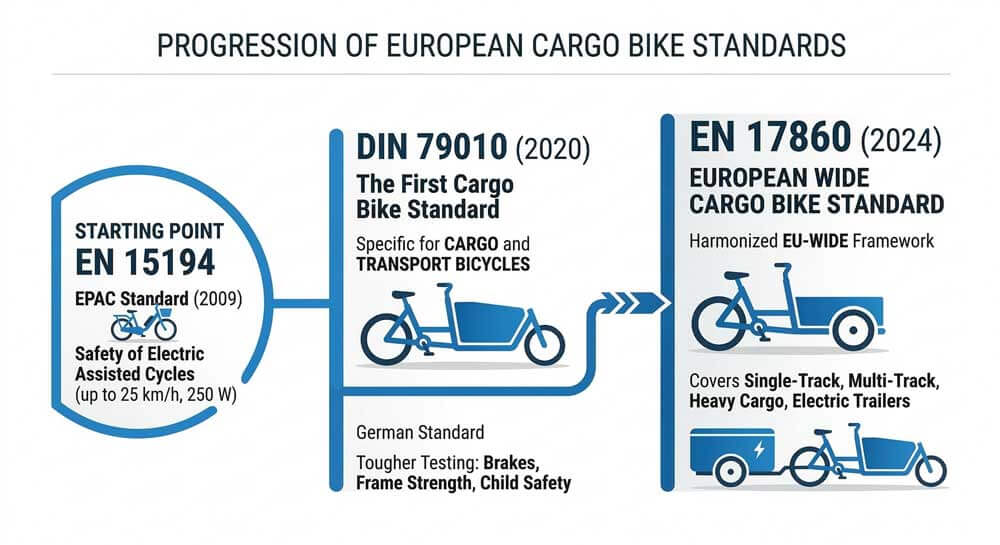
For en mere detaljeret oversigt over EN 17860 og implikationerne for ladcykelfabrikker og -mærker, se vores komplet EN 17860 importørvejledning.
Hvordan UM Frontier-platformen imødekommer disse krav
Vi designer og bygger kommercielle ladcykler til europæiske mærker, distributører og flådeoperatører. Vores portefølje spænder over syv platforme, men for flådeoperatører, der evaluerer et primært erhvervskøretøj, starter samtalen normalt med Frontier - vores første kommercielle long john, der er bygget op omkring et modulært lastsystem.
UM Frontier — modulær ladcykel til kommerciel flådeudrulning
Grænsen er en kommerciel kvalitet Long-John elektrisk ladcykel bygget til førere, der måler succes i ture pr. dag. forstærket modulær ramme transporterer 130 kg gods gennem hver leveringskreds — 340 liters låsbar vejrbestandig lastboks, dobbeltbatteri rækkevidde, elektronisk bakgear med et enkelt tryk og stangstyring konstrueret til vedligeholdelsesfri flådeindsats. Skift efter skift, uden drama.
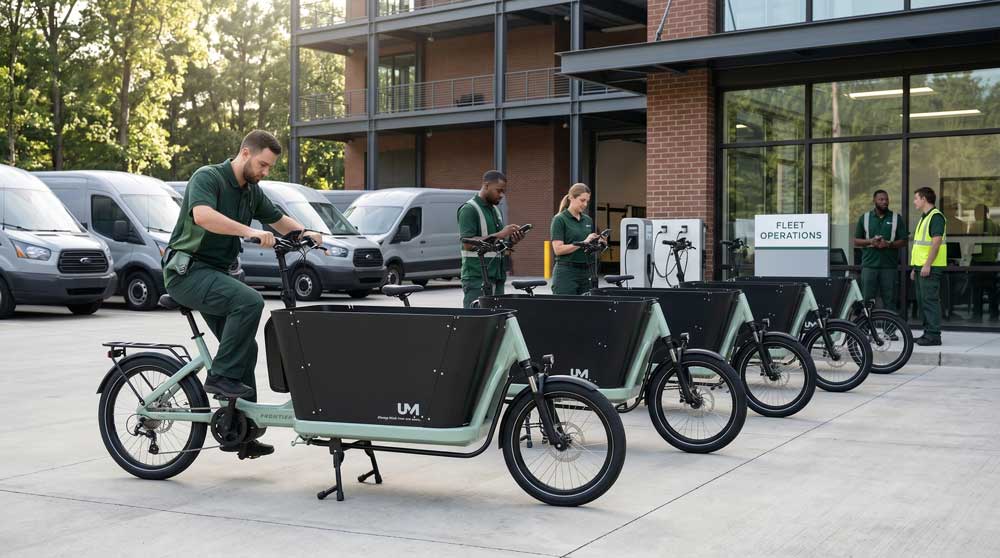
- Maks. totalvægt: 300 kg
- Forstærket modulær ramme (6061 aluminium)
- 340L aflåselig lastboks (robust, vejrbestandig) med halvåbent låg
- 672 Wh dobbeltbatterisystem for længere rækkevidde
- Shimano 7-speed ekstern gearing
- Ananda midtermotor 48V/250W 120Nm (navmotor 48V/250W 55Nm valgfri)
- Højdejusterbar frempind og sadelpind
- Hydrauliske skivebremser med parkeringsbremse
- Fuld OEM/ODM tilgængelig — brugerdefinerede farver, mærkevarekomponenter.
Standard produktionstid er 45-60 dage. MOQ'er varierer afhængigt af model og tilpasningsdybde. For en mere fuldstændig behandling af udbudssiden - hvordan ODM-indkøb rent faktisk fungerer, hvordan de samlede omkostninger ser ud i Tyskland, Holland og Frankrig, og forskellen mellem at sourcing fra en seriøs producent versus en aggregator - læs vores ledsagende artikel: Kommercielle elektriske ladcykler i Europa — hvad flådekøbere rent faktisk har brug for at vide.
Dybdegående artikler om hvert beslutningsområde
Denne guide er overblikket. Detaljerne findes i nedenstående ledsagende artikler, der hver især behandler et specifikt spørgsmål, som en seriøs flådekøber skal besvare i rækkefølge: hvilket køretøj, hvad skal specificeres, hvordan anskaffes det, hvordan implementeres det, og hvordan holdes det kørende.
Valg af den rigtige type erhvervsladcykel: et rammeværk med use case først
Sådan knytter du køretøjstyper til kommercielle anvendelsesscenarier – og hvorfor kommercielle specifikationer på den samme platform adskiller sig fra familiespecifikationer på måder, som de fleste købere undervurderer. Inkluderer tjeklisten til specifikationsark, som ingen leverandører ønsker, at du bruger.
Flådeklar ud over rammen: de operationelle specifikationer, der bestemmer oppetiden
En ramme, der overholder EN 17860, er holdbar – ikke flådeklar. Batteriskift, telematik, sikkerhed, overdragelse af fører og reservedele er det, der holder en flåde kørende i seks måneder. De operationelle specifikationer, ingen brochurelister – og hvordan man monterer dem, ikke bolter dem på.
Kommercielle el-ladcykler i Europa: Hvad flådekøbere rent faktisk har brug for at vide
Udbudssidens ledsager. ODM-indkøb, samlede ejeromkostninger i Tyskland/Holland/Frankrig, tilskud, certificeringskæder og forskellen mellem at sourcing fra en rigtig producent og en aggregator.
Implementering af ladcykler: hvad sker der egentlig, når cyklerne ankommer
Ladcykler fejler ved udrulning, ikke ved anskaffelse. Ruteomlægning, mikrohub-infrastruktur, cykeltræning, vedligeholdelsesadgang – de operationelle beslutninger, der afgør, om TCO-modellen overlever kontakten med virkeligheden.
Vedligeholdelse af kommercielle ladcykler: oppetid, garanti og servicebeslutninger
Valg af drivlinje bestemmer den årlige pris. Garantivilkår, der ser identiske ud, skjuler 10 gange forskelle i forhold til den faktiske service. En praktisk guide til de vedligeholdelses- og oppetidsbeslutninger, der stille og roligt afgør, om en flåde skal fornyes.
Ofte stillede spørgsmål
Forskellen er driftscyklussen, ikke udseendet. En almindelig (familie) ladcykel kører et par timer om ugen, har én fast rytter og står i en garage. En erhvervsladcykel kører 6-10 timer om dagen, roterer ryttere, står udendørs og skal være tilbage i drift inden for 48 timer efter et hvilket som helst fejl. Den samme platform kan specificeres til begge roller - stellets udmattelsesklassificering, lejekvalitet, bremseblanding, valg af drivlinje og design af bagagerum ændrer sig alle.
EN 17860, den europæiske strukturstandard for ladcykler, der blev offentliggjort i 2024, skelner eksplicit mellem ladcykler til personlig brug og ladcykler til erhverv og kræver dobbelt så mange testcyklusser for pedalkraft i den erhvervsmæssige kategori.
En troværdig ladcykel i erhvervsklassen i EU lander i prisklassen €4.000-€8.500. Det inkluderer en Bosch eller lignende midtergear, hydrauliske skivebremser, et låsbart modulært lastsystem, EN 17860-kompatibelt stel og en dobbeltbatterimulighed. Under €3.500 kigger du typisk på forbrugerspecifikationsstel, der markedsføres som erhvervscykler. Over €10.000 betaler du mere for mærkevarepræmie end for ingeniørkunst.
Subsidier ændrer den effektive pris betydeligt. Tysklands BAFA-program bidrager med op til 2.500 euro pr. enhed; Holland tilbyder accelereret afskrivning under MIA/Vamil; Frankrig og flere andre EU-lande har lignende ordninger.
På tætte byruter – gennemsnitlig stopafstand under 400 meter og gennemsnitlig faldvægt under 25 kg – overgår en erhvervsladcykel en varevogns pris med 35-55 procent over en periode på fem år. Besparelsestallet på 60 procent, der er angivet i markedsføringsmaterialer, forudsætter ideelle forhold, der findes et sted, men sandsynligvis ikke i din virksomhed.
Ladcykler mister sammenligningen, når stoptætheden falder til under ~6 pr. kilometer, når enkeltpakker overstiger ~40 kg, eller når ruter strækker sig ud over ~25 km fra depotet uden et mikrohub. De fleste succesfulde operatører kører en blandet flåde, ikke en fuld erstatning.
Det afhænger af operationen. Til bymæssig pakkedrift med høj stoptæthed (DHL/UPS/Amazon-profilen) er en kommerciel long john som UM Frontier normalt det rigtige svar - lavt CoG, god lastsigtbarhed, standard pakkedimensioner. Til kurer- og madlevering, hvor passagerudskiftning er en stor omkostningspost, vinder en longtail som UM Stretch, fordi den kører som en normal cykel og reducerer træningstiden. Til kommunale tjenester og blandede læs med høj passagerrotation kombinerer en frontlæsset trehjulet cykel som UM Flow statisk stabilitet med moderne stabil håndtering.
De fleste seriøse flåder kører med en blandet platformstrategi – ikke fordi de ønsker kompleksitet, men fordi ingen enkelt køretøjstype passer til alle ruteprofiler i deres drift.
EN 17860 er den europæiske standard, der blev udgivet i 2024-2025 af CEN/TC 333/WG 9, specifikt til ladcykler. Før EN 17860 blev ladcykler certificeret i henhold til EN 15194, som var designet til trekking- og by-elcykler og aldrig kunne veje over 200 kg. Babboe-hændelsen med en revne i stellet og Vogue/Carqon-tilbagekaldelserne i 2023-2024 skete i høj grad, fordi branchen i årevis havde opereret på egenattestering i forhold til en standard, der ikke passede.
For kommercielle købere er overholdelse af EN 17860 – verificeret af tredjeparts testrapporter, ikke producenterklæringer – i stigende grad et juridisk og forsikringsmæssigt krav, ikke en markedsføringspåstand. Leverandører, der ikke kan fremlægge dokumenterede EN 17860 testrapporter, bør behandles med forsigtighed.
Opbygning af en kommerciel ladcykelflåde i 2026?
Den korteste vej til et rigtigt svar er normalt en samtale, ikke endnu en artikel. Vores team svarer inden for tre arbejdstimer med tekniske detaljer i stedet for salgstekster. Medbring din ruteprofil, dit volumenestimat og din tidslinje – vi sørger for ingeniørarbejdet.
 Danish
  English
  German
  Dutch
Dutch  French
  Polish
  Portuguese
  Spanish