

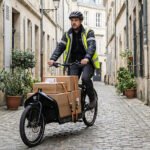

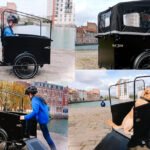
Cycling is a national identity in Denmark — and the ladcykel (cargo bike) sits right at the center of that culture. Streets in Copenhagen and Aarhus are filled with parents carrying kids, groceries, and even dogs in their cargo bikes. Yet, behind this familiar scene, a quiet but serious problem is growing: many local cargo bikes simply don’t meet EU safety standards.
Thin steel tubes. Simplified frame joints. Weak box materials. Easy-clip dropouts. Lightweight frames designed for online assembly — all to cut costs and simplify transport.
But these shortcuts come at a price: stability, braking power, and load safety — the very qualities end-users increasingly demand.
Now that Danish consumers are waking up to EN-certified safety, manufacturers, distributors, and retailers have a clear opportunity — to lead, not follow, the next evolution of cargo bike quality.
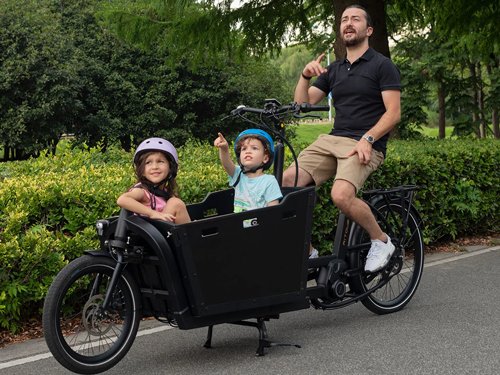
The Danish Cargo Bike Market: Loved, Popular, but Falling Behind
Denmark remains one of the world’s top cycling nations. Denish people’s biking culture, and cargo bikes make up a fast-growing share of urban transport.
Yet, market data and user feedback (from Reddit, Facebook groups searching Ladcykel DK, and Danish cycling forums) reveal recurring concerns:
- Frames that flex or twist under heavy load
- Cargo boxes that crack after one winter
- Steering arms loosening after months of daily school runs
- Battery systems that fail due to poor waterproofing
- Limited after-sales support from small online brands
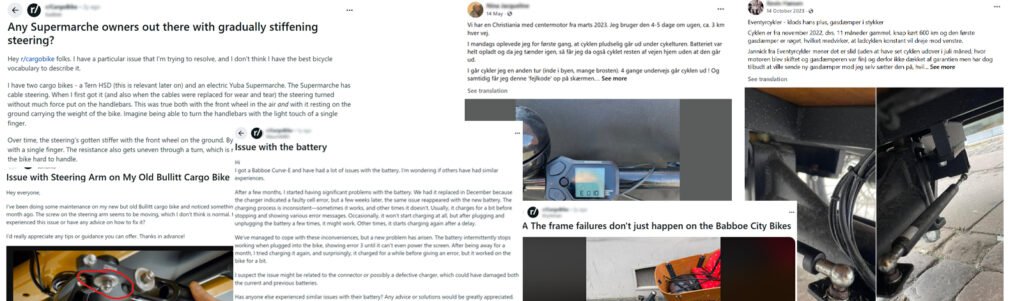
These stories are everywhere — and they show a growing mismatch between what Danish riders expect and what many locally-assembled cargo bikes deliver.
The Regulation Gap: Why EN 17860 and EN 15194 Matter Now
Until recently, Denmark’s cargo bike market was largely self-regulated. But the introduction of EN 17860 (for cargo bikes) et EN 15194 (for e-bikes) is reshaping the landscape.
Let’s break down what these standards actually mean for you as a cargo bike seller in Denmark:
| Standard | Covers | Key Requirements |
|---|---|---|
| EN 17860 | Cargo bike structure & safety | Load capacity testing, braking distance, handlebar strength, steering stability, cargo box crash tests |
| EN 15194 | Electrically assisted cycles | Electrical safety, motor system limits (max 250W), braking system integration, EMC compliance |
| Battery Regulation (EU 2023/1542) | Lithium battery design & recycling | Traceability, safety testing, transport classification |
Meeting these isn’t just about compliance — it’s about earning consumer trust. Danish families now check whether a cargo bike is “EN-approved” before buying. That’s a major cultural shift.
Meet Real Danish Cargo Bike User Needs
The new Danish cargo bike buyer is not only price-sensitive but safety-aware. They also expect convenience — easy maintenance, intuitive assembly, and compact delivery packaging.
This means we must rethink design priorities:
- Frame kits: Use strong and lightweight aluminum tubes that pass EN fatigue testing
- Brake systems: Upgrade to hydraulic brake pads with certified performance data
- Steering and control: Robust steering wheels and anti-loosen steering linkages reduce daily wear
- Box design: Weather-proof cargo boxes with reinforced joints and child-safe seatbelts
- Component quality: Use sealed pedal censors, integrated belt drives, and reliable rain covers for northern climates
In fact, some brands are already shifting — partnering with reliable cargo bike OEM/ODM suppliers that operate local assembly facilities and provide certified frame production, along with modular cargo bike frame kits designed to simplify post-import assembly and cut overall logistics costs.
Which Cargo Bike Should I Choose? (For Your Product Line)
If you’re expanding your product portfolio, the first question isn’t “Which model sells best?” — it’s “Which design meets real Danish conditions?”
As someone already experienced in the cargo bike industry, you probably have a clear vision of what works for your customers. But it’s also worth staying alert to how fast the market is evolving.
In Denmark, three-wheeled ladcykler still dominate the streets — yet this also proves that end users are becoming more specific about their needs and riding scenarios. Families, seniors, and even small business owners are no longer satisfied with “one-size-fits-all” cargo bikes. They’re looking for purpose-built designs that match their lifestyles:
| Model Type | Typical Use | Key Selling Point |
|---|---|---|
| Front Cargo Bike (Bakfiets) | Family, child transport, small businesses logistics | Best visibility, traditional appeal |
| Longtail Cargo Bike | Urban mobility, courier | Slim, lighter, fits bike lanes easily |
| Trike / Electric Trike | Seniors & Rehabilitation | Stable, easy to balance, comfortable |
| Compact Two-Wheel Cargo E-Bike | Mixed use | Lighter frame, lower cost, flexible transport |
Consumers now ask questions like:
- Is this ladcykel EN-certified?
- Can it handle Danish winter roads?
- How easy is it to service or replace parts?
If your catalog can answer these questions clearly — you’re already ahead of most online-only sellers.
Lead, Don’t Follow: What B-End Brands Should Do Next
The next growth wave of electric cargo vehicles in Denmark will come from trust-based differentiation. Safety, modularity, and after-sales support will soon outweigh cheap entry prices.
That’s where working with experienced Cargo Bike suppliers becomes essential — suppliers who offer:
- Flexible frame kits for B2B assembly
- Local after-sales or European hubs for warranty support
- Compliance documentation for EN 17860 and EN 15194
- Scalable production with reliable component sourcing
As online reviews and community feedback shape buying decisions, distributors who can prove quality, not just price, will dominate the Danish ladcykel market.
Final Insight
Denmark’s cargo bike story isn’t slowing down — it’s evolving.
And those who lead with quality, compliance, and user-driven design will define what the next generation of Danish family mobility looks like.
If you want to build your brand on that foundation, start with one question:
“Does my cargo bike truly meet the standards my customers deserve?”
If you’re looking to expand your cargo bike product line, optimize product design, or create models that better match Danish(or wider EU market) riders’ needs, we’d love to support you.
À UM (United Mobility), we specialize in ODM/OEM cargo bike solutions with nearly two decades of experience in frame design, system integration, and end-user research.
Our production follows EN17860 and other key EU standards, and our modular frame kits make local assembly simple, cost-efficient, and compliant.
👉 Get in touch to explore how we can help you create safer, smarter, and more profitable ladcykel solutions.
✅ Related Reading:
 French
  English
  German
  Dutch
Dutch  Danish
  Polish
  Portuguese
  Spanish