

Das halbliegende Elektrodreirad zählt zu den vielversprechendsten Komfortmobilitätskategorien der letzten Jahre, und insbesondere die Variante mit Breitreifen birgt großes Potenzial für den US-amerikanischen und australischen Markt – große Länder mit abwechslungsreichem Terrain und Fahrer, die abseits befestigter Wege unterwegs sein wollen. Doch ein Breitreifendreirad, das dieses Versprechen tatsächlich einlöst, zeichnet sich durch eine durchdachte Konstruktion aus und ist mehr als nur ein breiter Reifen auf einem Standardrahmen. Für einen Händler oder eine Handelsmarke kann genau dieser Unterschied darüber entscheiden, ob sich ein Produkt gut verkauft oder nicht.
Breitreifen sind eine Konfiguration der Plattform, die wir behandeln in Beschaffung eines halbliegenden elektrischen Dreirads. Dieser Artikel untersucht, wo sich die Version mit breiten Reifen einordnet, wie sich die Spezifikationen von Markt zu Markt unterscheiden und warum die Konstruktion – und nicht der Reifen – über den Erfolg entscheidet.
Wo die Nachfrage besteht und wie sie sich von Markt zu Markt unterscheidet
Die Nachfrage nach Fatbike-Trikes ist in den USA am deutlichsten zu erkennen, wo sich dieses Format bereits etabliert hat und Fahrer höhere Leistung und ein per Gasgriff gesteuertes Fahrgefühl erwarten. Die US-amerikanischen Vorschriften erlauben dies: Leistungsstärkere Klassen sind straßenzugelassen, und ein Großteil der Bekanntheit dieser Kategorie in den USA ist auf Direktvertriebsmarken zurückzuführen, die die Nachfrage unter Beweis gestellt haben.
Australien passt gut zum Gelände mit breiten Reifen – Schotter, Strände, gemischte Untergründe und lange Strecken eignen sich für ein breiteres, stabileres Trike –, aber die Leistung ist eine andere Sache. Die australischen Straßenverkehrsregeln begrenzen die Leistung von E-Bikes auf 250 W Tretunterstützung, Die Gaspedalstellung ist dort nur bis Schrittgeschwindigkeit erlaubt; ein 750-Watt-Trike ist nicht straßenzugelassen und kann beschlagnahmt werden. Daher wird die gleiche Plattform mit breiten Reifen nach Australien als 250-Watt-Pedalunterstützungssystem exportiert, nicht als leistungsstärkeres US-Modell. Die EU ähnelt eher Australien – überwiegend städtisch und asphaltiert, 250 Watt Pedalunterstützung, wobei breite Reifen für den ländlichen und nordischen Raum besser geeignet sind.
| Markt | Geländetauglichkeit für breite Reifen | Kraft-/Unterstützungsregel |
|---|---|---|
| Vereinigte Staaten | Starke, etablierte Nachfrage | Leistungsstärkere Klassen und höhere Drosselklappenöffnungsgeschwindigkeiten erlaubt |
| Australien | Robust – für Gelände und den Einsatz im Freien geeignet | 250 W Tretunterstützung; Gashebel nur bis Schrittgeschwindigkeit |
| EU | Enger – ländlich und nordisch | 250 W Tretunterstützung |
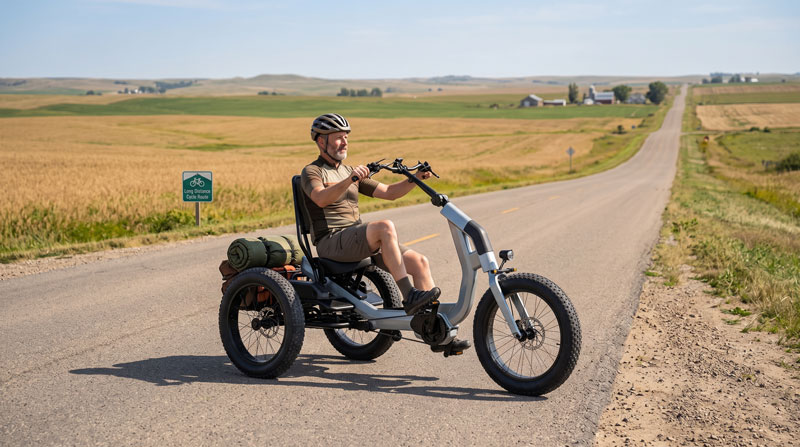
Ein Fatbike-Trike ist ein System, keine bloße Reifenumrüstung.
Breitere Reifen verändern die Belastungen, die das gesamte Trike trägt, und um daraus ein gutes Fahrgefühl anstatt eines schweren, unkomfortablen oder instabilen zu machen, müssen mehrere Dinge gleichzeitig angepasst werden:
- Rahmen. Verstärkt für das zusätzliche Gewicht und – in den leistungsstärkeren Märkten – für das zusätzliche Drehmoment, damit es unter Last die Ausrichtung beibehält, anstatt sich zu verbiegen.
- Motor und Antriebsstrang. Die Antriebe sind auf die gesetzlichen Fahrzeugklassen abgestimmt und für US-Leistungsniveaus ausgelegt, um dem hohen Drehmoment standzuhalten. Antriebe, die nicht speziell dafür entwickelt wurden, versagen unter Last – eine Lektion, die diese Fahrzeugkategorie schmerzlich lernen musste.
- Suspension. Vorne und hinten, sodass ein schwereres, schnelleres Trike auch auf rauen Oberflächen, wie sie breite Reifen geradezu heraufbeschwören, komfortabel und kontrollierbar bleibt.
- Stabilität. Entwickelt durch einen Differenzialantrieb und eine Lenkung, die stets stabil bleibt – denn wenn Leistung und Geschwindigkeit steigen, wird ein Trike, das nicht dafür ausgelegt ist, im ungünstigsten Moment nervös.
- Gasgriff oder Pedalunterstützung. Für den jeweiligen Markt ausgewählt: Gashebelsteuerung für die USA, Tretunterstützung für Australien und die EU.
- Bremsen. Ausgelegt auf die schwerere, schnellere Bauweise, nicht übernommen von einem Standardmodell.
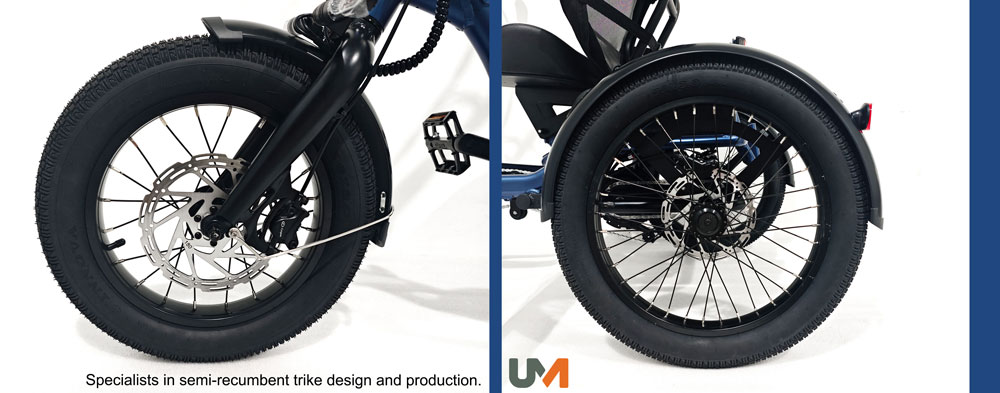
Nichts davon ist optional und nichts funktioniert isoliert. Genau das ist der springende Punkt: Ein Fatbike-Trike ist ein integriertes System, das als Ganzes abgestimmt ist. Deshalb kann es nicht einfach aus einem Standard-Trike und einem größeren Reifen zusammengesetzt werden.
Die Kostenseite, um es klar zu sagen
Ein Trike mit Breitreifen ist teurer als ein Standardmodell – mehr Material, ein stärkerer Motor, wo der Markt es zulässt, Federung sowie ein robusterer Antriebsstrang und Bremsen. Das ist kein Nachteil, sondern die Ausstattung, für die die Zielgruppen bereit sind zu zahlen. Das Risiko liegt woanders: nicht im Preis, sondern darin, viel Geld für ein Trike auszugeben, das eher zusammengebaut als durchdacht konstruiert wurde, und das merkt man schon auf der ersten holprigen Straße.
Warum der Hersteller das Ergebnis bestimmt
Alle genannten Komponenten müssen aufeinander abgestimmt sein, und zwar für jeden Markt individuell. Rahmen, Antrieb, Federung, Stabilität, Unterstützungssystem und Bremsen – alles abgestimmt auf den Zielmarkt und die Fahrweise des Trikes – unterscheiden einen erfahrenen Hersteller von einem, der einfach nur breite Reifen auf eine Standardplattform montiert und auf Erfolg hofft. Der Schlüssel zum Erfolg liegt im iterativen Prozess und im Feedback von echten Fahrern, nicht in vorgefertigten Spezifikationen.
United Mobility hat rund drei Jahre in die Entwicklung und Verfeinerung seiner Halbliegedreirad-Plattform investiert und diese an verschiedene Märkte und deren Bestimmungen angepasst. Wenn Sie ein Halbliegedreirad mit Breitreifen in den USA oder Australien einführen möchten, entscheidet die Verarbeitung über Erfolg oder Misserfolg – und es lohnt sich, einen Partner zu wählen, der die optimale Balance bereits gefunden hat. Leitfaden zur Auswahl eines Dreiradherstellers behandelt, was zu überprüfen ist, und die ODM-Prozess Beschreibt, wie ein konfigurierter Auftrag ausgeführt wird.
Häufig gestellte Fragen
Ist ein Fat-Tyre-Trike einfach ein normales Trike mit größeren Reifen?
Nein. Breitere Reifen verändern die Belastung des gesamten Trikes, daher müssen Rahmen, Motor, Federung, Stabilitätssystem und Bremsen darauf abgestimmt werden. Es handelt sich um ein komplexes System, nicht um einen einfachen Reifenwechsel.
Für welche Märkte eignet sich ein Halbliegedreirad mit breiten Reifen?
In den USA, wo eine hohe Nachfrage besteht und höhere Leistungen zulässig sind, ist dies besonders ausgeprägt; in Australien, wo es auf unebenem Gelände mit einer 250-Watt-Tretunterstützung am besten geeignet ist; sowie in ländlichen oder nordischen Gebieten der EU. Flache, asphaltierte Stadtgebiete sind in der Regel mit Standardreifen besser bedient.
Kann ich ein Fatbike-Trike mit 750 W Gasgriff in Australien verkaufen?
Nicht für den Straßenverkehr zugelassen. In Australien ist die Tretunterstützung von straßenzugelassenen E-Bikes auf 250 W begrenzt, wobei der Gashebel nur bis Schrittgeschwindigkeit funktioniert. Ein 750-W-Modell mit Gashebel kann als Kraftfahrzeug eingestuft und beschlagnahmt werden. Dieselbe Plattform wird für diesen Markt als 250-W-Tretunterstützungsdreirad angeboten.
Sind Dreiräder mit breiten Reifen teurer?
Ja. Der größere Motor, die Federung und der robustere Rahmen, Antriebsstrang und die Bremsen verursachen zusätzliche Kosten – es handelt sich um ein leistungsfähigeres Modell für Märkte, die dies zu schätzen wissen, nicht um einen direkten Austausch.
Kann ich ein Halbliegedreirad mit breiten Reifen als Eigenmarkenprodukt bestellen?
Ja. Es handelt sich um eine Konfiguration der Plattform, die unter Ihrer eigenen Marke erhältlich ist und speziell auf die Gegebenheiten und Stromnetzregeln Ihres Marktes zugeschnitten ist.
Ein Halbliegedreirad mit breiten Reifen in die USA oder nach Australien einführen? Sagen Sie uns, welcher Markt gemeint ist und wie das Fahrzeug gefahren werden soll, und wir werden die Konstruktion – Leistung, Federung, Stabilität und Bremsen – entsprechend ausbalancieren. Sprechen Sie mit unserem Team über die Konfiguration für Ihren Markt.
 German
  English
  Dutch
Dutch  Danish
  French
  Polish
  Portuguese
  Spanish