
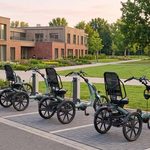
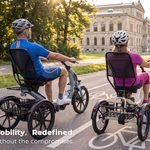
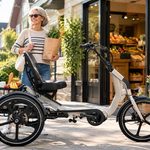
Markedet for elektriske trehjulede cykler til seniorer er et af de hurtigst voksende hjørner af e-mobilitet – og et af de dårligst udbudte. Seniorer har den største disponible formue og den mest konkrete grund til at købe en stabil, assisteret elektrisk trehjulet cykel, men de udbudte produkter deler sig op i to utilfredsstillende områder: billigt forbrugerudstyr, der ligner og kører som budgetbyggesæt, eller dyre, lavvolumen, ofte klinisk udseende mobilitetsudstyr. Mellemrummet - en velkonstrueret trehjulet cykel, der ikke ligner eller føles som et medicinsk hjælpemiddel - er kløften. For distributører og private label-mærker er dette kløft muligheden.
Dette er ikke en prognose, der afhænger af en fast trend. Den er baseret på demografiske forhold, som man allerede kan se to årtier frem i tiden.
Hvorfor markedet for elektriske trehjulede seniorer fortsætter med at vokse
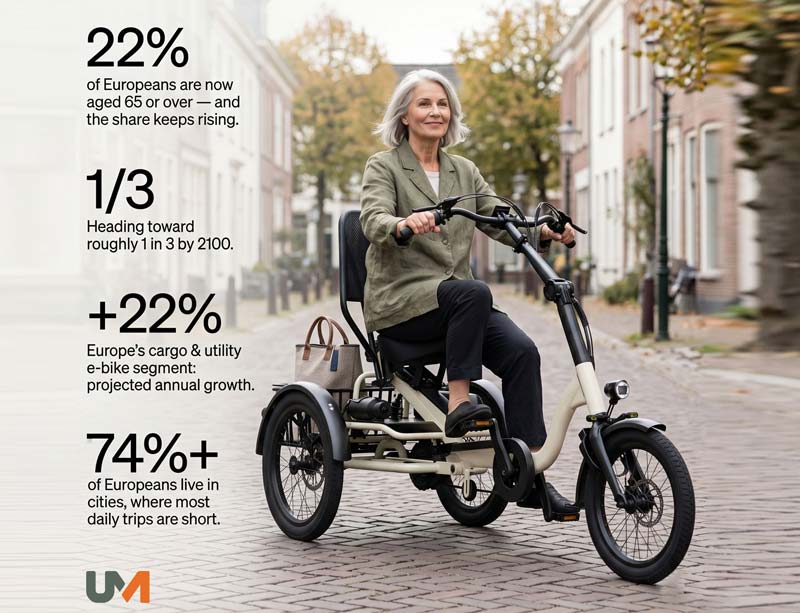
Efterspørgselssiden er bundet af befolkningsstrukturen. Den 1. januar 2025 nåede EU's befolkning 450,6 millioner, og 22% af dem var 65 år eller derover — en stigning fra 21,6% året før og 2,9 procentpoint højere end for et årti siden (Eurostat). Medianalderen i EU er nu 44,9 år. I Italien, Portugal og Bulgarien er der allerede færre end tre voksne i den erhvervsaktive alder for hver person over 65 år.
USA ligger på samme kurve, lidt bagud. Folketællingsbureauet anslår befolkningen over 65 år til 61,2 millioner (18% af landet) i 2024, en vækst på 13% mellem 2020 og 2024, mens gruppen i den erhvervsaktive alder voksede med 1,4%. I 2030 forventes dette segment at nå omtrent 71,6 millioner (omkring 211,3 milliarder af befolkningen), og Befolkningsreferencebureauet forudser 82 millioner inden 2050.
Den elektriske trehjulede cykel til seniorer i Europa og USA er derfor ikke et nichebud – den sporer det mest forudsigelige demografiske skift i århundredet.
Sølvøkonomien bag udgifter til seniormobilitet
Bag antallet af ansatte ligger købekraften, og det er her, mobilitet i sølvøkonomien bliver en kategori snarere end en velgørenhedssag. En undersøgelse fra Europa-Kommissionen (Technopolis Group med Oxford Economics) vurderede Europas sølvøkonomi - privat og induceret forbrug blandt personer over 50 år - til 3,7 billioner euro i 2015, med en projektion til at nå 5,7 billioner euro inden 2025. Ældre europæere er ikke en sparsommelig eftertanke; i flere nationale analyser tegner de sig for størstedelen af forbrugernes efterspørgsel.
Så køberen eksisterer, har penge og har et problem, som cykling kan løse. Spørgsmålet er, hvorfor produktet stadig skuffer.
Hvorfor udbuddet af trehjulede cykler sidder fast i to yderpunkter
Gå på det nuværende marked, og du finder to klynger med meget lidt imellem dem.
I den ene ende sidder massemarkeds forbruger-triangler — step-through stel, navmotorer, en kurv boltet på. De er overkommelige og stabile nok, men de er konstrueret til prisen, ikke til kroppen af en 72-årig med ledfølsomhed. Sadlen, bremsekraften, håndteringen ved lave hastigheder, pasformen — de ting, der rent faktisk afgør, om man bliver ved med at cykle — er normalt en eftertanke.
I den anden ende sidder der førsteklasses specialiserede producenter, der tydeligvis forstår motorcyklisten. En håndfuld veletablerede europæiske værksteder bygger senior-trehjulede cykelr, der er oprigtigt stabile, meget justerbare og bevidst designet til at ligne attraktive genstande snarere end medicinsk udstyr. De beviser to ting på én gang: efterspørgslen er reel, og køberne vil betale godt for en trehjulet cykel, der er lavet ordentligt. Problemet er strukturelt. Disse er typisk håndsamlede, forhandlerkanal, lavvolumenoperationer - ofte kun et par tusinde enheder om året - så uanset hvor godt produktet er, kan de ikke levere en distributør en skalerbar, private label-linje.
Det efterlader et hul i midten, som ingen udfylder ordentligt: a afmedicinsk, korrekt konstrueret, skalerbar Senior-trehjulet cykel, som et mærke kan sætte sit eget navn på.
De afmedicinaliserede, tilgængelige elektriske trehjulede købere, der rent faktisk ønsker sig
Den største barriere i denne kategori er ikke pris eller specifikation. hvad produktet signalerer. Det er her, at afmedicinsk mobilitetsdesign holder op med at være en stylingbemærkning og bliver den kommercielle beslutning.
Forskning i, hvorfor ældre voksne opgiver mobilitetshjælpemidler, når hele tiden frem til den samme konklusion: et åbenlyst medicinsk udseende gør skaden. En undersøgelse i Humanistiske og samfundsvidenskabelige kommunikationsformer Om design af mobilitetshjælpemidler viste det sig, at klinisk udseende hjælpemidler opgives, selv når de virker. Arbejdet med stigmatiseringen af brugen af rollatorer understreger pointen med et eksempel, som alle distributører bør huske: Nordiske gangstave er bredt accepterede, hvor en standard vandrestok modsættes, fordi stavene er indrammet som træningsudstyr snarere end hjælpemiddelteknologi. Samme fysiske støtte, fuldstændig forskellig accept. Produktsemantisk forskning er enig – klinisk form, farve og materiale forstærker en følelse af sårbarhed, mens et varmere, mindre medicinsk design lader rytteren bevare sin værdighed offentligt.
En tilgængelig elektrisk trehjulet cykel, der lyder som en fritids- og livsstilskøretøj lader ryttere komme i butikkerne, forblive uafhængige og se venner uden offentligt at acceptere en stempel på forfald. Det er præcis, hvad de europæiske premium-trehjulede cykler gør rigtigt, og hvad de billige forbrugercykler og de kliniske hjælpemidler gør forkert.
Holdningen betyder mindre her, end de fleste antager. Den populære forkortelse siger, at den acceptable senior-trehjulede cykel er "oprejst, lavt trin, stabil". Oprejst fungerer – den er velkendt og synlig i trafikken. Men en halvt liggende Layoutet, med et stollignende sæde og ryglæn, kan læses endnu længere væk fra den medicinske kategori, fordi hele objektet præsenteres som et komfortabelt fritidskøretøj snarere end en tilpasset cykel. Det definerende træk er ikke sædevinklen. Det er afmedicinsk udseende + ægte ergonomisk ingeniørkunst + stabilitet ved lav hastighed + bevaret værdighed. (Vi udpakker afvejningen i vores Sammenligning af liggende vs. opretstående trehjulede cykel og den komfort-først liggende ingeniørkunst sammenbrud.)
Hvem køber elektriske trehjulede cykler til seniorer – og hvorfor det er et B2B-signal
Dette er ikke et marked med kun én køber, hvilket er en af grundene til, at det bliver overset. Efterspørgslen efter en elektrisk trehjulet cykel til seniorer kommer gennem flere kanaler på én gang:
- Forhandlere af seniormobilitet og adaptive cykler, der sælger til ryttere, der gerne vil fortsætte med at cykle.
- Kommuner og plejehjem, hvor uafhængig mobilitet reducerer plejebyrden og isolation.
- Partnere inden for rehabilitering og sundhedspleje, for ryttere, der vender tilbage til aktivitet efter skade eller balancetab.
- Turisme- og fritidsoperatører — hoteller, campingpladser og udlejningsflåder tilføjer stabile trehjulede cykler til ældre gæster.
Når efterspørgslen dukker op gennem så mange døre, er det ikke længere et nicheforbrugerprodukt. Det er en kategori, der har brug for platforme, fleksibilitet inden for private label og leveringskontinuitet – hvilket vil sige, den har brug for en OEM/ODM-partner i stedet for endnu en forsendelse af lagerenheder.
Hvordan kategorien for aldersvenlige trehjulede cykler udvider sig
Det tydeligste tegn på, at dette er mere end et enkelt produkt, er det, der dannes omkring det. Den aldersvenlige el-trike er ved at blive til en økosystem:
- Komfort- og funktionstilbehør — justerbare sæder og ryglæn, aftagelige indkøbskurve, belysning og blinklys, vejrudsigt — der forvandler en basisenhed til et dagligt redskab.
- Fritidsudstyr til aktiv aldring, der kører sideløbende med den bredere sølvturismeøkonomi (europæiske rejsende over 65 år bruger omkring 66 milliarder euro om året). Trehjulede cykler købes i stigende grad som fritidsudstyr, ikke kun som transportmiddel.
- Programmatisk efterspørgsel — cykelklubber for seniorer, organiserede gruppeture, subsidierede lejeordninger drevet af byer og nonprofitorganisationer.
For en producent eller et brand er det strategiske punkt simpelt: Den, der ejer platformen, ejer den efterfølgende pipeline af tilbehør, udskiftninger og flådefornyelser. Det første salg er den mindste del af forholdet.
Hvorfor vinduet er åbent nu
Demografiske ændringer er langsomme og sikre – hvilket netop er grunden til, at udbudskløften er en timingmulighed snarere end et permanent træk. Kunderne ankommer efter en kendt tidsplan. Premium-specialistproducenterne har valideret efterspørgslen, men kan ikke skalere ind i den. Den billige ende kan ikke nå køberens faktiske standarder. De distributører, der nu låser fast i en troværdig, afmedicinaliseret, veludviklet seniorplatform – og leverandørrelationerne bag den – vil have plads på hylderne, når kohorten ankommer fuldt ud.
For det praktiske næste skridt – hvilke funktioner afgør en senior-trehjulet cykel, og hvordan de opretstående og halvliggende formater sammenlignes med dit marked – start med vores Oversigt over platformen for senior el-trike og hvad købere virkelig leder efter i en elektrisk trehjulet cykel.
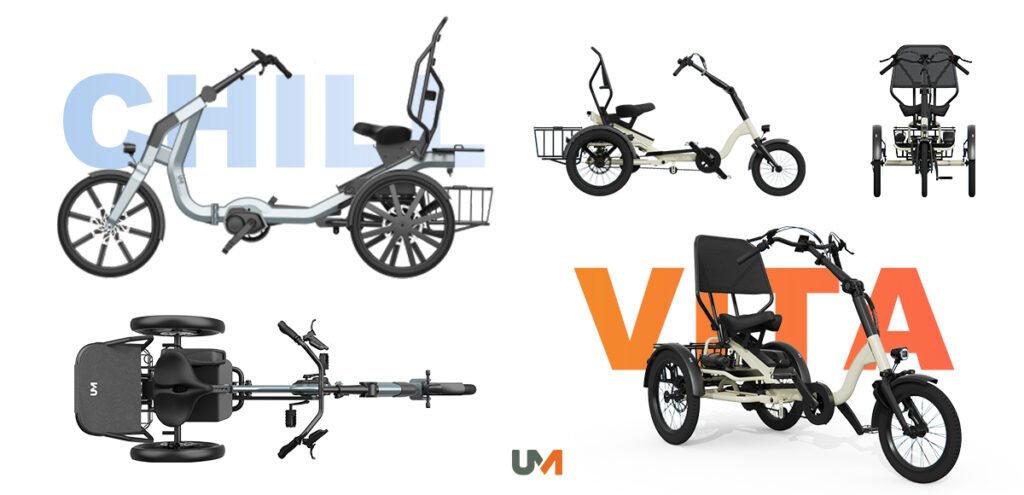
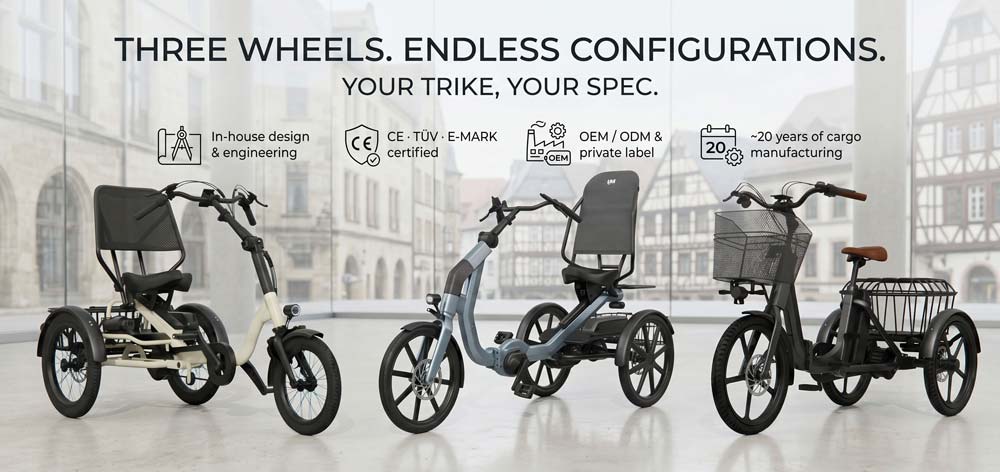
Hvor United Mobility passer til: vi bygger afmedicinsk, EN 17860-kompatibel Senior trike-platforme — den kompakte UM Vita og den større UM Chill — for distributører og private label-mærker på OEM/ODM-basis. Hvis du vægter denne kategori for dit sortiment, udforsk seniorplatformene eller kontakt os angående en konfiguration, der er bygget til dit marked.
FAQ
Hvor stor er markedet for elektriske trehjulede cykler til seniorer?
Den sporer den bredere aldring i Europa og USA. Over 221 000 000 af EU's befolkning er allerede over 65 år (Eurostat, 2025), USA passerede 61 millioner seniorer i 2024, og EU's sølvøkonomi blev vurderet til 3,7 billioner euro i 2015 med en prognose på mod 5,7 billioner euro inden 2025. Inden for dette område fortsætter andelen af cykling, der udføres af ældre voksne, med at stige, og den stabile, assisterede trehjulede cykel er det format, der holder folk kørende i takt med at balance og ledkomfort ændrer sig.
Hvorfor kaldes markedet for elektriske trehjulede seniorer "underforsynet", hvis produkter allerede findes?
Fordi udbuddet klynger sig sammen i to yderpunkter – billige forbruger-triangler bygget til en pris, og dyre premium-triangler i lav volumen – med meget lidt imellem. Kløften er en afmedicinaliseret, velkonstrueret og tilgængelig elektrisk trehjulet cykel, der er tilgængelig i stor skala og med fleksibilitet under private labels.
Skal en trehjulet cykel til seniorer være oprejst for at blive accepteret?
Nej. Accept afhænger af, om produktet ligner fritidsudstyr snarere end et medicinsk hjælpemiddel, ikke af siddevinklen. Både opretstående og halvt liggende formater kan være en succes; et halvt liggende layout lyder ofte endnu mindre "medicinsk", fordi det præsenteres som et komfortkøretøj.
 Danish
  English
  German
  Dutch
Dutch  French
  Polish
  Portuguese
  Spanish