



Why Cities, Parcel Service Providers, and Local Businesses Are Shifting Their Last-Mile Strategy?
If you work in last-mile delivery, you already feel the pressure: rising delivery volume, rising urban restrictions, and rising operational costs. At the same time, your customers expect faster drop-offs, tighter delivery windows, and real-time visibility—without increasing delivery fees.
This is exactly why the question “Can cargo bike delivery be successful?” is suddenly everywhere in Europe.
And the short answer is: yes—when it fits the right conditions. Cargo bikes are not replacing every van, but they are transforming last-mile logistics in dense urban zones.
Let’s break down the numbers, the real-world constraints, and which cargo bike models actually work for business.
Cargo Bike Delivery Is Growing Fast — And the Demand Is Data-Backed
E-commerce deliveries are exploding
Online shopping across Europe has doubled in the past decade. In 2023 alone:
- Europe’s e-commerce parcel volume grew 5.5% YoY (Source: CEP Research 2024)
- By 2027, Europe is expected to surpass 20 billion parcels per year
📊 Chart: European Parcel Volume Growth (2015–2027 forecast)
(CEP Research, 2024)
| Year | Parcel Volume (bn) |
|---|---|
| 2015 | 8.1 |
| 2020 | 12.1 |
| 2023 | 15.2 |
| 2027 (forecast) | 20+ |
This makes short-distance, high-frequency deliveries the fastest-growing segment—where cargo bikes excel.
Food delivery is now a permanent habit
- Over 30% of Europeans order takeaway weekly (Statista 2024)
- Riders cover short distances, require flexibility, and often deal with narrow streets
- Many restaurants now prefer direct-to-customer delivery fleets instead of platform commissions
Cargo bikes offer lower cost, branding potential, and easy training for staff riders.
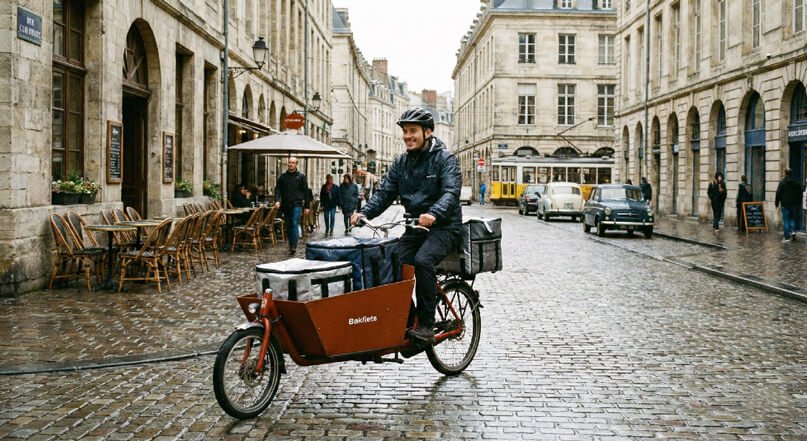
On-demand errands & courier services are increasing
Grocery top-ups, pharmacy runs, flower deliveries, laundry pickup—urban errands are now fully digitised. This creates demand for:
- compact bikes
- high-frequency stops
- versatile cargo space
This is where modular Longjohn bikes and compact e-cargo bikes shine.
Why Cargo Bike Delivery Works — Lower Costs, More Flexibility, Faster ROI
1. Lower Operating and Ownership Costs
Compared with vans:
| Cost Category | Ladcykel | Van |
|---|---|---|
| Fuel/Energy | €0.05–€0.15 per 10 km | €1–€2 per 10 km |
| Maintenance | €150–€350/year | €1,200–€2,000/year |
| Parking & penalties | Almost €0 | Very high in EU cities |
| Insurance | Low | High |
(Source: CycleLogistics Federation / DLR Germany)
For small and midfleet operators, this alone determines profitability.
2. Better Access in Dense Urban Environments
Cargo bikes:
✔ pass through narrow medieval streets
✔ avoid congestion
✔ stop at the door without fines
✔ require minimal parking space
Cities like Amsterdam, Paris, Vienna, and Copenhagen now design infrastructure assuming cargo bikes will be part of logistics fleets.
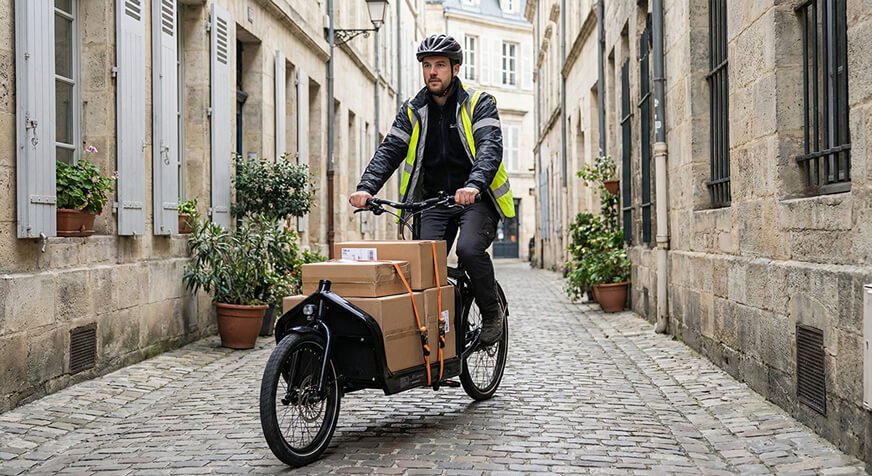
3. Lower Barrier for Rider Training
Your staff doesn’t need a license.
Most riders can operate an electric Longjohn or trike after 30–45 minutes of training.
4. Customisation = Operational Precision
If your delivery needs change, the vehicle can change with you.
This is where cargo bikes outperform vans dramatically.
Examples of tailor-made modifications:
- insulated food delivery boxes
- modular platforms for parcels
- foldable front racks
- branding panels
- rain covers
- side-opening doors for fast drop-offs
- high-brightness lights & turn signals for safety
- battery upgrades for long-hour shifts
For many companies, a tailor-made cargo bike solution becomes a long-term competitive asset.
5. Bonus! Green Mobility = Brand Value
More companies use cargo bikes not only to deliver but also to communicate:
- sustainability
- local commitment
- “zero-emission last mile” statements
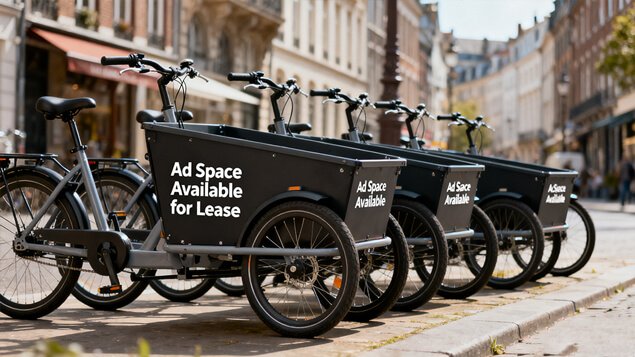
Some brands even sell advertising space on their delivery boxes.
6. Subsidies Make the Business Case Stronger
EU countries offering incentives include:
- Tyskland — up to €2,500 per heavy-duty cargo bike
- France — up to €1,000 subsidy for business use
- Austria, Denmark, Netherlands — various local-level grants
- C40 Cities initiative — promoting cargo bikes for urban logistics
However, incentives and regulations shift frequently, and every city or region applies different rules. To ensure accurate planning, you should always check the most recent local guidelines or consult your municipal mobility office before making investment decisions.
The Limits — When Cargo Bike Delivery Is Not the Right Solution
I want to be clear: cargo bikes are not magic.
Not ideal for:
- long-distance rural routes
- oversized or extreme-weight freight
- steep hilly terrain
- long-stop cold chain delivery
- heavy rain regions without storage infrastructure
Ideal for:
- last-mile within 5–10 km
- multi-stop high-frequency delivery
- dense urban districts
- time-sensitive food or parcel drops
When you match the right terrain and route type, the success rate increases dramatically.
Which Cargo Bike Models Actually Work for Business?
Here are practical recommendations based on real-world last-mile setups.
1. Compact Two-Wheel Longjohn (e.g., UM ZIP Platform Model)
Best for: parcel delivery, food delivery, service technicians
Why:
- foldable front basket
- front-and-rear load capacity
- manoeuvrable in narrow streets
- can switch between cargo mode & normal e-bike mode
This is the most flexible option for small shops and high-frequency couriers.
2. Modular Front-Loader Longjohn (Customisable platform)
Best for: groceries, multi-stop parcel drops, flower shops
Why:
- detachable front box
- fits crates or branded boxes
- can add foldable side extensions
- perfect for operators needing different setups per route
Ideal for businesses that want one frame but multiple cargo configurations.
3. Three-Wheeled E-Cargo Bike / Trike
Best for: heavier loads, bulky items, stable slow-speed delivery
Why:
- ultra-stable
- safe for new riders
- load capacity 150–250+kg
- road presence for city logistics
Used by: postal services, laundry services, micro-fulfilment centres.
4. Four-Wheeled E-Cargo Vehicle (Mini Urban Van Style)
Best for:
- high-volume deliveries
- grocery chains
- medical deliveries
- B2B courier services
Why: stability + capacity + weather protection.
This is a growing category in Germany, Netherlands, and France.
What Delivery Operators Usually Ask (FAQ)
Is cargo bike delivery fast enough for peak e-commerce hours?
Yes in dense city zones.
Cargo bikes bypass traffic and parking delays, often outperforming vans on routes <10 km.
What about maintenance downtime?
Typically < 48 hours.
E-cargo bikes use modular components (motor, battery, drivetrain, hydraulic disc brake systems), making repairs fast.
Can they operate year-round?
Yes, with:
- rain covers
- winter tyres
- protected battery casing
- high-brightness lights and turn signals
Northern Europe (DK/NL/DE) already operates fleets through winter.
How long does the battery last?
600–1200 cycles depending on motor & capacity.
Most fleets run 40–60 km per charge in urban use.
Can we fully customise the frame and platform?
Yes.
UM (United Mobility) provides:
- mould development
- custom tubing / reliable frame geometry
- modular cargo boxes
- Available motor configurations include front or rear geared hub motors and high-torque mid-drive systems, paired with commercial-grade cadence/torque sensors for smooth and responsive power delivery.
- EN 17860 + EN 15194 + EN 50604-1 compliant systems
So… Can Cargo Bike Delivery Be Successful?
(Yes — If You Use the Right Model for the Right Job)
Cargo bikes are not replacing vans.
They are replacing the wrong trips done by vans.
For parcel carriers, food delivery businesses, micro-fulfilment operators, and municipal services, cargo bikes deliver:
- lower operating costs
- faster delivery in congested areas
- flexible vehicle customisation
- easier recruitment
- a powerful sustainability story
If your business wants a tailor-made cargo bike solution for last-mile operations, UM helps you build the exact model you need—from compact Longjohns to heavy-duty trikes—fully compliant with EN 17860, EN 15194, and EN 50604-1.
 Danish
  English
  German
  Dutch
Dutch  French
  Polish
  Portuguese
  Spanish